

Disqualification Clauses Must Be Construed Strictly: Patna High Court Dismisses Appeal Against IOCL Dealership Allotment
The High Court held that disqualification conditions in public advertisements must be interpreted strictly as written and cannot be expanded by implication, stressing that mechanical or literal construction divorced from context would defeat both fairness and proportionality.
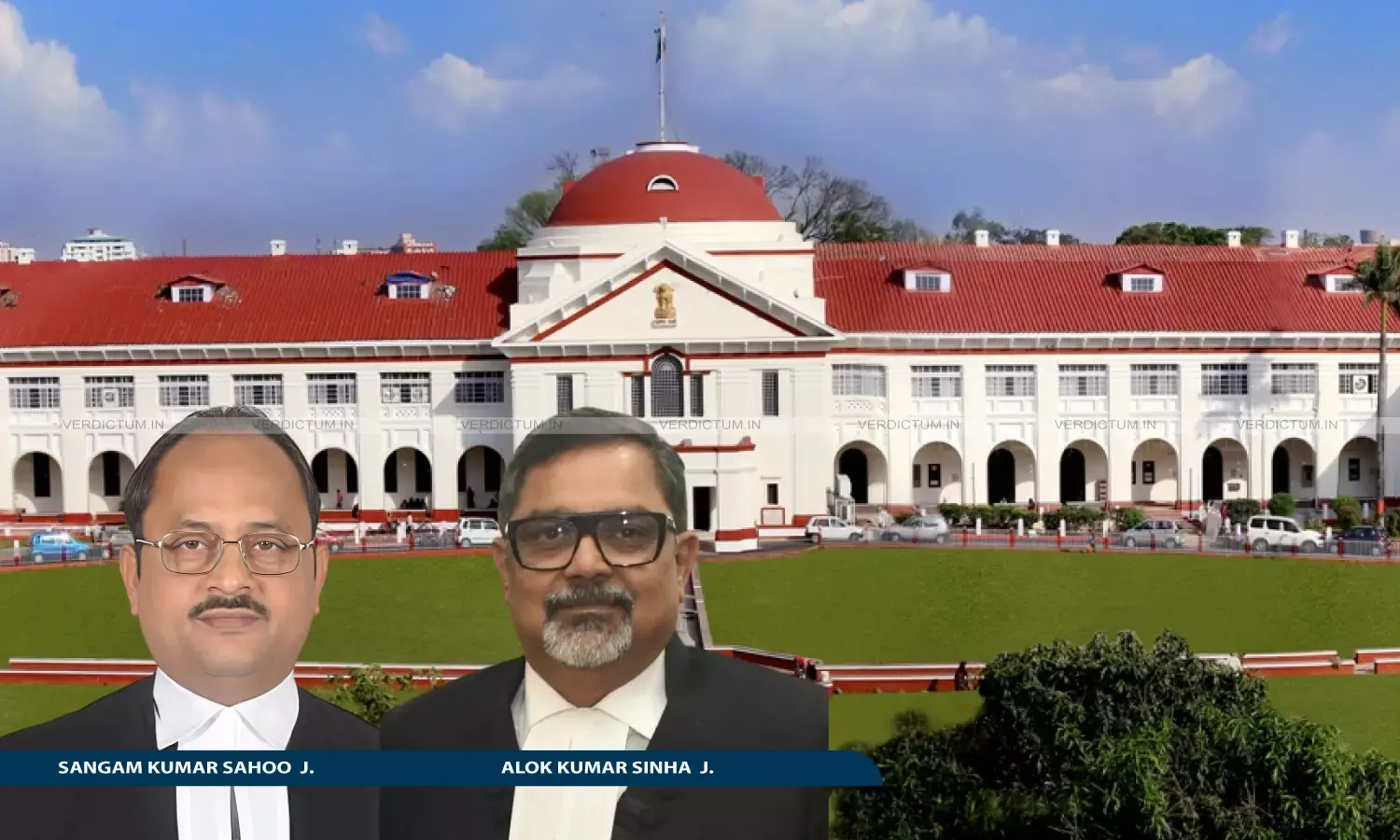
The Patna High Court dismissed a Letters Patent Appeal challenging the allotment of a retail outlet dealership by Indian Oil Corporation Limited (IOCL), holding that disqualification clauses in public advertisements must be construed strictly as written and that a mechanical or expansive interpretation, divorced from context, would defeat fairness and proportionality in the selection process.
The High Court further held that mere pendency of a criminal case, where charges had not been framed on the cut-off date, does not automatically render a candidate ineligible unless expressly stipulated in the advertisement.
The Court was hearing an intra-court appeal arising from the dismissal of a writ petition which had assailed the selection of a candidate for dealership on the ground of alleged suppression of the pendency of a criminal case and violation of eligibility conditions under the advertisement.
The Division Bench comprising the Chief Justice Sangam Kumar Sahoo and Justice Alok Kumar Sinha while stating that “that disqualification clauses in public notices must be construed strictly and not expansively”, further relied on the Supreme Court’s ruling in Ramana Dayaram Shetty v. International Airport Authority of India, (1979), observed: “the Supreme Court emphasised adherence to declared norms; however, the same line of authority also mandates that conditions must be interpreted as they are written and not extended by implication. If Clause 4 does not expressly stipulate that mere registration of an FIR or pendency at a pre-charge stage results in automatic ineligibility, the Court cannot supply such words.”
Background
The dispute arose from an advertisement inviting applications for the grant of a dealership. The selected candidate was placed at Rank No. 1 in the merit panel following interviews and evaluation. The appellant, who was placed below in rank, challenged the selection on the ground that a criminal case had been registered against the selected candidate and that such pendency ought to have disqualified her.
It was contended that the selected candidate had failed to disclose the pendency of the criminal case in her application and affidavit, and that this amounted to suppression of material facts in violation of the advertisement conditions.
The Corporation, however, maintained that as on the cut-off date for submission of applications, no charge had been framed against the selected candidate and there was no conviction. It was further asserted that the governing advertisement stipulated disqualification only in cases of conviction or framing of charges by a competent court, and not mere pendency of a case at a pre-charge stage.
The learned Single Judge rejected the writ petition after examining the advertisement, the application form, and the administrative decision taken by IOCL while disposing of a representation submitted pursuant to an earlier liberty granted by the Court.
Court’s Observations
The Division Bench of the Patna High Court framed specific issues for determination, including whether mere pendency of a criminal case without framing of charge attracts ineligibility under Clause 4 of the advertisement; whether the advertisement or the application form governs eligibility; whether the administrative decision suffered from arbitrariness; whether equitable considerations barred relief; and whether a new plea under Clause 10 could be raised in appeal.
On the interpretation of disqualification clauses, the Court reiterated that such provisions must be construed strictly and not expansively. Relying on established principles, the Court held that if the advertisement does not expressly provide that mere registration of an FIR or pendency at a pre-charge stage results in automatic ineligibility, the Court cannot read such disqualification into the clause by implication.
“It is also significant that the appellant’s interpretation would require reading Clause 4 in a manner that enlarges the scope of disqualification beyond what is expressly provided. Such an approach would run contrary to settled principles of interpretation, particularly where civil consequences ensue”, the Court further remarked.
The Bench observed that eligibility must be assessed with reference to the governing advertisement and as on the cut-off date. Since no charge had been framed against the selected candidate on the relevant date, and there was no conviction, the disqualification clause was not attracted.
On the interplay between the advertisement and the application form, the Court held that the advertisement is the foundational and governing instrument of the selection process. The application form, being ancillary in nature, cannot independently enlarge or curtail the scope of disqualification prescribed in the advertisement. Any apparent variance must be resolved in favour of the advertisement.
The Court further noted that IOCL, being the author of the selection documents, had consistently interpreted the eligibility conditions and had passed a reasoned order while disposing of the appellant’s representation. The learned Single Judge had examined the decision-making process and found no illegality, irrationality, or non-application of mind.
On the aspect of delay and equity, the Bench recorded that the retail outlet had been operational for a considerable period and that substantial investment had been made by the selected candidate. In such circumstances, and in the absence of a foundational illegality, interference would cause manifest inequity and unsettle a long-standing commercial arrangement.
The Court also declined to entertain a new plea alleging violation of another clause of the advertisement, holding that parties are bound by their pleadings and that grounds not raised in the writ proceedings cannot ordinarily be introduced in an intra-court appeal. The attempt was held to be barred by principles analogous to constructive res judicata and finality of pleadings.
Conclusion
Finding no error of law, perversity of reasoning, or jurisdictional infirmity in the impugned judgment, the Division Bench held that the learned Single Judge had correctly interpreted the governing eligibility conditions and exercised discretion within settled parameters of judicial review.
Accordingly, the Letters Patent Appeal was dismissed, with no order as to costs
Cause Title: Binod Kumar Mishra v. Indian Oil Corporation Limited & Ors.
Appearances
Appellant: Senior Advocate Y.V. Giri, with Advocates Pranav Kumar, Dimpal Kumari
Respondents: Additional Solicitor General, Senior Advocate Anil Kumar Jha, with Advocates Ankit Katriar, Mithlesh Kumar Gupta, Sanat Kumar Mishra
