

State Cannot Sit Idle On Unused Iron Ore : Orissa High Court Orders Action Against Defaulting Lessees
Invokes public trust doctrine, flags ₹4,000 crore loss

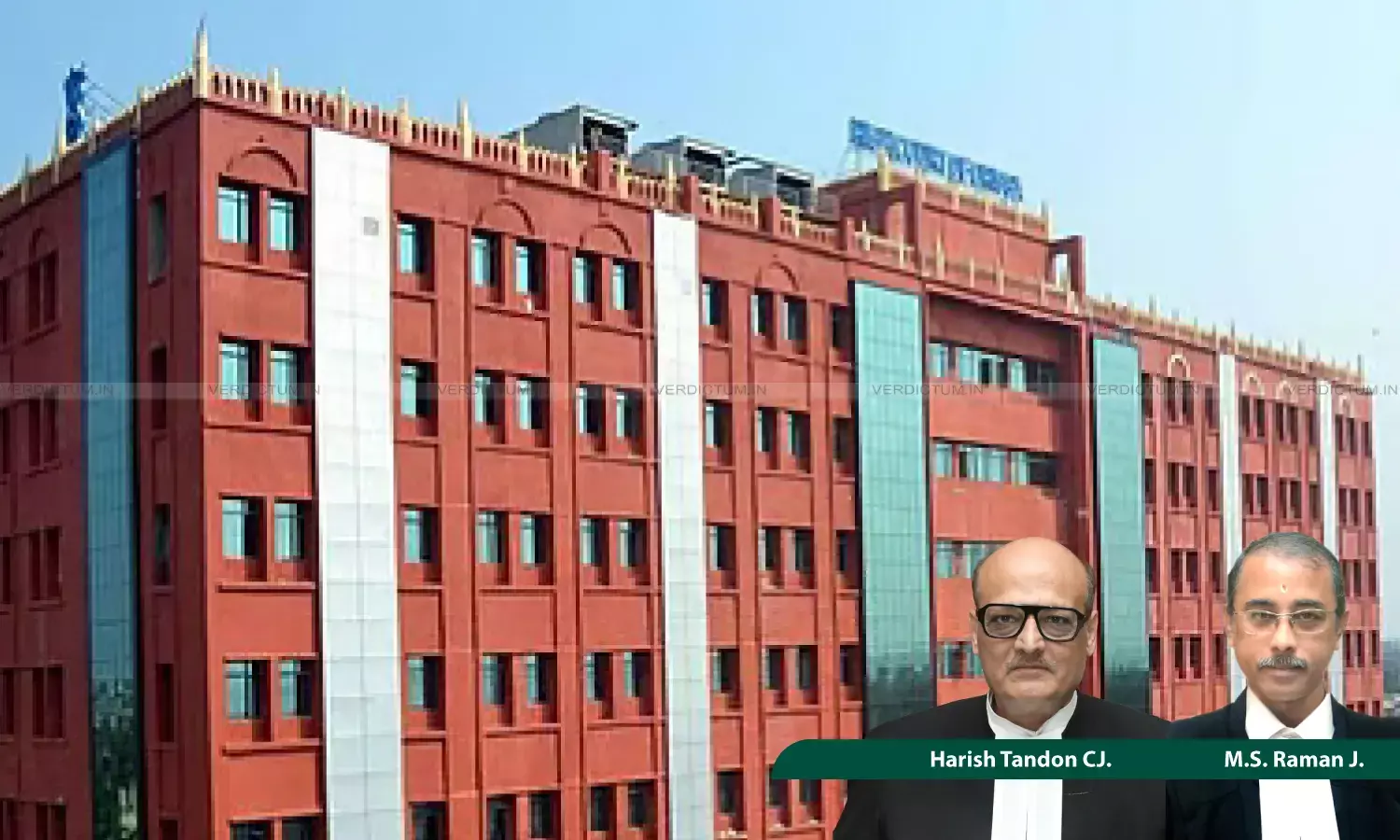
The Orissa High Court has pulled up the Odisha Government for failing to act against mining leaseholders who have persistently under-utilised iron ore reserves, holding that minerals are public resources held in constitutional trust and that statutory powers meant to ensure optimum extraction cannot be allowed to remain dormant.
The Court noted that the State sustained under-utilisation over multiple years across several mining blocks, despite Odisha accounting for nearly 30% of India’s iron ore reserves. Resulting in an estimated revenue loss of nearly ₹4,000 crore, besides adversely affecting employment and public interest. Emphasising that minerals are public assets governed by Article 39(b) of the Constitution of India, the Bench observed that once statutory mechanisms are consciously enacted to address defaults, the State is under a corresponding duty to enforce them.
A division bench comprising Chief Justice Harish Tandon and Justice M.S. Raman “The entire episode as succinctly narrated hereinabove leaves no ambiguity that there is a patent underutilization of the mines by the mining lease holders, but in none of the cases, we find that the State has taken recourse to the provision contained under Rule 12 (1) (ee) of the Concession Rules, 2016. The instant PIL highlighted some of the mining blocks to corroborate the factum of underutilization not only in one year but continuously for several years resulting in deprivation of a statutory imposition under the statute but also affects the livelihood of large number of people...”.
“…It is axiomatic to record that failure on the part of the lessee to comply any terms and conditions, be it statutory or otherwise, invites any consequences for action to be taken, the State cannot remain static, but should invoke such provision in the manner provided therein.”, the bench further observed.
Advocate Matrugupta Mishra appeared for the petitioner and Debashis Tripathy, Additional Advocate General for the respondent.
In the present matter, the Public Interest Litigation (PIL) highlighted the chronic under-exploration and discontinuous production by iron ore lessees.
The petitioner contended that several mining leaseholders were extracting far below their approved capacity, in violation of environmental clearances and lease conditions, leading not only to market disruption but also substantial loss of royalty to the State exchequer.
It was argued that despite the availability of penal provisions under the Mines and Minerals (Development and Regulation) Act, 1957 and the Odisha Mineral Concession Rules, 2016, the State had failed to invoke Rule 12(1)(ee) of the Concession Rules, 2016, which empowers the Government to step in where lessees fail to ensure optimum utilisation.
Pursuant to earlier directions passed on 7-11-2025 and 22-12-2025, the State filed an affidavit admitting that a majority of leaseholders had not achieved minimum production targets. While penalties had been imposed in some cases, several such demands remained in abeyance due to interim court orders. Notably, the State had not invoked Rule 12(1)(ee) in any instance.
Clarifying the scope of Rule 12(1)(ee), the Court held that the provision is an integral condition of every mining lease and must be activated where lessees fail to comply with production obligations.
The State was accordingly directed to take concrete steps against defaulting leaseholders and to ensure continuous and sustainable utilisation of mineral resources in the larger public interest.
Cause Title: Citizens’ Action Forum, Bhubaneswar v. State of Odisha and others W.P.(C) No. 31036 of 2025
Appearances:
Petitioner: Matrugupta Mishra, Advocate.
Respondent: Debashis Tripathy, Additional Advocate General.
Click here to read/download the Judgment