

Registrar Has Power To Investigate Society U/S 22 MSR Act, But Must Follow Statutory Procedure: Manipur High Court
The High Court held that while the Registrar of Societies is empowered under Section 22 of the Manipur Societies Registration Act to investigate allegations of mismanagement, such power must be exercised strictly in accordance with the substantive provision and the procedure prescribed under the Rules.
The Manipur High Court has clarified that the Registrar of Societies is vested with statutory authority under Section 22 of the Manipur Societies Registration Act to investigate into the affairs of a society upon forming an opinion that circumstances suggest mismanagement.
The Court, however, held that the exercise of that jurisdiction must strictly conform to the substantive framework of Section 22 and the procedural mandate prescribed under Rule 30 of the Manipur Societies Registration Rules, failing which any consequential order would be liable to be set aside for non-compliance with the statutory scheme.
The Court was hearing an intra-court appeal against the judgment whereby the Single Bench had set aside the Registrar’s order cancelling a notice convening elections of the MOA, holding that the Registrar lacked authority to pass such directions.
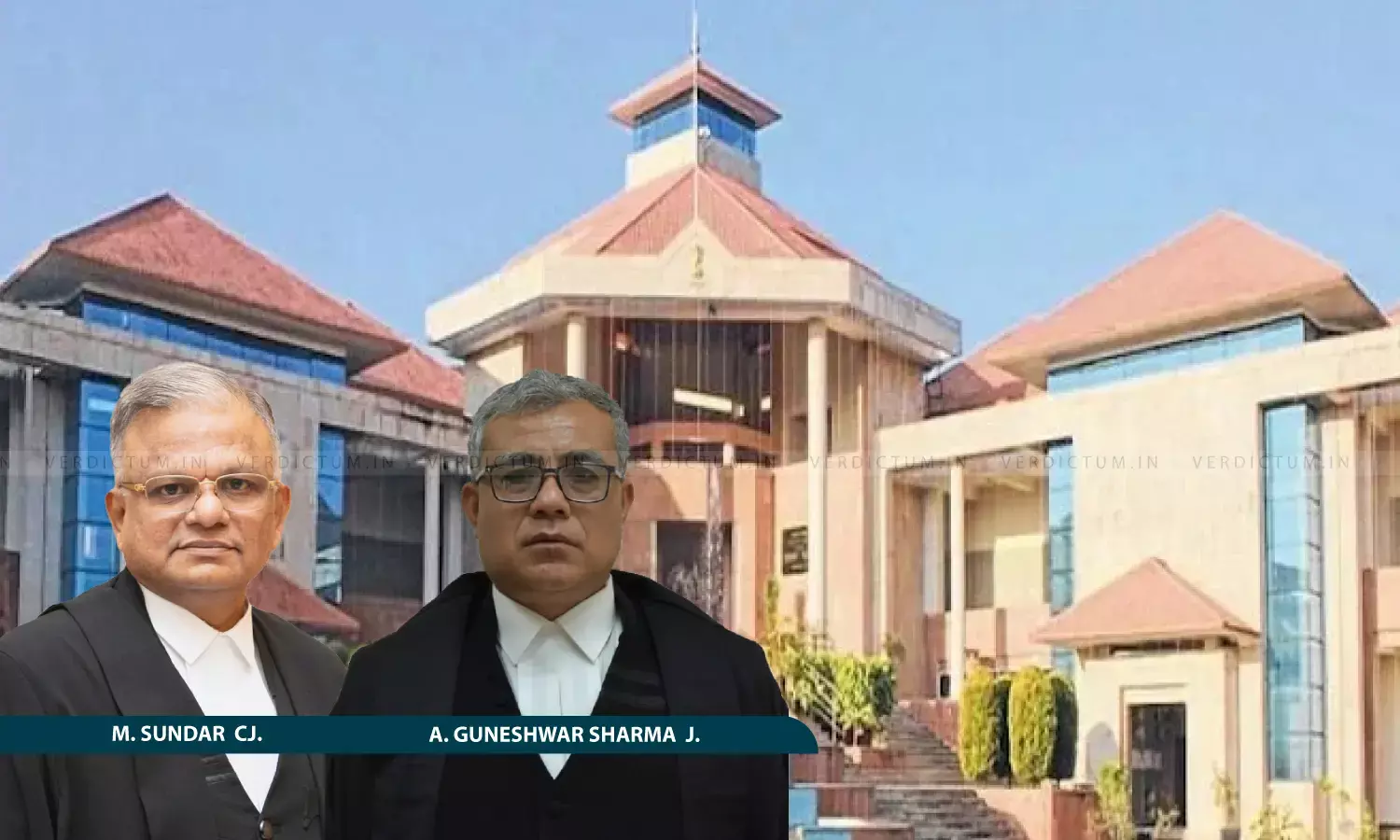
A Division Bench comprising Chief Justice M. Sundar and Justice A. Guneshwar Sharma examined the scope of Section 22 of the Manipur Societies Registration Act, 1989 and observed: “Second appellant (Registrar of Societies, Manipur) certainly has powers to investigate the affairs of a society (MOA in this case) under Section 22 of MSR Act when he/she, on information is of opinion that circumstances suggesting that a society is guilty of mismanagement of affairs has come to light.”
Background
The dispute arose out of the election of office bearers and executive council members of the Manipur Olympic Association. The previous elected council’s tenure had elapsed. Notices were thereafter issued convening an Annual General Meeting and elections.
A member association, the Manipur Judo Association, raised objections before the Registrar of Societies, alleging that elections were being conducted by a council whose term had already expired and that all office bearers had been elected unopposed in circumstances that suggested irregularity.
Pursuant to judicial directions in earlier proceedings, the Registrar issued an order cancelling the notice convening the election and directed that fresh elections be conducted through a process involving the appointment of a Returning Officer and publication in newspapers.
This order was challenged before the Single Bench, which allowed the writ petition on the ground that the Registrar lacked the power to pass such directions.
Aggrieved, the State preferred the present appeal.
Court’s Observations
The Division Bench first examined the scope of Section 22 of the MSR Act and Rule 30 of the Manipur Societies Registration Rules, 2004, extracting both provisions in extenso from the statute.
The Court held that Section 22 empowers the Registrar to order an inquiry when, on information received, circumstances suggest that the society is being mismanaged or is guilty of fraudulent or unlawful acts. In the present case, the allegation that elections were conducted by a council whose tenure had expired and that all office bearers were elected unopposed constituted material that could prima facie justify the formation of such an opinion.
The Court clarified that it was not expressing any opinion on whether mismanagement had actually occurred, but only that the Registrar’s opinion that circumstances warranted inquiry “cannot be found fault with.”
However, the Bench found that the manner in which the Registrar exercised power was contrary to the statutory framework. The Act required the Registrar to appoint an officer to conduct an inquiry, obtain a report, forward it with comments to the State Government, and thereafter the Government could issue directions to remove defects or, in default, direct steps for dissolution.
In the present case, no inquiry officer had been appointed, and the procedural drill under Rule 30 had not been followed. The Court held that the Registrar’s order cancelling the election notice was not in conformity with either Section 22 or Rule 30.
Emphasising adherence to statutory procedure, the Bench invoked the well-established principle laid down in Taylor v. Taylor and reiterated by the Supreme Court, that where a statute prescribes the manner of doing a thing, it must be done in that manner or not at all. The Court observed that when the Registrar exercised power under Section 22, “it ought to have been done in the prescribed manner or not done at all,” especially when the exercise was triggered by judicial direction.
The Bench also rejected the State’s contention that mere awareness of the proceedings by the Government sufficed as compliance with Section 22(5). It held that the statute explicitly required submission of a report with comments and subsequent action by the Government, which could not be substituted by general knowledge of the proceedings.
Conclusion
The Division Bench set aside the finding of the Single Bench that the Registrar lacked power under Section 22. It clarified that while the Registrar does have authority to investigate into the affairs of a society upon forming the requisite opinion, the impugned order was liable to be set aside for non-conformity with the statutory procedure.
The Registrar was directed to conduct a de novo exercise by strictly following Section 22 of the Act and Rule 30 of the Rules. Specific timelines were prescribed for completion of the inquiry, submission of the report, and consequential action by the State Government under Section 22(5).
In the meantime, the Court clarified that the office bearers elected in the impugned election would continue to function, subject to the outcome of the statutory drill. The continuation was directed to avoid leaving the administration of the society in uncertainty.
All questions were expressly left open, and the Registrar was directed to proceed uninfluenced by observations made in the judgment, which were confined to the limited purpose of disposal of the appeal.
The writ appeal was partly allowed.
Cause Title: State of Manipur v. Manipur Olympic Association & Ors.
Appearances
Appellants: M. Rarry, Senior Advocate, Nikita, Advocate
Respondents: N. Ibotombi, Senior Advocate, Leo, Advocate; N. Jotendro, Senior Advocate, Md. Syed Murtaza Ahmed, Advocate
