

No Statutory Time Limit Under NSA To Make A Representation: Manipur High Court Quashes Preventive Detention Order
Court notes detenu misled into believing representation could not be made beyond 3 weeks; failure to forward plea to authorities held unconstitutional.

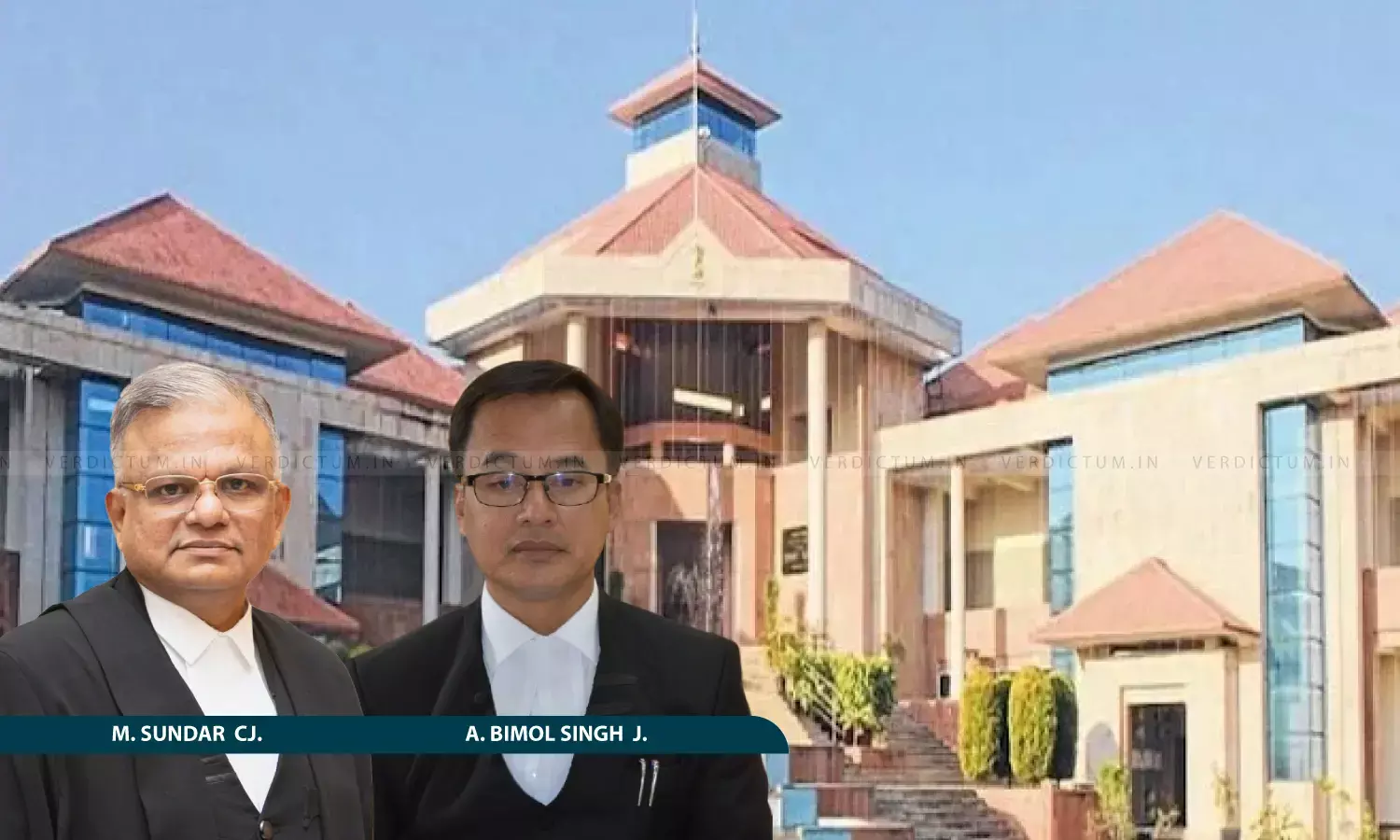
The Manipur High Court has quashed a preventive detention order passed under the National Security Act, 1980 (NSA), considering the argument, and the relevant facts, that the detenu, who had an average educational background, was misled by the time-bound framework indicated in the grounds of detention, thereby impairing his ability to effectively exercise his rights.
The Bench also found fault with the detention order for prescribing specific time limits for making representations. Relying on Premlata Sharma (Smt.) v. District Magistrate, Mathura & Ors. (1998) 4 SCC 260, the Court reiterated that there is no limitation period for a detenu to exercise the right to make a representation, and such right continues as long as the detention subsists. Furthermore, failure of the detaining authority to forward the detenu’s representation to the appropriate authorities resulted in a violation of the constitutional guarantee under Article 22(5) of the Constitution of India, it noted.
Chief Justice M. Sundar and Justice Ahanthem Bimol Singh noting the grounds of detention supplanted to the detenue, observed, “…the detaining authority has fixed time frames for sending representations to the detaining authority, State Government as well as the Central Government. This is the reason why the detenu has sent the 2nd representation i.e., representation dated 08.12.2025 to the Hon'ble Advisory Board. Hon’ble Supreme Court in Premlata Sharma (Smt.) v. District Magistrate, Mathura & Ors.’ reported in (1998) 4 SCC 260 held that there can be no period of limitation regarding exercise of the right of a detenu to make a representation and corresponding obligation of the Central Government to consider the same for deciding upon the question of order of detention as such a right of a detenu and corresponding/axiomatic obligation of State subsists so long as the preventive detention order continues to operate”.
Advocate Ph. Sanajaoba appeared for the petitioner and Phungyo Zingkhai, Deputy Government Advocate, and S. Vijayanand Sharma, Senior Panel Counsel appeared for the respondents.
The writ petition was filed seeking a writ of habeas corpus by the spouse of the detenu, who had initially been arrested in connection with offences under the Unlawful Activities (Prevention) Act, 1967 (UAPA). While he remained in judicial custody, a preventive detention order dated November 17, 2025 was issued against him under the NSA by the District Magistrate, Imphal West.
The principal challenge raised by the petitioner was that the detenu had submitted a representation dated November 26, 2025 to the detaining authority, specifically requesting that copies be forwarded to both the State and Central Governments.
However, this request was not complied with, and the State contended that there was no statutory obligation on the detaining authority to forward such representation, particularly when a specific procedure for submission had already been communicated to the detenu.
The Court, rejecting this contention, relied on the Supreme Court’s judgment in Amir Shad Khan v. L. Hmingliana and Ors. with Aziz Ahmed Khan alias Aziz Mohd. Khan v.. L. Hmingliana and others (1991) 4 SCC 39, which held that refusal to forward a detenu’s representation upon request amounts to a denial of the constitutional right to make an effective representation. The Court observed that such a technical approach is impermissible in matters concerning personal liberty.
Significantly, the Court noted that the detenu’s first representation was never placed before the Advisory Board, which proceeded on the assumption that no representation had been made. This resulted in the detenu losing a valuable right of consideration of his representation under Section 10 of the NSA. The Court held that this omission constituted a clear infraction of both constitutional and statutory safeguards.
The Bench noted, “…This Court had the benefit of perusing the file produced by the learned State counsel and this Court finds that the Hon’ble Advisory Board has proceed on the basis that the detenu has not made any representation. This means that the detenu has lost his valuable constitutional right of having his 1 st representation dated 26.11.2025 considered by the Hon'ble Advisory Board. This is a clear infraction of sacrosanct constitutional right enshrined in Article 22(5) read with sanctified statutory right codified vide Section 10 of NSA”.
Accordingly, the writ petition was allowed, and the Court directed that the detenu be released forthwith, if not required in any other case.
Cause Title: Laishram Nilajit Shija v. The State of Manipur & Ors. W.P. (Crl.) No. 1 of 2026
Appearances:
Petitioner: Ph. Sanajaoba, Advocate.
Respondents: Phungyo Zingkhai, Deputy Government Advocate, S. Vijayanand Sharma, Senior Panel Counsel.