

Video Journalists Are On Front Lines In Combating Misinformation, Must Adhere To High Ethical Standards: Madras High Court In YouTuber Savukku Shankar Case
The Court refused to cancel the interim bail granted to YouTuber-Journalist Savukku Shankar due to his medical conditions.

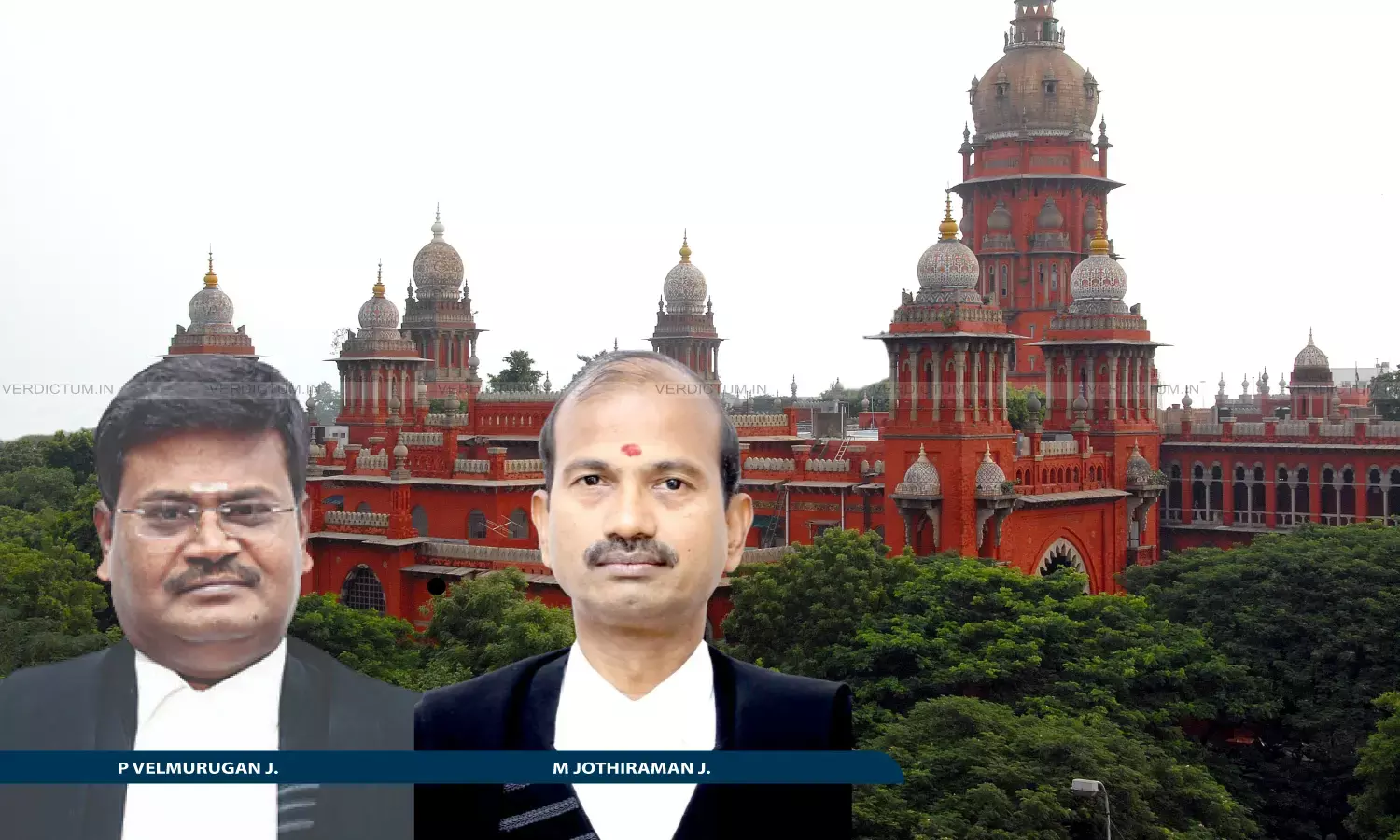
The Madras High Court, while refusing to cancel the interim bail granted to YouTuber-Journalist Shankar@Savukku Shankar, has observed that video journalists must adhere to high ethical standards to maintain public trust and credibility.
The Court made the following observation while hearing the petition seeking cancellation of the interim bail granted to A. Shankar @ Savukku Shankar. The interim bail was granted to Shankar on December 26, 2015.
The Division Bench of Justice P Velmurugan and Justice M Jothiraman observed, “Before parting, this Court wishes to observe that video journalists must adhere to high ethical standards to maintain public trust and credibility. In the digital age, they are on the front lines in combating misinformation and disinformation.”
Additional Public Prosecutor R. Muniapparaj appeared for the Petitioners, while Advocate G. Purushothamman appeared for the Respondents.
Factual Background
Shankar was arrested on December 13, 2025, for the offences punishable under Sections 296(b), 353(1)(c), 308(5), 61(2) and 351(3) of the Bharatiya Nyaya Sanhita, 2023 ("BNS") and was remanded to judicial custody. The Respondent/Mother of the accused approached the Court seeking an interim bail on the grounds that her son was suffering from serious cardiac ailments, diabetes and hypertension and required specialised medical treatment. Taking note of the medical condition projected and considering the repeated curtailment of personal liberty, the Court granted interim bail for a period of twelve weeks, subject to stringent conditions.
Contention of the Parties
The State submitted that, though interim bail was granted exclusively for the purpose of medical treatment, the accused merely visited a private hospital as an outpatient and thereafter actively engaged in publishing numerous videos on YouTube and posts on social media platforms, thereby demonstrating that the medical grounds projected before the Court were exaggerated and misleading.
It was also submitted that the Accused has been threatening and intimidating the complainant and witnesses in the present case through videos and online posts, resulting in several complaints and registration of CSR in different police stations. It was contended that such acts squarely violate the specific condition imposed by the Court restraining the accused from interacting with or intimidating witnesses.
It was also pointed out that the accused failed to inform his place of residence to the Investigating Officer, obstructed the enquiry by forcibly removing a co-accused from the investigation, and has continuously made adverse comments on the merits of the criminal cases, in clear violation of the conditions imposed by the Court.
Observations of the Court
The Court observed, “Condition (IV) of the interim bail order dated 26.12.2025 expressly stipulated that the respondent’s son, shall not interact with any witnesses or attempt to hamper, influence, or tamper with them in the criminal cases. Despite this clear restriction, the submissions of the learned Additional Public Prosecutor demonstrate that this condition has been materially violated. The respondent’s son concealed the mobile phone alleged to have been used to threaten the complainant, provided false information regarding the same after being released on interim bail, and publicly displayed the phone on YouTube and other media. In addition, he forcibly took A3/Nithish Kumar during an ongoing enquiry without the knowledge of the Investigating Officer. These actions obstructed the investigation, intimidated potential witnesses, and clearly constitute a deliberate breach of the interim bail conditions dated 26.12.2025.”
The Court said that though it was contended that the accused is entitled to freedom of speech and expression under Article 19(1)(a) of the Constitution of India, the Court refused to accept the said submission in its absolute form. It said that the right guaranteed under Article 19(1)(a) is subject to reasonable restrictions. When a criminal investigation is pending, and the person making such statements is himself an accused, public commentary on the complaint, the complainant, the investigating agency, or the evidence cannot be claimed as a protected right. Such conduct has the potential to prejudice the investigation, influence witnesses, and obstruct the administration of justice, and therefore falls outside the protective ambit of Article 19(1), the Court noted.
“In the present case, as noted above, the respondent’s son concealed the mobile phone during interrogation, which was alleged to have been used to threaten the complainant, and subsequently displayed the said device publicly on YouTube and other media platforms on the following day, stating, ‘Is it the police who are searching for this?’” Further, during the enquiry, he forcibly took A3/Nithish Kumar in the midst of an ongoing enquiry without the knowledge of the Investigating Officer. These acts clearly obstructed the investigation, had the potential to intimidate witnesses, and amount to a wilful and conscious violation of the interim bail conditions imposed on 26.12.2025, thereby justifying cancellation of the interim bail,” the Court said.
After considering the seriousness of the medical condition of the Accused and the medical records produced, the Court held that the cancellation of bail outright may not be warranted.
“Therefore, while this Court is not inclined to cancel the interim bail at this stage, additional and more explicit restrictions are warranted. Such restrictions are required to ensure that the liberty granted is not misused, that the investigation proceeds unhindered, and that the rights of the complainant and witnesses are adequately protected,” the Court concluded.
Accordingly, the Court disposed of the petition.
Cause Title: The State of Tamil Nadu & Ors. v. A Kamala & Anr. [W.P.M.P (Crl)No.14 of 2026] and other connected matters.
Appearances:
Petitioners: Additional Public Prosecutor R. Muniapparaj and Advocate M. Sylvester John
Respondents: Advocate G. Purushothamman