

Sabarimala Pilgrimage Must Follow ‘Carrying Capacity’ Principle: Kerala High Court Upholds Daily Cap of 75,000 Devotees & Digital Queue System
The Bench noted that as per the data consolidated during the Mandala–Makaravilakku Season 2025–2026, a total of 78,68,272 devotees visited Sabarimala.

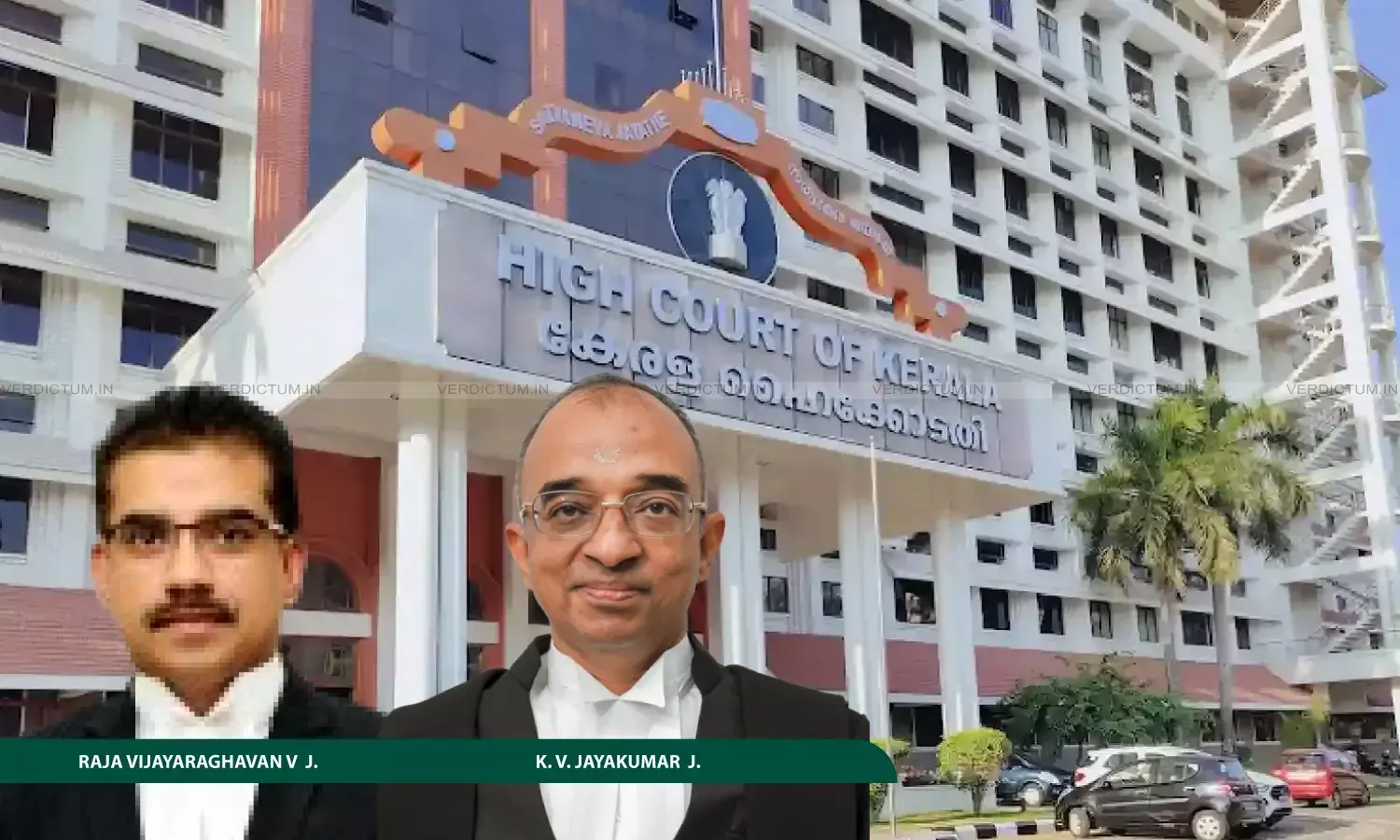
The Kerala High Court has mandated a sharp shift towards digital infrastructure, by upholding Travancore Devaswom Board’s decision for capped entry system to manage the 2026-27 Mandala-Makaravilakku season. This includes a daily ceiling of 75,000 pilgrims and the deployment of a professionalised "Virtual Queue" system equipped with real-time updates and financial safeguards to prevent speculative bookings.
Further, noted that the administration of large-scale religious pilgrimages must be anchored in the scientific principle of "carrying capacity", ensuring that devotee inflow does not exceed the structural and environmental limits of the shrine. The Court observed that without a rational nexus between available amenities and the number of pilgrims, the management of such congregations remains vulnerable to operational failures.
A Division Bench comprising Justice Raja Vijayaraghavan V. and Justice K. V. Jayakumar while monitoring the preparedness for the upcoming pilgrimage seasons at the Sabarimala Sannidhanam, observed, “…It has been emphasised that the number of devotees permitted to enter the sanctum sanctorum must have a rational nexus with the number who can be safely accommodated for darshan without compromising on safety, order, or dignity. On this basis, and taking into account the existing infrastructure and logistical constraints, the Board has arrived at a considered conclusion that the maximum number of devotees permitted per day—from Pamba to Sannidhanam and from Nilakkal to Pamba—should be restricted to 75,000. This determination appears to be an attempt to strike a balance between facilitating pilgrimage and ensuring safety and manageability”.
G. Biju, Standing Counsel, Travancore Devaswom Board; and Nagraj Narayanan, Special Government Pleader appeared for the respondents.
The matter originated from a suo motu proceeding initiated following the 2025-26 season, which saw an unprecedented surge of 78.68 lakh devotees. This massive influx resulted in significant bottlenecks, straining the resources of the Travancore Devaswom Board and the police.
The Bench noted that the lack of a coordinated long-term plan had led to intermittent crises in crowd control, sanitation, and transport, necessitating a judicial intervention to establish a permanent regulatory roadmap.
The Court had earlier directed the Travancore Devaswom Board (TDB) and the State Government to submit a comprehensive "Vision Document". The current order follows the evaluation of this document and the reports submitted by the Chief Police Coordinator. The Court sought to consolidate various proposals into a time-bound judicial mandate to ensure that the infrastructure projects and digital trials do not suffer from administrative delays.
It was noted that the physical space at Sannidhanam and the trekking paths from Pamba are finite and cannot be infinitely expanded. The Bench reasoned that crowd management is a science involving "Green, Amber, and Red" density zones, and therefore, the inflow must be regulated at the base camps itself. It further held that the adoption of modern technology, such as AI-based surveillance and RFID tracking, is no longer optional but essential for real-time disaster mitigation in the ecologically sensitive Western Ghats.
“…This figure, by itself, underscores the magnitude of the challenge faced in managing the pilgrimage. The Board has rightly recognised that the amenities and facilities available for devotees are not limitless, but are measurable and finite, and must therefore be aligned with realistic carrying capacity…”, the Bench, thus, noted.
“The existing Virtual Queue system is to be upgraded to a highly professional platform with real-time updates and cancellation options. We are of the view that a nominal, fixed, refundable security deposit be introduced for each reservation slot. This amount will be refunded upon arrival within the allotted time window or adjusted against prasadam of equivalent value. If the devotee fails to arrive within the scheduled window, the booking amount may be forfeited, which would act as a deterrent against speculative bookings, slot-blocking, and last-minute crowd surges. This is required to improve the predictability of inflow and reduce peak-hour pressure in the holy shrine, which is located in the heart of the Periyar Tiger Reserve”, the Bench noted further.
The operative directions of the Court include the immediate constitution of a multidisciplinary Expert Committee and the appointment of an All-India Service officer as a dedicated Sabarimala ADM.
The Court fixed a hard deadline of April 30, 2026, for the completion of all civil work tenders, and October 2026 for the completion of all infrastructural and digital trials. Furthermore, the TDB was directed to operationalise a new Festival Office at Pamba by mid-April and implement a "Sabarimala Festival Budget" to ensure financial transparency and accountability.
Cause Title: Suo Motu v. State of Kerala & Ors. [WP(C) NO. 8529 OF 2026]
Appearances:
Respondents: Government Pleader for the State; G. Biju, Standing Counsel for Travancore Devaswom Board; Sri. Nagraj Narayanan, Special Government Pleader (Forest), Chitra Chandrasekharan, Standing Counsel, George Johny, Standing Counsel, B Premod, Standing Counsel, T Naveen, Standing Counsel, Deepu Thankan, Standing Counsel.