Delay In Lodging FIR In POCSO Cases Where Possibility Of False Implication Exists Must Be Closely Scrutinised: Kerala High Court
The High Court held that although delay in lodging an FIR in sexual offence cases is generally treated as inconsequential owing to social stigma and concern for the victim’s future, this principle is not absolute.
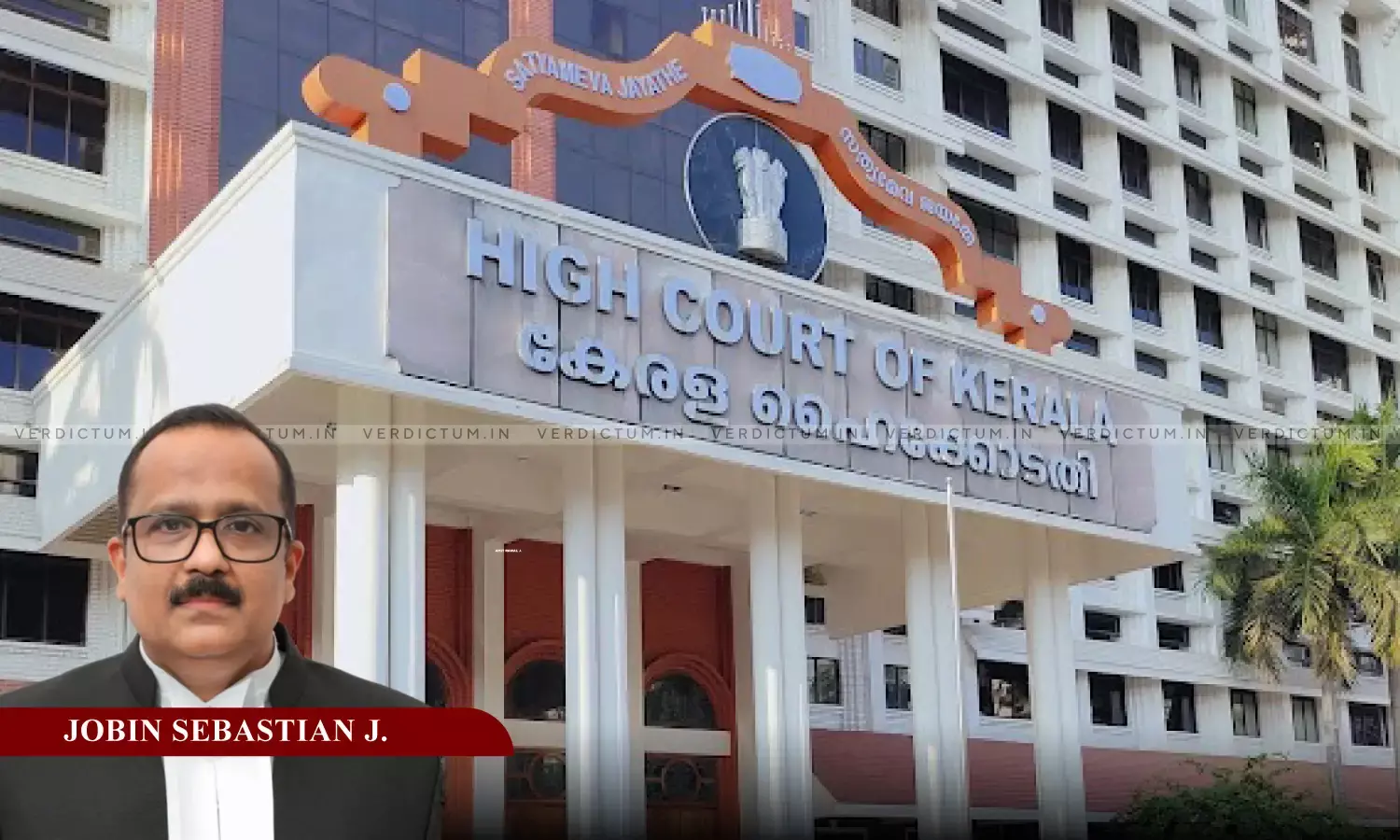
Justice Jobin Sebastian, Kerala High Court
The Kerala High Court has held that Courts must not mechanically disregard delay in registration of an FIR in sexual offence cases and must examine such delay with greater care where circumstances suggest that the allegation may require closer scrutiny.
The Court was hearing a bail application arising out of proceedings under the Protection of Children from Sexual Offences Act, 2012, wherein the prosecution complaint had been lodged after a considerable lapse of time.
A Single Judge Bench of Justice Jobin Sebastian, while considering the scope of judicial scrutiny at the stage of bail, observed that although the “delay in lodging an FIR in sexual offence cases is often of little consequence as the social stigma and the victim's future often weigh heavily on the minds of parents”, further remarked that “this principle is not absolute”.
Advocate Nireesh Mathew represented the petitioner, while U. Jayakrishnan, Public Prosecutor, appeared on behalf of the respondents.
Background
The bail application arose from criminal proceedings instituted after a substantial delay from the alleged occurrence. The accused had been taken into custody and approached the High Court seeking bail after completion of the investigation and submission of the final report before the jurisdictional court.
One of the principal submissions advanced on behalf of the petitioner was that the delay in lodging the FIR was not satisfactorily explained and that the surrounding circumstances warranted closer scrutiny at the stage of bail.
Court’s Observation
The High Court first reiterated the settled legal position that delay in lodging an FIR in sexual offence cases does not, by itself, vitiate the prosecution case, as hesitation in reporting such offences may arise due to social stigma, trauma, and concern for the victim’s future.
However, the Court underscored that this principle is not absolute. Integrating the controlling legal test, the Bench observed that “where there is a discernible possibility of false implication, such a delay must be scrutinised closely.”
The Court examined the material placed on record solely for the limited purpose of assessing whether continued incarceration of the accused was warranted, and therefore noted that the petitioner had produced material which, at a prima facie level, indicated the existence of circumstances that could not be ignored altogether at the bail stage.
The Bench, however, clarified that it was not embarking upon an appreciation of evidence or adjudicating on the merits of the prosecution case, and that the genuineness and probative value of the material relied upon by the petitioner could only be conclusively determined during trial.
The Court further took note of the stage of the proceedings, observing that the investigation had been completed and the final report had already been filed, and accordingly held that continued custody of the petitioner would not serve any further investigative purpose.
The Bench also remarked that concerns relating to the safety of the victim and the possibility of influencing witnesses could be addressed by imposing appropriate and stringent conditions while granting bail.
Conclusion
Having regard to the unexplained delay, the material placed on record at the bail stage, the completion of the investigation, and the nature of the proceedings, the Court found it appropriate to enlarge the petitioner on bail, subject to stringent conditions. The bail application was accordingly allowed.
Cause Title: Sreenath K.S. v. State of Kerala & Anr. (Neutral Citation: 2025:KER:98919)
Appearances
Petitioner: Advocates Nireesh Mathew, Vivek Venugopal, Babu Jose, Gajendra Singh Rajpurohit and Athul Poulose
Respondents: U. Jayakrishnan, Public Prosecutor; Advocates Prabha R. Menon and Arun Samuel