

Kerala High Court Directs Railway Claims Tribunals To Annex Details Of Witnesses And Exhibits To Its Judgments
The High Court, while exercising supervisory jurisdiction under Article 227 of the Constitution, directed the Registry of the Railway Claims Tribunal to annex details of witnesses examined and documents marked in evidence to all its judgments.
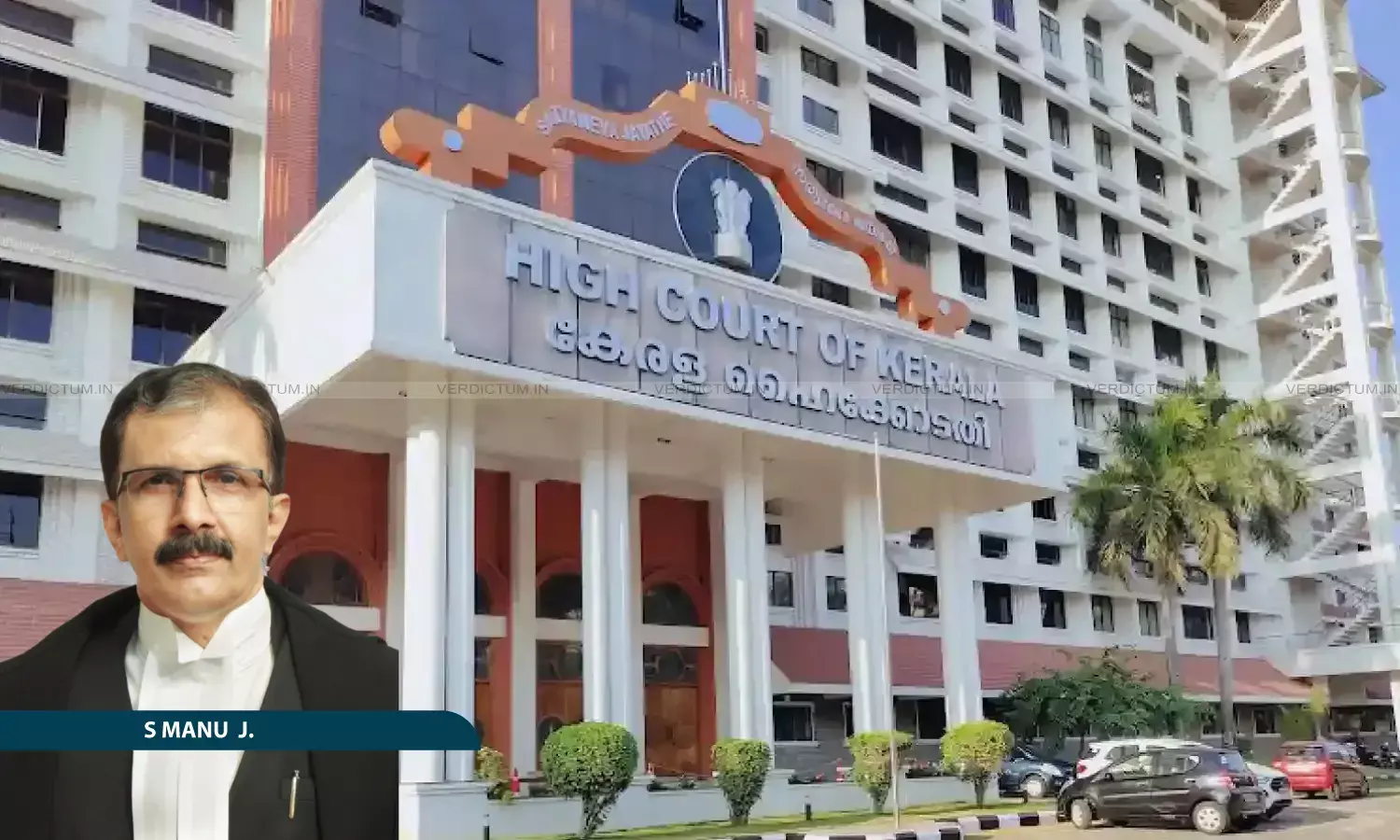
Justice S. Manu, Kerala High Court
The Kerala High Court has issued directions to the Railway Claims Tribunal, Ernakulam Bench, mandating that all judgments of the Tribunal must be accompanied by appendices detailing the witnesses examined and documents filed and marked in evidence.
The High Court held that such procedural clarity is “desirable” to ensure transparency, consistency, and meaningful appellate review.
The Court was hearing an appeal arising from the dismissal of a compensation claim by the Railway Claims Tribunal, Ernakulam Bench, under the Railways Act, 1989.
A Bench of Justice S Manu took note that the copies of the judgments of the Tribunal are issued without any attachment showing the details of witnesses examined and documents marked and held: “…in exercise of the supervisory jurisdiction of this Court under Article 227 of the Constitution of India, the Registry of the Railway Claims Tribunal, Ernakulam Bench is directed to annex details of the witnesses examined and documents filed and marked by the parties and also the other documents marked by the court in evidence if any, to all its judgments”.
Background
The appellant had approached the Railway Claims Tribunal seeking compensation for grievous injuries sustained while travelling as a passenger on a train. The Tribunal dismissed the claim, holding that the injuries were self-inflicted and thus excluded from the category of ‘untoward incidents’.
Aggrieved, the appellant preferred an appeal before the Kerala High Court, challenging both the factual findings and the procedural approach adopted by the Tribunal.
Court’s Observation
While examining the appeal, the Kerala High Court found procedural irregularities in the manner in which the Railway Claims Tribunal had recorded and presented evidence. The Court noted that affidavits filed instead of the chief examination were improperly marked as documentary exhibits, contrary to the Railway Claims Tribunal (Procedure) Rules, 1989.
The Court observed that affidavits constitute oral evidence under Rule 14 and cannot be treated as documents under Rule 15-C. The Court further observed that judgments of the Tribunal were being issued without annexures or appendices specifying the list of witnesses examined and the documents marked in evidence.
This, according to the Court, made it difficult for appellate courts to ascertain whether the evidence relied upon had been duly proved and marked, and in some cases resulted in references to materials not formally brought on record.
The High Court noted that while the Railway Claims Tribunal Rules do not expressly mandate such appendices, similar requirements exist under the Criminal Rules of Practice and Civil Rules of Practice in Kerala. The Court also referred to earlier judicial directions requiring other tribunals to incorporate appendices for effective judicial review.
Accordingly, the Court directed that, henceforth, all judgments of the Railway Claims Tribunal, Ernakulam Bench, must annex details of witnesses examined, documents filed and marked by the parties, and any other exhibits marked by the Tribunal itself. The Registry of the Tribunal was directed to communicate this order to the Registrar of the Tribunal for compliance
Conclusion
The High Court disposed of the appeal by setting aside the Tribunal’s order on the merits and awarding compensation to the appellant. In addition, invoking its supervisory jurisdiction, the Court issued systemic directions to the Railway Claims Tribunal to ensure procedural transparency by annexing proper appendices to its judgments.
Cause Title: Sidharth K. Bhattathiri v. Union of India (Neutral Citation: 2025:KER:98490)
Appearances
Appellant: Adhil P., Muhammed Ibrahim Abdul Samad, Shabeer Ali Mohamed, Advocates
Respondent: A.R. Gangadas, Senior Panel Counsel
