

No Proof Of Service Attribution: Kerala High Court Dismisses Ex-Serviceman’s Plea For Disability Pension For Anxiety Disorder
The petitioner was denied disability pension as his neurosis/anxiety disorder.
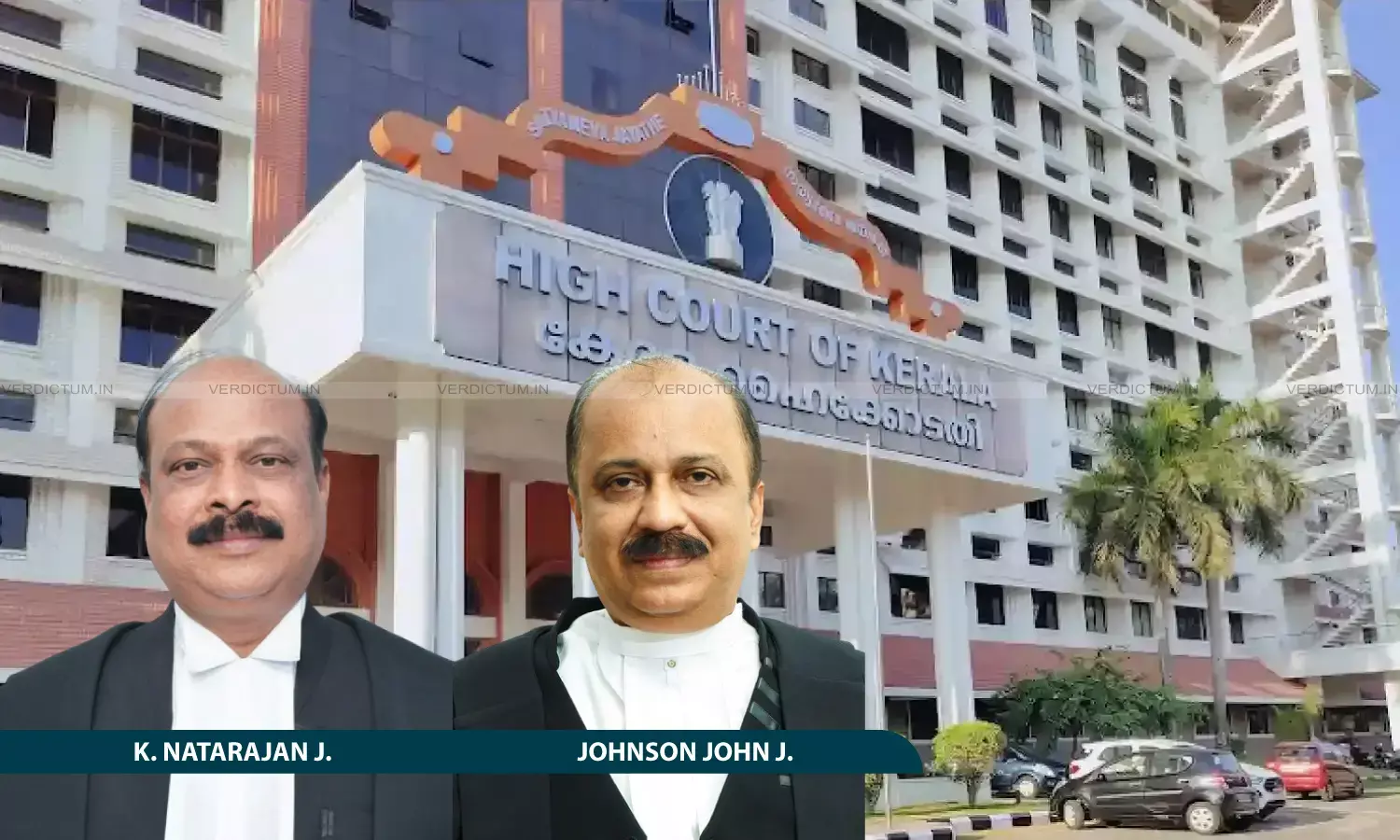
The Kerala High Court dismissed a writ petition filed by an ex-serviceman challenging the denial of disability pension for “Generalised Anxiety Disorder”, holding that there was no material to show that the disability was attributable to or aggravated by military service.
Petitioner had approached the Court after the Armed Forces Tribunal (AFT) dismissed his Original Application.
A Division Bench of Justice K. Natarajan and Justice Johnson John held, “In the absence of any material to indicate that the disability assessed by the Invaliding Medical Board or in the Re-assessment Medical Board is attributable to or aggravated by military service, it cannot be held that there is any denial of fundamental right or jurisdictional error or error apparent on the face of the record warranting interference under Article 226 of the Constitution of India. In view of the opinion expressed by the medical experts in the initial Medical Board assessment and the Re assessment Medical Board, we find that the writ petitioner is not entitled to derive the benefit of the presumptions on the basis of Rules 5, 9 and 14 of the Entitlement Rules (supra) and therefore, we find that this writ petition is liable to be dismissed.”
Advocate V.K. Sathyanathan appeared for the Petitioner and Advocate .R. Ajith Kumar appeared for the Respondents.
The petitioner had been enrolled in the Army in 1969 and was invalided out of service in 1976 due to low medical category. The Invaliding Medical Board assessed him with “Neurosis (300-b)” to the extent of 30% for two years and opined that the disability was neither attributable to nor aggravated by military service. On that basis, disability pension was denied.
Earlier, the petitioner had challenged the denial before the AFT which was dismissed with the Tribunal observing that it was open to him to seek re-assessment by a Medical Board. Subsequently, a Re-assessment Medical Board assessed him with “Generalised Anxiety Disorder” at 40% lifelong. However, his claim for disability pension was again rejected as the Re-assessment Medical Board did not record that the disability was attributable to or aggravated by military service.
Before the High Court, the petitioner relied on Rules 5, 9 and 14 of the Entitlement Rules for Casualty Pensionary Awards, 1982, contending that a presumption arises that deterioration in health is due to military service.
The Court noted that the Release Medical Board and the Re-assessment Medical Board had diagnosed different medical conditions and that the re-assessment was conducted after a lapse of about 39 years from the date of discharge. The Bench observed that the Re-assessment Medical Board report showed domestic stressors and post-service employment, and did not indicate that the disability was attributable to or aggravated by military service.
Referring to the Supreme Court’s decision in Union of India v. Parashotam Dass (2025), the Court held that interference under Article 226 of the Constitution is warranted only where there is denial of fundamental rights, jurisdictional error, or error apparent on the face of the record. In the absence of any such infirmity, and in view of the medical opinions on record, the Court held that the petitioner was not entitled to the benefit of presumptions under the Entitlement Rules.
Accordingly, the writ petition was dismissed.
Cause Title: Rajendran P. v. Union of India & Ors., [2026:KER:9080]
Appearance:
Petitioner: Advocates V.K. Sathyanathan, Vinod K.C.
Respondents: Advocate P.R. Ajith Kumar
