

Squarely Within Government’s Policy-Making Realm: Kerala High Court Dismisses Appeal Of Seasonal Workers Seeking Parity With Regular Workers
The Kerala High Court was considering the appeal of the seasonal workers of a sugar company who sought parity with regular employees,

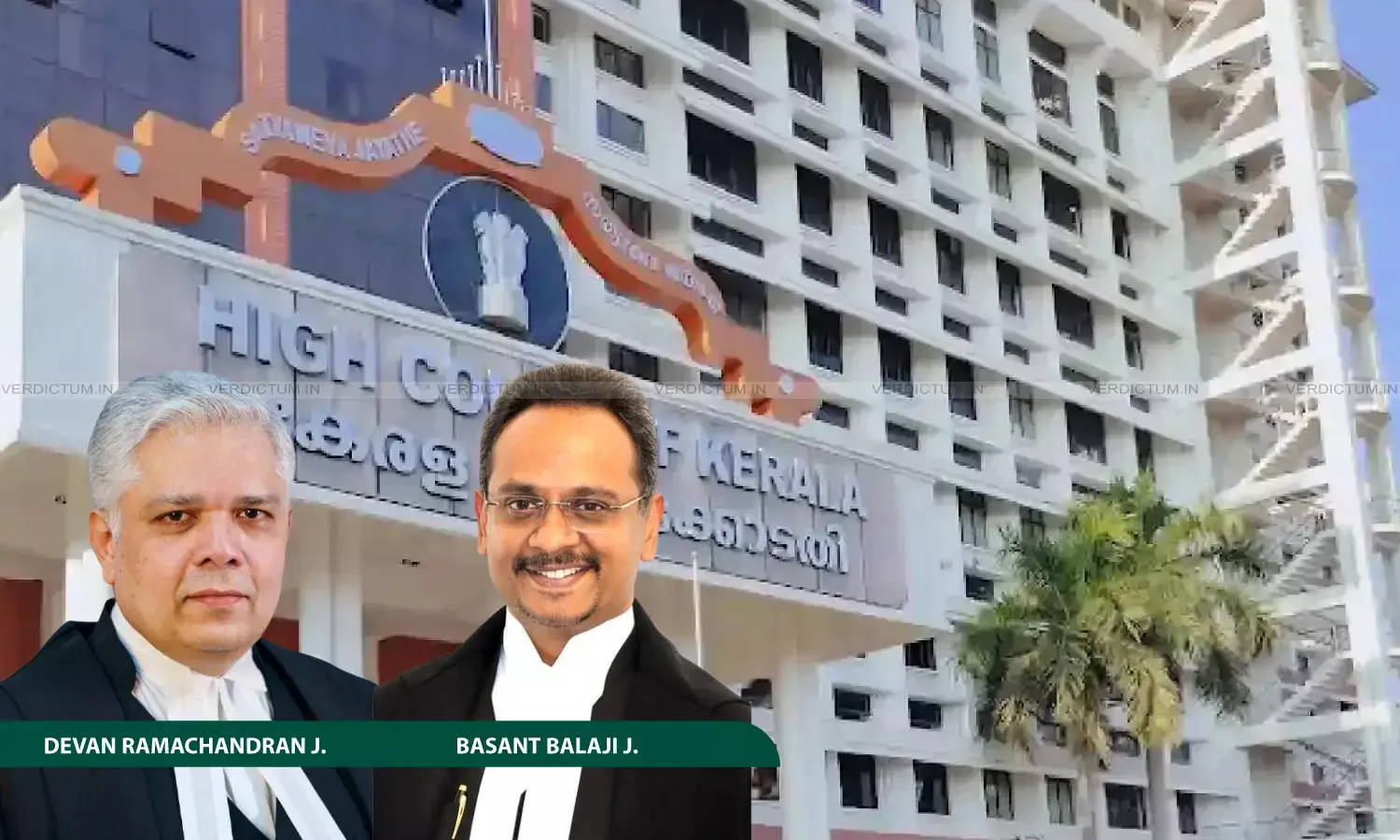
While dismissing the appeal of the seasonal workers of a sugar company who sought parity with regular employees, the Kerala High Court held that when the Government had decided to hold that such workers cannot be equated with regular employees, the Court cannot intervene while acting under Article 226 of the Constitution.
The High Court also affirmed the view of the Single Bench that the matter fell squarely within the policy-making realm of the Government.
The Division Bench of Justice Devan Ramachandran and Justice Basant Balaji held, “When the Government has taken the decision based on all relevant facts to hold that the appellants cannot be equated with regular employees, there is hardly anything this Court can, while acting under Article 226 of the Constitution of India, intervene into, or do, going by the well-recognized constraints of jurisdiction.”
“We are afraid that we cannot enter into the merits of the same since, as rightly found by the learned Single Judge, this is squarely within the policy-making realm of the Government”, it added.
Advocate P.R.Venkatesh represented the Appellant, while Senior Advocate K. Anand represented the Respondent.
Factual Background
The appellants conceded that they were working as ‘seasonal workers’ in the services of the third respondent – Co-operative Sugars Ltd. and were offered a Voluntary Retirement Scheme (VRS), under a program called Social Safety Net Program (SSNP), propounded by the Government of Kerala. Their grievance was that in the SSNP and VRS under it, they were treated on par only with ‘badalis’ by the Government, though they had been recommended to be equated as regular employees by the Company, as early as in the year 2005. The appellants approached the Government for modification of the terms of VRS, but the same was rejected through an order dated January 15, 2014, which constrained them to approach the Single Judge through the Writ Petition. The Single Bench had approved the stand of the Government.
Reasoning
The Bench noted that the appellants sought that their terms under the VRS be modified, treating them on par with regular employees. The Bench found that the Government appeared to have considered the claim of the appellants, to find that they were only ‘seasonal workers’, called to work during the ‘crushing seasons’, which was less than six months. The contraassertion of the appellants was that, though they are ‘seasonal workers’, required only during the afore-mentioned season, they were expected to be available 24 hours because they did not know when sugar cane would arrive for them to commence duty.
“It is thus luculent that even the appellants do not have a case that they are regular employees, but only seek a benefit with the latter category, on the assertion that they were expected to be available in service 24 hours a day. This assertion, however, has not been established, particularly when both the 3rd respondent and the Government take a contrary view”, it stated.
The Bench also noticed that in the year 2005, the Managing Director of the respondent Company had recorded that the company had requested the Government to treat the appellants and others on par with the regular employees but there was nothing to show that these recommendations were accepted by the Government at any point of time and the appellants also did not have a case that they had litigated for such benefit thereafter.
The Bench held that it cannot enter into the merits of the same and intervene under Article 226 when the Government had already taken a decision.
Thus, considering the aforesaid aspects, the Bench dismissed the appeal.
Cause Title: P. Sahadevan v. State Of Kerala (Neutral Citation: 2026:KER:27593)
Appearance
Appellant: Advocate P.R.Venkatesh
Respondent: Senior Advocate K. Anand, Advocates Latha Anand, S. Vishnu (Arikkattil), Government Pleader Anil Kumar Kuriakose