Right To Appoint Temple Staff Integral To Management Of Religious Affairs: Kerala High Court Declares Section 9 KDRB Act Unconstitutional
The High Court held that the right to appoint officers and employees is an integral facet of the right of a religious denomination to manage its own affairs under Article 26 of the Constitution of India, and consequently declared the power conferred on the Kerala Devaswom Recruitment Board to conduct appointments for the Guruvayoor Devaswom as unconstitutional.
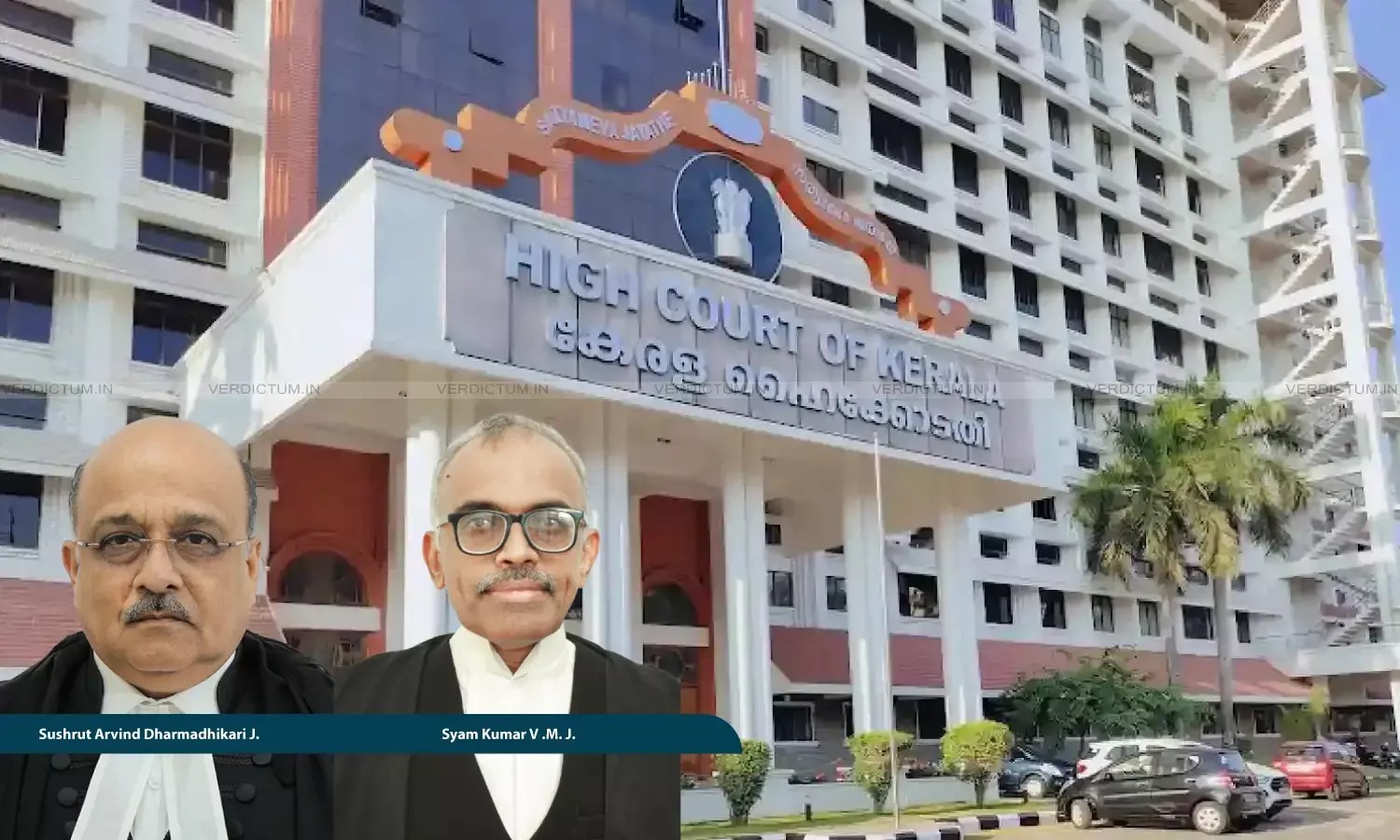
Kerala High Court, Justice Sushrut Arvind Dharmadhikari and Justice Syam Kumar V.M
The Kerala High Court held that the right to appoint staff forms an essential component of the Right to manage religious affairs under Article 26 of the Constitution of India, and declared that the Kerala Devaswom Recruitment Board has no authority to conduct selection or appointment processes for posts under the Guruvayoor Devaswom.
The Court was hearing a writ appeal challenging the dismissal of a writ petition which had questioned the constitutional validity of Section 9 of the Kerala Devaswom Recruitment Board Act, 2015, insofar as it empowered the Recruitment Board to prepare select lists for appointments to posts under the Guruvayoor Devaswom.
A Division Bench comprising Justice Sushrut Arvind Dharmadhikari and Justice Syam Kumar V.M., while stating that “the right to appoint staff is integral to the right to manage religious affairs under Article 26 of the Constitution of India”, declared that “Section 9 of the KDRB Act is unconstitutional and shall be inoperative”.
The appellants were represented by Senior Advocate K. Jaju Babu, while the respondents were represented by KP Harish, Senior Government Pleader.
Background
The writ petition before the Single Judge had assailed Section 9(1) of the Kerala Devaswom Recruitment Board Act, 2015, which authorises the Kerala Devaswom Recruitment Board to conduct selection and prepare rank lists for appointment to various posts in Devaswoms, including the Guruvayoor Devaswom.
The petitioners contended that the Guruvayoor Devaswom Managing Committee is the sole representative body of the religious denomination and that the power to appoint officers and employees is an essential part of the management and administration of the temple, protected under Articles 25 and 26 of the Constitution of India.
The Single Judge dismissed the writ petition at the threshold, relying on an earlier decision, while leaving the constitutional validity of Section 9 of the Act open. Aggrieved by the dismissal, the petitioners preferred the present writ appeal.
Court’s Observation
The Division Bench of the Kerala High Court examined the statutory framework governing the Guruvayoor Devaswom and traced the constitutional history relating to its administration. It noted that the earlier Guruvayoor Devaswom Act, 1971, had been struck down by a Full Bench of the High Court on the ground that it violated Articles 25 and 26 by vesting effective control over the temple, including appointments, in a body dominated by Government nominees.
Following the said judgment, the Guruvayoor Devaswom Act, 1978, was enacted with Presidential assent, expressly restoring the power of appointment of officers and employees to the Guruvayoor Devaswom Managing Committee. The Court observed that the 1978 Act consciously corrected the constitutional infirmities identified earlier by vesting such powers in the denominational representative body.
The Bench noted that Section 9 of the Kerala Devaswom Recruitment Board Act, 2015, empowered the Recruitment Board to prepare select lists for appointments across Devaswoms, notwithstanding anything contained in any other law. Applying this provision to the Guruvayoor Devaswom, the Court held, would effectively divest the Managing Committee of a core function essential to the administration of religious affairs.
The Court reiterated that the right to manage religious affairs under Article 26 of the Constitution included the appointment of staff, particularly those associated with temple administration and religious functions, while further stating that “vesting the power of appointment in a body separate from the denominational representative, i.e., the Guruvayoor Devaswom Managing Committee (GDMC), violates Article 26 of the Constitution of India.”
The Bench further held that the presence of a non obstante clause in Section 9 of the KDRB Act could not override the special statutory scheme under the Guruvayoor Devaswom Act, 1978, which had received Presidential assent. A later general enactment, the Court held, could not dilute or abrogate the autonomy statutorily and constitutionally conferred on the Guruvayoor Devaswom.
Accordingly, the Court concluded that Section 9 of the Kerala Devaswom Recruitment Board Act, 2015, insofar as it empowered the Recruitment Board to conduct selection and appointment processes for posts under the Guruvayoor Devaswom, was unconstitutional and inoperative.
Conclusion
Allowing the writ appeal, the Kerala High Court set aside the judgment of the Single Judge and declared Section 9 of the Kerala Devaswom Recruitment Board Act, 2015, as unconstitutional to the extent it applied to the Guruvayoor Devaswom.
The Court directed that henceforth, the Kerala Devaswom Recruitment Board shall not conduct any selection or appointment proceedings for posts under the Guruvayoor Devaswom.
The Court further directed that all future appointments shall be carried out strictly in accordance with the provisions of the Guruvayoor Devaswom Act, 1978. Selection processes initiated by the Recruitment Board in respect of Guruvayoor Devaswom posts were quashed, while appointments already made were left undisturbed.
With a view to manage the transition and to avoid administrative difficulties, the Kerala High Court also constituted an independent committee to ensure a free, fair, and transparent selection process to supervise and oversee the recruitment process undertaken in accordance with Section 19 of the Act of 1978, for a period of one year.
The writ appeal was accordingly allowed on these terms, and all Interlocutory Applications as regards interim matters were closed.
Cause Title: Guruvayur Devasom Employees Union Congress And Others v. State of Kerala And Others (Neutral Citation: 2026:KER:801)
Appearances
Appellants: K. Jaju Babu, Senior Advocate, with Advocates Brijesh Mohan, Sachin Ramesh, Manikantan S. Kandathil, Smt. Aishwarya Satheesan and Smt. Sreelakshmi S.N.
Respondents: K.P. Harish, Senior Government Pleader; T.K. Vipindas, Standing Counsel; V.V. Nandagopal Nambiar, Standing Counsel