

Not Necessary To Specify Exact Quantity Of Contraband In Grounds Of Arrest: Kerala High Court Denies Bail To NDPS Accused
The application before the Kerala High Court was filed by the applicant under Section 483 of the Bharatiya Nagarik Suraksha Sanhita, 2023 (BNSS), seeking regular bail.

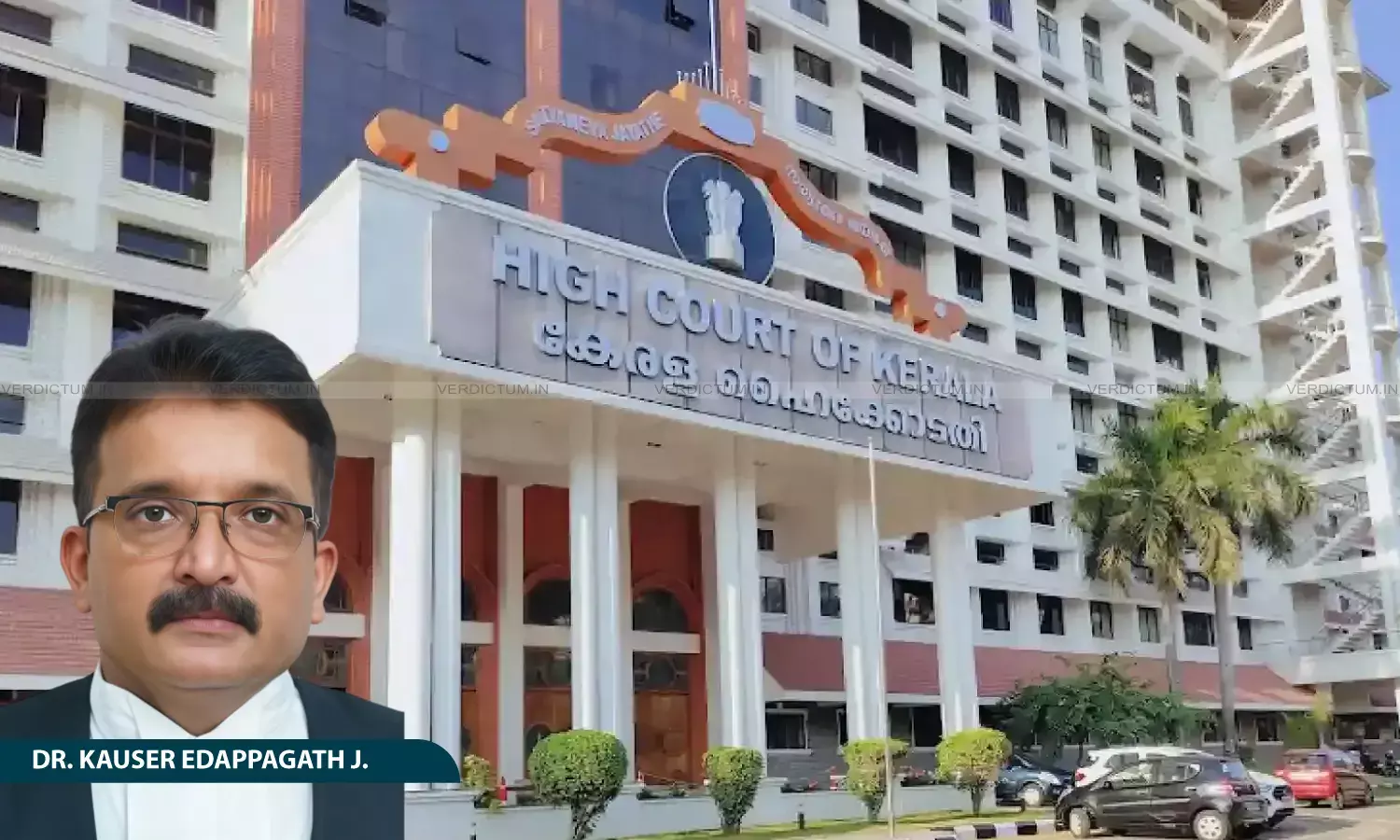
While dismissing a bail application of an accused in an NDPS case, the Kerala High Court has held that if the grounds for arrest state that the quantity seized is an intermediate or commercial quantity, that suffices to comply with Sections 47 and 48 of BNSS, even if the exact quantity is not specified.
The application before the High Court was filed by the applicant under Section 483 of the Bharatiya Nagarik Suraksha Sanhita, 2023 (BNSS), seeking regular bail in a case registered under Section 22(c) of the Narcotic Drugs and Psychotropic Substances Act, 1985.
The Single Bench of Justice Kauser Edappagath held, “Therefore, if the grounds for arrest state that the quantity seized is an intermediate or commercial quantity, that suffices to comply with Sections 47 and 48 of BNSS, even if the exact quantity is not specified. Thus, there has been proper communication of the grounds of arrest to the applicant and his relative.”
Advocate P. Mohamed Sabah represented the Applicant while Senior Public Prosecutor Sreeja V. represented the Respondent.
Factual Background
The applicant was found in possession of 194.99 grams of MDMA on a road near Kovoor Cochin Bakery.
Argument
It was the case of the applicant that the requirement of informing the arrested person of the grounds of arrest is mandatory under Article 22(1) of the Constitution and Section 47 of the BNSS, but the applicant was not furnished with such grounds. The applicant thus submitted that his arrest was illegal and he was liable to be released on bail.
Reasoning
The Bench took note of the fact that the applicant was arrested on January 8, 2026, and since then, he had been in judicial custody. Reference was made to Section 47 of BNSS, which states that every police officer or other person arresting any person without a warrant should communicate to him full particulars of the offence for which he is arrested or other grounds for such arrest.
Dealing with the aspect of failure to communicate the written grounds of arrest, the Bench referred to the judgment of the Apex Court in Pankaj Bansal v. Union of India and Others (2024) and Prabir Purkayastha v. State (2024), wherein it has been held that the requirement of informing a person of the written grounds of arrest in writing is a mandatory requirement under Article 22(1) of the Constitution and Section 47 of the BNSS and absence of the same would render the arrest illegal.
On reviewing the case diary, which contained notices served on the applicant and his relative under Sections 47 and 48 of BNSS, the Bench held that these notices showed that specific grounds and reasons for arrest were communicated to both the applicant and his relative.
It was argued that although separate grounds for arrest were provided to each, there was no mention of the quantity of contraband seized from the applicant. On this, the Bench clarified that although the notices did not specify the quantity seized, it was explicitly stated that a commercial quantity was seized. As per the Bench, this was sufficient compliance with Sections 47 and 48 of BNSS, even if the exact quantity was not specified.
The Bench thus dismissed the bail application.
Cause Title: Arun Kumar. P v. State Of Kerala (Neutral Citation: 2026:KER:24697)
Appearance
Applicants: Advocates P. Mohamed Sabah, Libin Stanley, Saipooja, Sadik Ismayil, R.Gayathri, M.Mahin Hamza, Alwin Joseph, Benson Ambrose
Respondent: Senior Public Prosecutor Sreeja V.