

Advocates Can’t Blackmail Clients & Stall Legal Proceedings To Settle Fee Disputes: Kerala High Court
The Court remarked that the legal profession is nobel however, nobility is determined by the persons adorning the black robes.

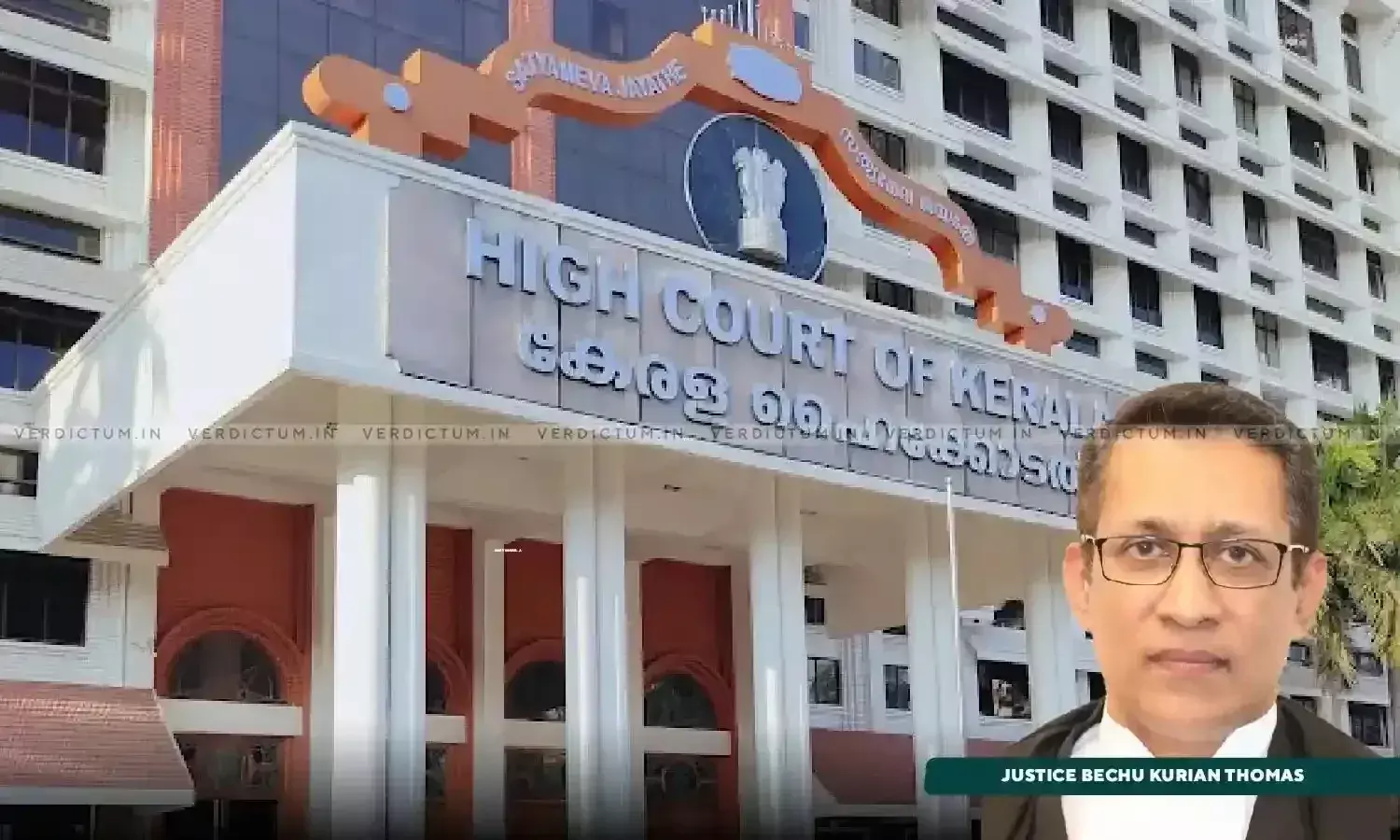
The Kerala High Court held that a legal practitioner has no right to halt or navigate judicial proceedings to recover unpaid professional fees.
The Court dismissed a writ petition filed by two advocates who sought to stay an execution petition until their fee claims were settled, terming their actions an affront to the nobility of the profession.
The Court emphasized that while advocates deserve fair compensation, they cannot "blackmail" clients or hold case files hostage, as the relationship between a lawyer and a litigant is a fiduciary one built on utmost trust.
Following the dismissal, the Court imposed exemplary costs of ₹50,000 on the petitioners for stalling the disbursement of a land acquisition award to rightful claimants for nearly ten months.
The Bench of Justice Bechu Kurian Thomas observed, “Be that as it may, even if it is assumed, without upholding it, that petitioners are correct about the unpaid fee, still, an Advocate has no right to halt the legal proceedings until his claim for fee is settled. The Advocate cannot demand that he be permanently engaged in a litigation by the litigant till its culmination. An Advocate is only a person representing his client. He does not step into the shoes of the client. If in case any fee is due to an Advocate, and if the client refuses to pay, his remedy is to initiate appropriate legal remedies.”
Advocate Roy Pallikoodam appeared for the Petitioners, while Advocate Shyni Das J.S. appeared for the Respondents.
The Petitioners, who were practising Advocates, alleged that they had represented the fourth and fifth Respondents (the Claimants) in a land acquisition matter since 2004. After an award was passed in favour of the Claimants, an execution petition was filed. The Petitioners claimed that a dispute arose regarding professional fees after the State deposited the first instalment of the compensation. They further alleged that the Claimants "fraudulently" engaged new Advocates (Respondents 1 and 2) without obtaining a No Objection Certificate (NOC) from the Petitioners.
The Claimants, in their counter-affidavit, contended that they had already paid over Rs. 25,00,000/- to the first Petitioner. They alleged that the Petitioner began demanding an additional Rs. 1 Crore and harassed them, threatening to stall the case unless the payment was made. Consequently, having lost confidence in their counsel, they approached the Executing Court, filed an affidavit explaining the circumstances, and engaged new counsel with the Court's permission.
The Court observed, “A pernicious conduct of a member of the legal profession, attempting to stall a decree holder from enjoying the fruits of a decree, until his claim for legal fees is settled, has been, unabashedly brought up for determination before this Court under Article 226 of the Constitution of India. The circumstances pleaded in the writ petition, reveal disconcerting instances for the whole legal fraternity, as an Advocate who had earlier appeared for a decree holder, is attempting to halt the progress of the execution petition, alleging non payment of fees.”
The Court said that the facts of the case revealed an unpleasant situation of an Advocate attempting to stall the execution proceedings pursuant to an award in a land acquisition reference alleging non-payment of his fees. It said that the dispute relating to non-payment of fees to an Advocate by a private litigant has to be agitated before a competent civil court in accordance with law. Such a claim cannot be agitated under Article 226 of the Constitution of India.
“There is a disconcerting situation that has been brought out in this case, which needs mention. The legal profession is undoubtedly a noble profession. Its nobility is however determined by the persons adorning the black robes. If the members of the legal profession conduct themselves in a manner prejudicial to the interests of their clients, the facade of nobility will be torn. The profession can ill afford that”, the Court observed.
The Court observed that the legal profession is a noble one, underpinned by a fiduciary relationship of utmost trust. It was noted that while an Advocate is entitled to fair remuneration for their skill and effort, they cannot "blackmail" a litigant or hold legal proceedings hostage to recover fees.
The Court placed reliance on the Bar Council of India Rules, specifically Rules 28 and 29, which allow an Advocate to deduct settled fees only from money already in their possession at the time of termination.
It added, “There cannot, under any circumstances whatsoever, be a situation where the litigant is pushed to a corner or blackmailed into paying the fee demanded by the Advocate. Even worse is the situation when the Advocate, after termination of his engagement, attempts to stall the very proceeding in which he was appearing on behalf of the litigant. Such conduct is an affront to the very nobility of the profession and has to be dealt with a stern hand.”
The Court dismissed the writ petition and imposed a cost of Rs. 50,000/-.
Cause Title: Mary Help John David J & Anr. v. JV Anoop and Ors. [Neutral Citation: 2026:KER:31575]
Appearances:
Petitioners: Advocate Roy Pallikoodam, Advocate R. Prasanth Kumar, Advocate R. Kalesh, Advocate K. K. Murukesan, Advocate P. Jayaprakash (Alappuzha), Advocate Jayaprakash Narayanan, Advocate Moosakutty V.S., Advocate Rajan K.
Respondents: Advocate Shyni Das J.S., Advocate M. U. Vijayalakshmi, Advocate Appu Ajith.