

Presence Of Employees At Factory Gate Satisfies "Public View" U/S 3 SC/ST Act: Karnataka High Court Refuses To Quash FIR
Court refuses to quash proceedings against factory owners; holds that power to quash must be exercised sparingly where a prima facie case of caste-based abuse at a workplace is established.

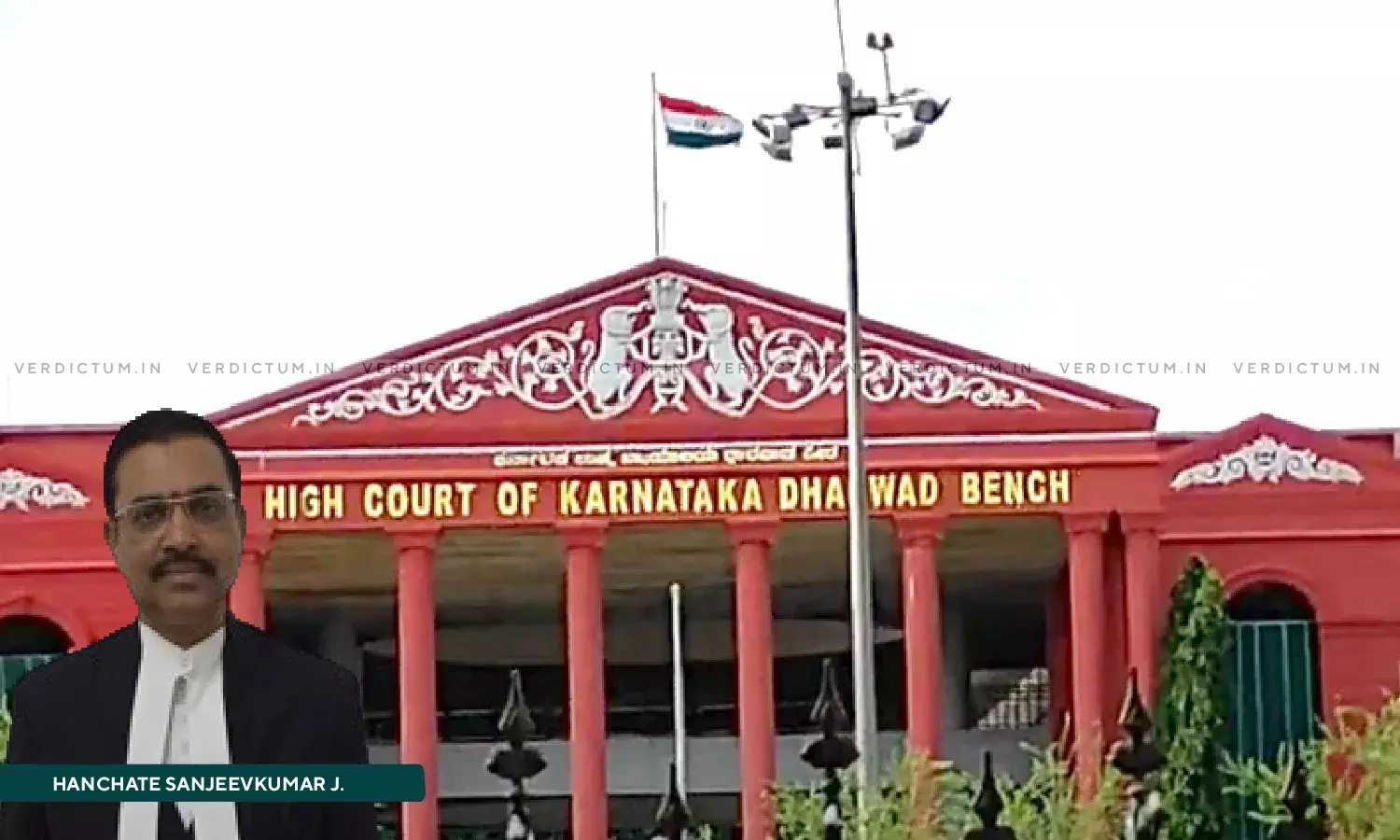
The Karnataka High Court has held that the presence of employee or staff during an incident of caste-based abuse satisfies the requirement of the offense occurring in a "place within public view" under Section 3 of the Scheduled Castes and the Scheduled Tribes (Prevention of Atrocities) Act, 1989. The Court said that the term "public view" is distinct from a "public place", and even a private premises like a factory gate becomes a place within public view if the utterances can be heard or witnessed by members of the public who are not merely relatives or friends of the parties.
Furthermore, the Court held that a significant delay in filing a complaint, six months in the instant matter was not a per se ground to quash an FIR when the victim is a vulnerable employee. The Bench observed that a "poor workman" might not be in a position to immediately confront their employers due to a genuine fear of termination and the subsequent loss of livelihood. Such surrounding circumstances must be evaluated during the trial rather than at the preliminary stage of quashing proceedings.
Justice Hanchate Sanjeevkumar observed, “…The dispatch section and its door are accessible to employees working in the factory and are not isolated places; therefore, the said place is easily accessible and amenable for employees for ingress and egress. Hence, when the alleged incident took place at the said place, it was easily amenable to public view. Public view does not necessity mean public view by any passer by public but if employees are at that place such employees are also to be considered as members of public. Therefore, this prima facie case is made out…”.
Advocate Shridhar Prabhu appeared for the petitioner and Abhishek Malipatil, HCGP appeared for the respondent.
As per the facts, the complainant, a workman with 20 years of service at Swims Technology Private Limited, alleged that on June 2, 2024, the factory owners (Petitioners-Accused Nos. 1 to 3) arrived at the dispatch section gate.
It was alleged that the owners pressured the complainant and another tribal workman to file a false complaint against a third party. Upon their refusal, the owners allegedly abused them using derogatory caste-based slurs and threatened them with dismissal in the presence of others.
Subsequently, an FIR was registered on October 29, 2024, nearly six months after the alleged incident, under Sections 504 and 506 IPC and Sections 3(1)(r) and 3(1)(s) of the SC/ST Act. The petitioners approached the High Court under Section 482 of the CrPC seeking to quash the proceedings, contending that the complaint was a malicious afterthought triggered by an ongoing trade union dispute.
The Court noted that the power to quash an FIR must be exercised with extreme caution and only in the "rarest of rare cases". It noted that if the complainant intended to file a false case, he would have likely fabricated a more recent date to avoid the delay.
“…the complainant being a poor workman might not have been in a position to face the petitioners/accused Nos.1 to 3, who are the owners of the factory and if a complaint had been lodged at that moment, there would have been chances of termination from the employment. Under these circumstances, the complainant would have been deprived of his livelihood...If the complainant had intended to manipulate the things, he could have mentioned dates prior one or two days prior to the date of lodging the complaint dated 29.10.2024, but that is not found. Hence, prima facie the date of occurrence of the incident appears to have been mentioned promptly. Thus, the delay in lodging the complaint considering the facts and circumstances surrounding the incidents cannot be made a ground to quash the proceedings”.
“…There may be industrial dispute, but upon perusal of the complaint averments extracted above, there is not even a whisper that the complaint has been lodged in the background of pending industrial dispute. Raising an industrial dispute is different; it is done collectively by all the employees in the factory. Therefore, merely because an employee, being a member of trade union, who incidentally happens to belong to the SC/ST community, lodges a complaint as in the present case alleging that an offence has been committed by abusing him with reference to caste, is not a ground to connect this case with industrial dispute cases”, it noted further.
The Court, accordingly, on finding that a prima facie case for trial was established, dismissed the criminal petition. It directed that the investigation should proceed in accordance with the law and that the delay and allegations of mala fide intentions remain subjects for the trial court to determine.
Cause Title: Shyam Mehta & Ors. v. State of Karnataka & Anr. [Neutral Citation: 2026:KHC-D:4997]
Appearances:
Petitioners: Shridhar Prabhu, Advocate.
Respondents: Abhishek Malipatil, HCGP, Rajneet M. Pawar, Advocate.