

Mutt As Legal Representative Entitled To Motor Accident Compensation For Death Of Mathadipati: Karnataka High Court
The Court held that dependency under motor accident law extends beyond familial relationships and includes institutional dependency where the deceased’s services and position enure to the benefit of a religious institution.
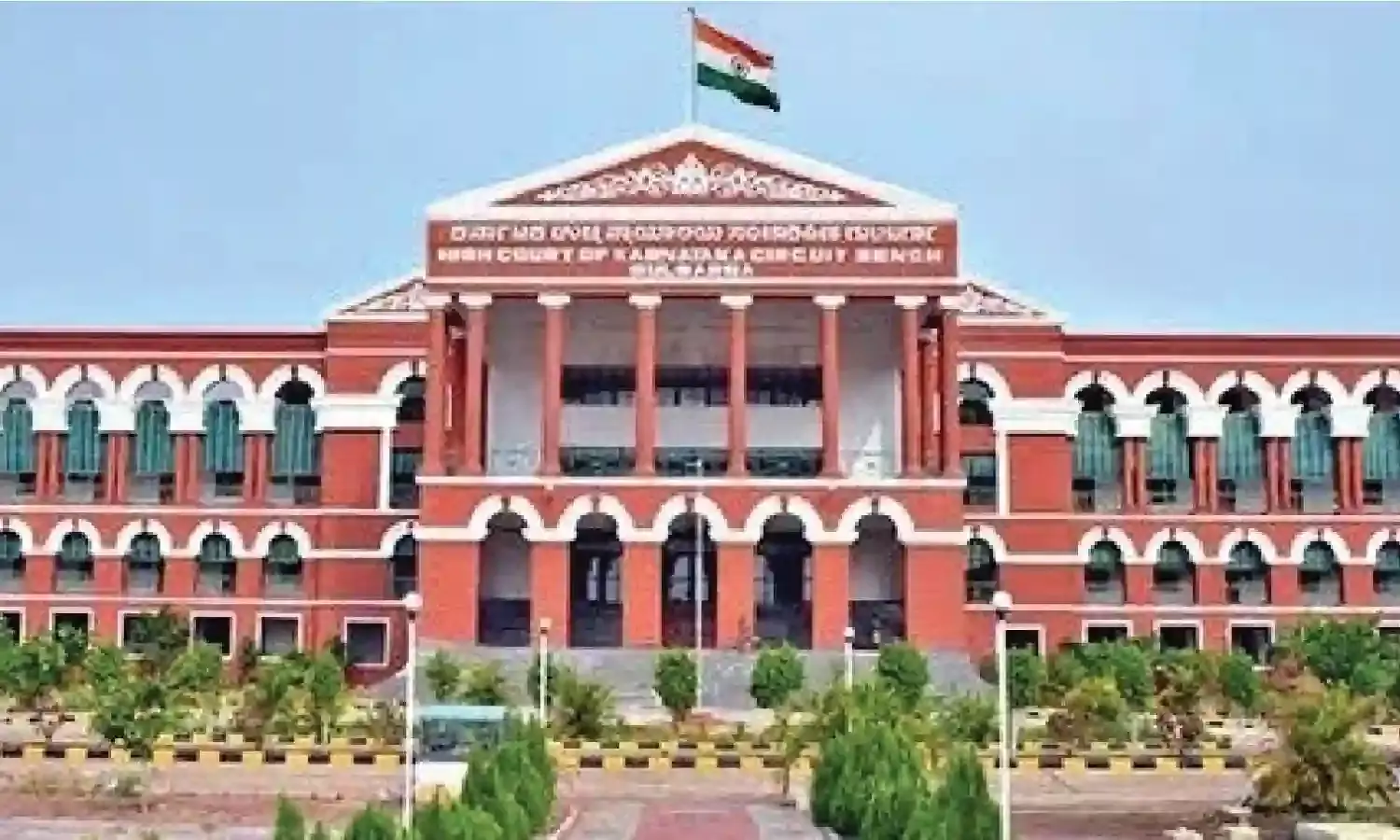
The Karnataka High Court held that a Mutt, represented through its functionary, qualifies as a “legal representative” and is entitled to claim compensation for loss of dependency upon the death of a Mathadipati in a motor accident.
The Court clarified that dependency in compensation jurisprudence is not confined to biological or familial ties, but extends to institutional and economic dependency.
The Court was hearing a Miscellaneous First Appeal challenging the judgment of the Motor Accident Claims Tribunal, which had denied compensation under the head of loss of dependency to the Mutt on the ground that an ascetic has no dependants.
A Division Bench of Justice Suraj Govindaraj and Justice Tyagaraja N. Inavally while stating that “the offerings, income, and benefits associated with the position are not appropriated for personal gain but accrue to the Mutt as a religious and juristic institution and he Mathadipati, therefore, acts not in his individual capacity but as a custodian and representative of the institution”, further held: “the economic relationship is inverted from the conventional model. Instead of the individual supporting dependants, it is the institution that derives benefit from the individual’s position, services, and spiritual authority. The dependency, therefore, is institution-centric, and the loss occasioned by the death of the Mathadipati is borne by the institution in terms of disruption of leadership, administration, and continuity of its activities”.
Advocate Krupa Sagar Patil appeared for the appellant, while Advocate Preeti Patil Melkundi represented the Insurance Company.
Background
The case arose from a motor accident in 2011, resulting in the death of a Mathadipati associated with Bale Honnur Shrimad Rambapur Virsinhasan Mutt. The claim petition was filed before the Tribunal by a representative of the Mutt seeking compensation, including under the head of loss of dependency.
The Tribunal, while awarding compensation towards loss of estate and funeral expenses, denied compensation for loss of dependency. It held that since the deceased was an ascetic who had severed ties with his family, there could be no dependency.
Aggrieved, the claimant approached the High Court, contending that the Mutt had suffered a loss due to the deprivation of the services of its spiritual and administrative head.
Court’s Observation
The High Court framed the central issue as “whether the Mutt or the Successor of the Mathadipati would be a legal representative… entitling the Mutt for compensation on account of loss of dependency.”
At the outset, the Court found the Tribunal’s reasoning to be fundamentally flawed. It clarified that renunciation by a Mathadipati pertains to personal ownership and material pursuits, and does not imply total disassociation from all forms of dependency or institutional relationships.
Relying on the Supreme Court’s decision in Montford Brothers of St. Gabriel v. United India Insurance Co. (2014), the Court reiterated that the expression “legal representative” must be interpreted broadly and purposively. It includes not only legal heirs but all persons or entities representing the estate or interest of the deceased.
The Court, while highlighting that “the expression ‘legal representative’ is of wide amplitude and includes not only legal heirs but also those who represent the estate of the deceased or on whom the estate devolves”, further observed that “the religious institution—being the recipient of the fruits of his labour and service, would stand in the position of a legal representative and would be entitled to claim compensation”.
Expanding on this principle, the Court held that when a person dedicates their life to a religious institution and devoted himself to a religious order, “the institution to which he belongs cannot be said to be a stranger to his estate or earnings, if such earnings or services enure to the benefit of the institution”.
The Court further elaborated that the concept of dependency must be understood in a functional and economic sense. In the case of a Mathadipati, the economic relationship is reversed—rather than the individual supporting dependants, it is the institution that depends upon the individual’s role and services.
The Court held that “in such circumstances, the religious institution— being the recipient of the fruits of his labour and service, would stand in the position of a legal representative and would be entitled to claim compensation.”
“The compensation, if awarded, would not enure to the benefit of any natural person, including the successor Swamiji, who is likewise an ascetic and bound by similar renunciatory principles; the benefit would vest in the Mutt as a continuing religious entity”, the Bench added.
The Court concluded that the “error of the Tribunal lies in equating dependency exclusively with familial dependency and overlooking institutional dependency”, while clarifying that “the expression ‘Legal Representative’ must be interpreted in a manner that advances the object of compensation law, namely, to provide restitution for loss caused by death”.
Conclusion
The High Court held that the Mutt is a legal representative of the deceased Mathadipati and is entitled to claim compensation, including under the head of loss of dependency.
Accordingly, the impugned judgment of the Tribunal was modified. The Court recalculated compensation by adopting notional income, applying the appropriate multiplier, and granting compensation under the head of loss of dependency.
The appeal was partly allowed, and enhanced compensation with interest was awarded.
Cause Title: S.B. Shivamurthy Shivachary Hiremutt v. Shabir Ahamed & Ors. (Neutral Citation: 2026:KHC-K:2871-DB)
