

Constitution Does Not Mandate Child To Invariably Bear Father’s Surname: Karnataka High Court
The High Court held that the Constitution does not mandate that a child must bear the father’s surname, observing that dignity, autonomy, and identity form intrinsic components of Article 21 of the Constitution of India.
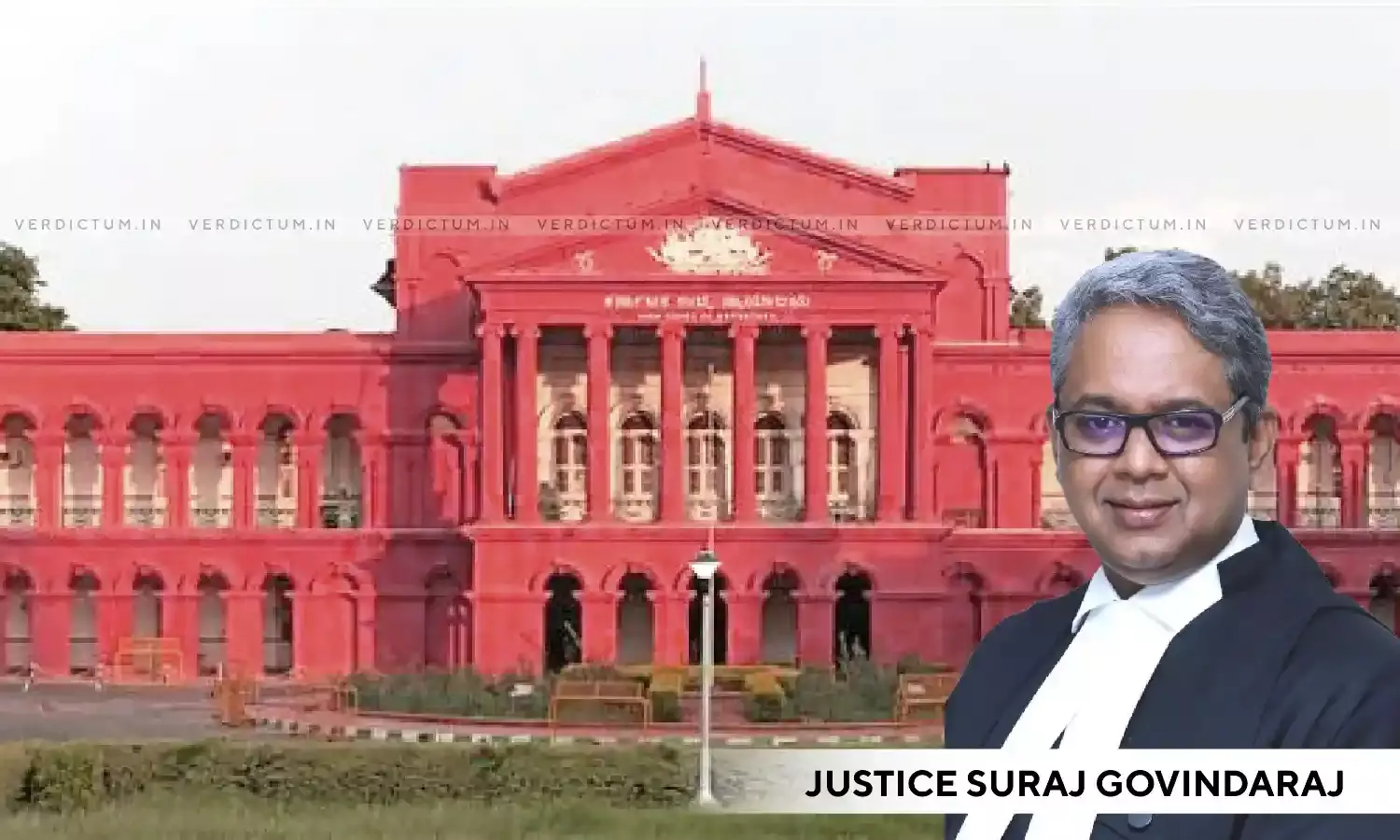
The Karnataka High Court has observed that identity is not frozen by tradition and that there is no constitutional compulsion requiring a child to invariably carry the paternal surname, while emphasising that personal identity falls within the protective ambit of Article 21.
The Court further held that recognition of maternal lineage in a child’s name does not, by itself, affect substantive legal rights.
The Court was hearing a writ petition seeking a direction to the Chief Registrar, Births and Deaths, Bengaluru, to change the name of a minor child in her birth certificate and issue a fresh certificate reflecting the revised name.
A Bench of Justice Suraj Govindaraj, while answering the issues framed for determination, observed: “dignity, autonomy, and identity are intrinsic components of Article 21 of the Constitution. Identity is not frozen by tradition, ...The Constitution does not mandate that a child must invariably bear the father’s surname”.
Background
The minor child was born in Bengaluru, and a birth certificate was issued recording her name and reflecting the biological father’s name. After the relationship between the parents ended and the father ceased contact, the mother applied to the Registrar seeking a change of the child’s name to incorporate the maternal derivative and family name. The application was accompanied by supporting documents and an affidavit stating that no third-party rights would be affected.
An endorsement was issued stating that the authorities did not possess the power to effect such a correction. A legal notice was issued but remained unacted upon, leading to the filing of the writ petition under Articles 226 and 227 of the Constitution.
Counsel for the petitioners submitted that the minor child was born out of a live-in relationship and that the father had subsequently expressed unwillingness to continue the relationship and had ceased participation in the child’s upbringing. It was contended that the child was being raised solely by the mother and maternal family, and that the proposed change sought only incorporation of the maternal derivative and family name, without deletion of the father’s name from the birth certificate.
The respondents contended that the Registrar lacked power to effect such a substantive change, arguing that the Registration of Births and Deaths Act, 1969, contemplated correction only of errors or omissions in the original entry and not alterations based on subsequent personal circumstances.
Court’s Observations
On the first issue, the Court examined the scheme of the Registration of Births and Deaths Act, 1969, particularly Section 22, which empowers the Registrar to correct entries that are “erroneous in form or substance.” The Court held that the provision is broad enough to encompass corrections of substance and that the Registrar had adopted an unduly restrictive interpretation in refusing to exercise power.
The Court further held that even assuming any limitation in statutory power, the High Court under Article 226 possesses wide authority to issue appropriate directions in the interest of justice, particularly where a minor’s rights are involved.
On the second issue, the Court underscored that a surname does not determine legal entitlements. It was observed that rights of maintenance, inheritance, and succession arise from the legal relationship of parent and child, which remained intact as the father’s name continued to be recorded in the birth certificate. The Court categorically stated, “Therefore, the change of surname does not affect substantive legal rights.”
The Court elaborated that “a surname is a social identifier. It signifies lineage or familial association but does not, by itself, create or extinguish legal rights. Rights relating to maintenance, inheritance, guardianship, or succession arise from the existence of a legally cognisable parent-child relationship”.
On the issue of the best interest of the child, the Court invoked the principle embodied in Article 3 of the UN Convention on the Rights of the Child and reiterated that the child’s welfare is paramount. It was observed that where the child was being raised exclusively in the maternal family environment, alignment of the recorded name with lived reality would promote dignity and psychological well-being.
The Court emphasised that the correction sought was administrative and representational in nature and did not adjudicate substantive rights. It clarified that the biological and legal relationship between the child and father remained unaffected, including rights relating to maintenance and succession.
Conclusion
Allowing the writ petition, the Court issued a writ of mandamus directing the Chief Registrar to change the minor’s name in the birth certificate as sought and to issue a fresh certificate upon payment of prescribed fees.
The Court directed that an indemnity deed be furnished before issuance of the fresh certificate and clarified that the order would not extinguish any rights of the child vis-à-vis the biological father under any law.
Cause Title: Ms Priancy Saru Magar v. Chief Registrar, Births and Deaths, Bengaluru (Neutral Citation: 2026:KHC:9735)
Appearances
Petitioners: Thangminlal Haokip, Advocate
Respondents: Pawan Kumar, Advocate
