

Government Not To Transfer Officials Without Providing Posting: Karnataka High Court Issues Directions To Regulate Transfer Practice
The High Court held that transferring an officer without assigning a posting leads to compulsory waiting at public expense and directed the State to ensure that no officer is transferred without a posting and that outstanding salary during such waiting periods be recovered from the responsible authorities.
The Karnataka High Court has held that the State must not transfer an officer or official without simultaneously providing a posting, observing that such transfers result in compulsory waiting periods during which public funds are expended without extracting work.
The Court further issued a structured set of directions to regulate transfer practices, including safeguards against relieving officers without postings and requiring recovery of salary paid during compulsory waiting periods from responsible authorities.
The Court was hearing a writ petition challenging an order of the Administrative Tribunal, which had declined to interfere with a transfer notification replacing the petitioner with another officer without assigning him a posting.
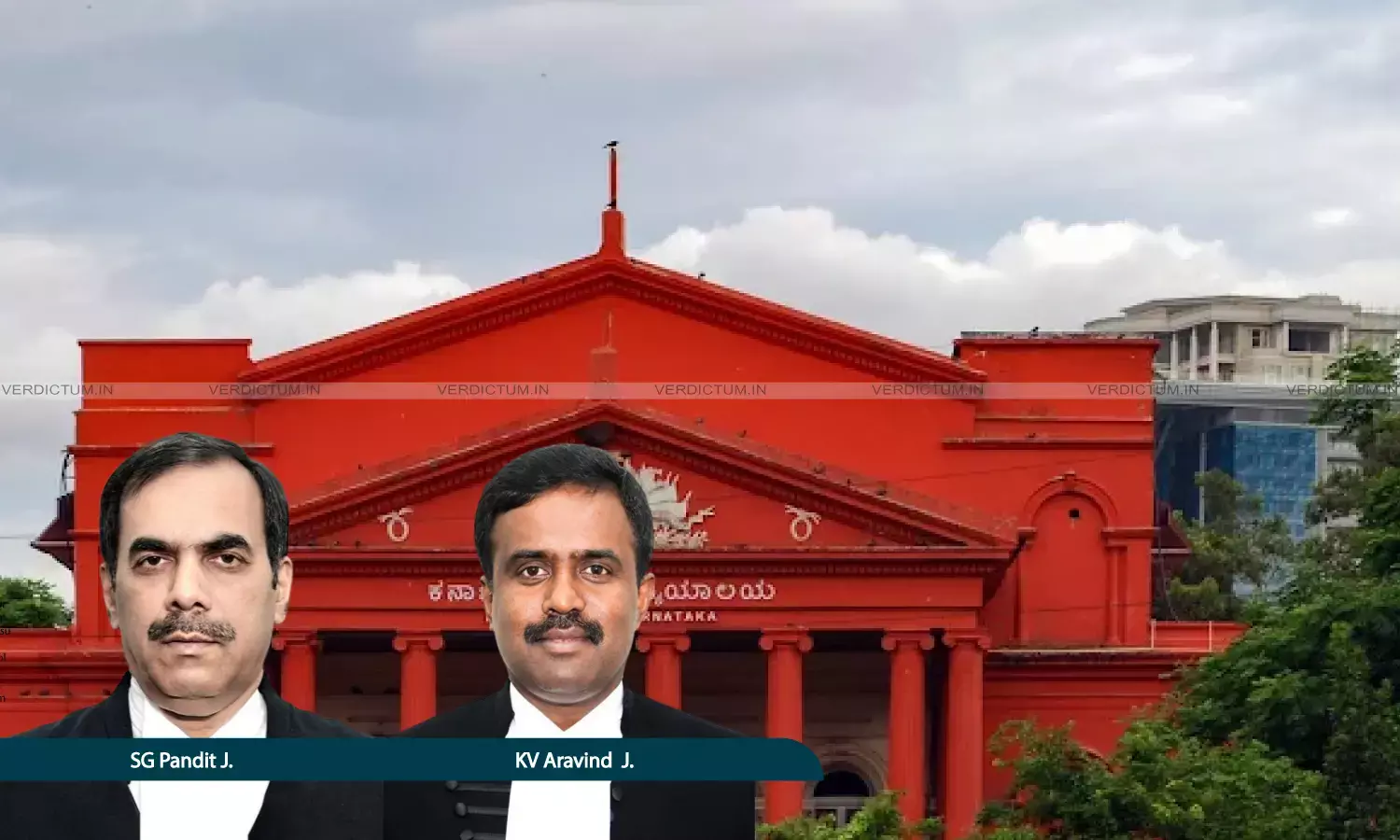
A Division Bench of Justice S.G. Pandit and Justice K. V. Aravind, disposing of the petition, observed that “the Government shall not transfer an officer/official without providing a posting and even if transfer is effected without providing a posting, such officer shall not be relieved until he is provided with a posting”.
Background
The petitioner was serving as a district-level officer when a notification was issued posting another officer in his place while directing him to report before the competent authority, without assigning any posting.
He complied and reported as directed, but was not given any posting for a prolonged period. He approached the Administrative Tribunal seeking to quash the notification replacing him and to secure a posting.
The Tribunal rejected his application, holding that he had already completed his tenure and that once he reported to the competent authority, the transfer had been implemented and could not be modified.
Challenging that decision and the transfer notification, the petitioner approached the High Court.
Court’s Observation
The Court first examined the legality of the Tribunal’s refusal to interfere with the transfer notification replacing the petitioner while directing him to report before the competent authority without assigning a posting. It noted that the petitioner had, in fact, reported as directed but was not provided any posting for nearly one year.
Pursuant to earlier directions issued during the proceedings, the State produced a notification assigning posting to the petitioner. The Court also called for an affidavit from the competent authority explaining the reasons for the delay and identifying officers responsible for providing postings to officials kept without assignment.
The affidavit disclosed that although vacancies existed, the file relating to the petitioner’s posting moved repeatedly between different authorities for approvals, including ministerial and higher-level approvals, and was returned multiple times for reconsideration of the posting category. It further revealed that approval processes, administrative requirements, pending litigation affecting other officers, and procedural approvals contributed to the delay.
The Court found that despite the availability of vacant posts, the Government took its own time to make a decision and that the posting was ultimately issued only after judicial directions were passed.
The Court stressed that transferring an officer without providing a posting and requiring him to report before a competent authority places him in a state of uncertainty and results in payment of salary without work, amounting to mismanagement of public funds.
Relying on precedent, the Court reiterated that lifting an officer from a post without assigning a new posting keeps him in administrative limbo and is an undesirable practice.
The Court then issued the following directions:
- The State shall not transfer an officer/official without providing a posting to him on his transfer.
- Directing a transferred officer/official to report before the competent authority would not amount to providing a posting.
- If the State transfers an officer/official without providing any posting to him, then such officer/official who is not provided with a posting shall not be relieved of his duties in the previous post until he is provided with a posting.
- If an officer/official is transferred without providing him posting and if he is relieved from his previous post, until he is given next posting, salary and allowances paid to such Government servant during his compulsory waiting period, shall be recovered from the officer who is vested with the power to effect such transfer, i.e., the Secretary to Government or Head of the Department or any other officer as the case may be, forthwith.
Conclusion
The High Court disposed of the writ petition with directions regulating transfer practice and requiring the State to ensure that officers are not transferred without being assigned a posting, while also mandating accountability for financial consequences arising from such administrative lapses.
The Court also directed the Registry to forward a copy of the order to the Chief Secretary, State of Karnataka, for circulation among the Secretaries and the Heads of Departments.
Cause Title: K. Arun Kumar v. State of Karnataka & Ors. (Neutral Citation: 2026:KHC:6227-DB)
Appearances
Petitioner: Mali Ramachandra Appasaheb, Advocate
Respondents: Shashikiran Shetty, Advocate General; Prathima Honnapura, AAG; Vikas Rojipura, AGA
