

Security Interests In Gold Cannot Override Criminal Investigation: Karnataka HC Upholds Police Power Under Section 94 BNSS
Pledge of stolen gold cannot override true owner’s rights

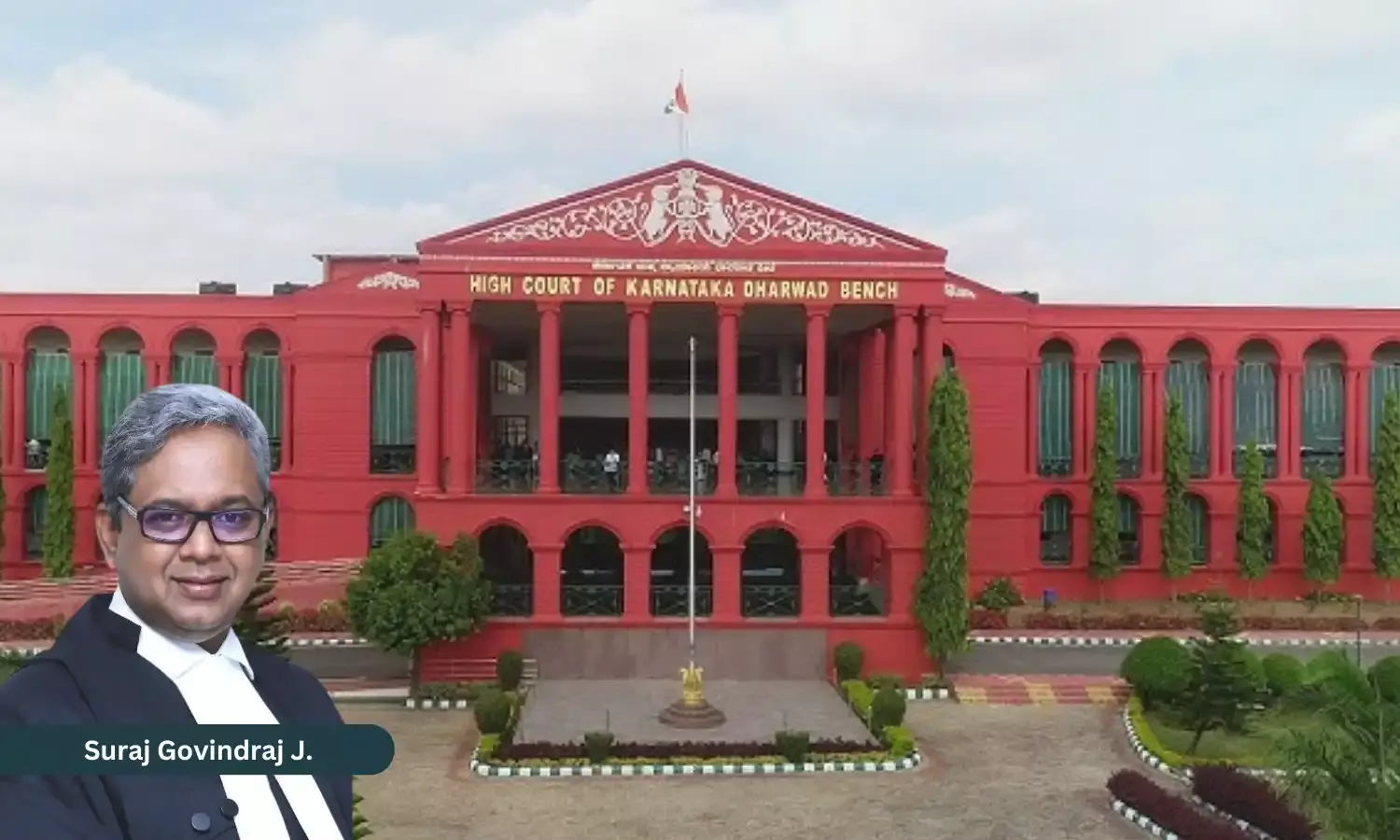
Justice Suraj Govindraj, Karnataka High Court
The Karnataka High Court has held that a finance company in possession of allegedly stolen gold cannot resist a police notice issued under Section 94 of the Bharatiya Nagarik Suraksha Sanhita, 2023 (BNSS), on the ground that it holds the gold as a secured creditor.
The bench further said that a pledge created over stolen property does not override the superior rights of the true owner, nor can contractual security interests obstruct a lawful criminal investigation.
On the victim-centric approach of criminal law, the Court noted that gold ornaments often represent lifetime savings or family security, and their continued deprivation cannot be prolonged on the basis of commercial claims of a financier.
Justice Suraj Govindaraj observed, “At the outset, this Court finds no merit in the Petitioner’s attempt to characterise itself solely as a “secured creditor” and thereby claim immunity from criminal investigation. Criminal law does not recognise contractual status as a shield against investigation. The moment property in possession is alleged to be stolen, the nature of the possession ceases to be purely civil or commercial and becomes subject to criminal scrutiny”.
“The argument that the gold constitutes security for recovery of loan dues is wholly untenable in criminal law. A pledge created by a person who had no lawful title to the property is void against the true owner. A pledgee cannot acquire a better right than that possessed by the pledger. Therefore, even assuming the Petitioner acted without knowledge of theft, such absence of knowledge does not elevate its contractual interest…”, the bench further observed.
Advocate Anish Jose Antony appeared for the petitioner and K.P. Yashodha, AGA appeared for the respondent.
In the pertinent matter, a case was registered at Kengeri Police Station based on a complaint by Karur Vysya Bank, alleging that one of its officials had removed genuine gold ornaments pledged by customers and replaced them with fake articles.
During investigation, the police found that certain gold ornaments allegedly stolen from the bank’s customers had been pledged with IIFL Finance Ltd., which had advanced loans exceeding ₹73 lakhs to the accused and her husband.
Thereafter, the police issued notices under Section 94 BNSS directing the finance company to furnish loan records, KYC documents, CCTV footage, and to produce the pledged gold articles.
Challenging the notice, the company contended that it was a bona fide lender and secured creditor, and that production, and possible seizure of the gold would extinguish its security interest. It also argued that any seizure must comply with Section 107 BNSS and require judicial approval.
However, rejecting the challenge, the Court clarified that a notice under Section 94 merely requires production of documents or “other things” necessary for investigation and does not by itself amount to seizure or adjudication of ownership.
The provision, the Court held, is investigatory in nature and essential to enable verification of whether the pledged gold corresponds to the allegedly stolen property.
The Court observed that once property in the possession of a third party is alleged to be stolen, the matter transcends the civil-commercial domain and becomes subject to criminal scrutiny. A pledgee cannot acquire a better title than that possessed by the pledger. If the pledger had no lawful title, the pledge cannot defeat the rights of the true owner.
On the argument regarding seizure, the Court distinguished between Sections 106 and 107 BNSS, holding that seizure of suspected stolen property is governed by Section 106 and does not require prior attachment proceedings under Section 107. Any seizure would be subject to statutory safeguards, including reporting to the jurisdictional Magistrate.
The bench further rejected the constitutional objections raised by the petitioner, holding that production of property pursuant to a statutory notice does not violate Articles 19(1)(g) or 300A of the Constitution of India.
Therefore, on finding that the petitioner had no legally sustainable grievance against the Section 94 BNSS notice, the High Court directed compliance and disposed of the writ petition.
Cause Title: IIFL Finance Ltd. v. State Of Karnataka & Anr. [Neutral Citation: 2026:KHC:7104]
Appearances:
Petitioner: Anish Jose Antony, Advocate.
Respondents: K.P. Yashodha., AGA, Balasubrahmany, Advocates.