

Seizure Not Unbridled Power But A Conditional Exercise: Karnataka High Court Orders Enquiry Against Erring Senior Motor Vehicle Inspector, Quashes FIR
Court in the order remarked that ‘a remedy that the statute contemplates, as a last resort, has, in the case at hand, deployed as the first’.

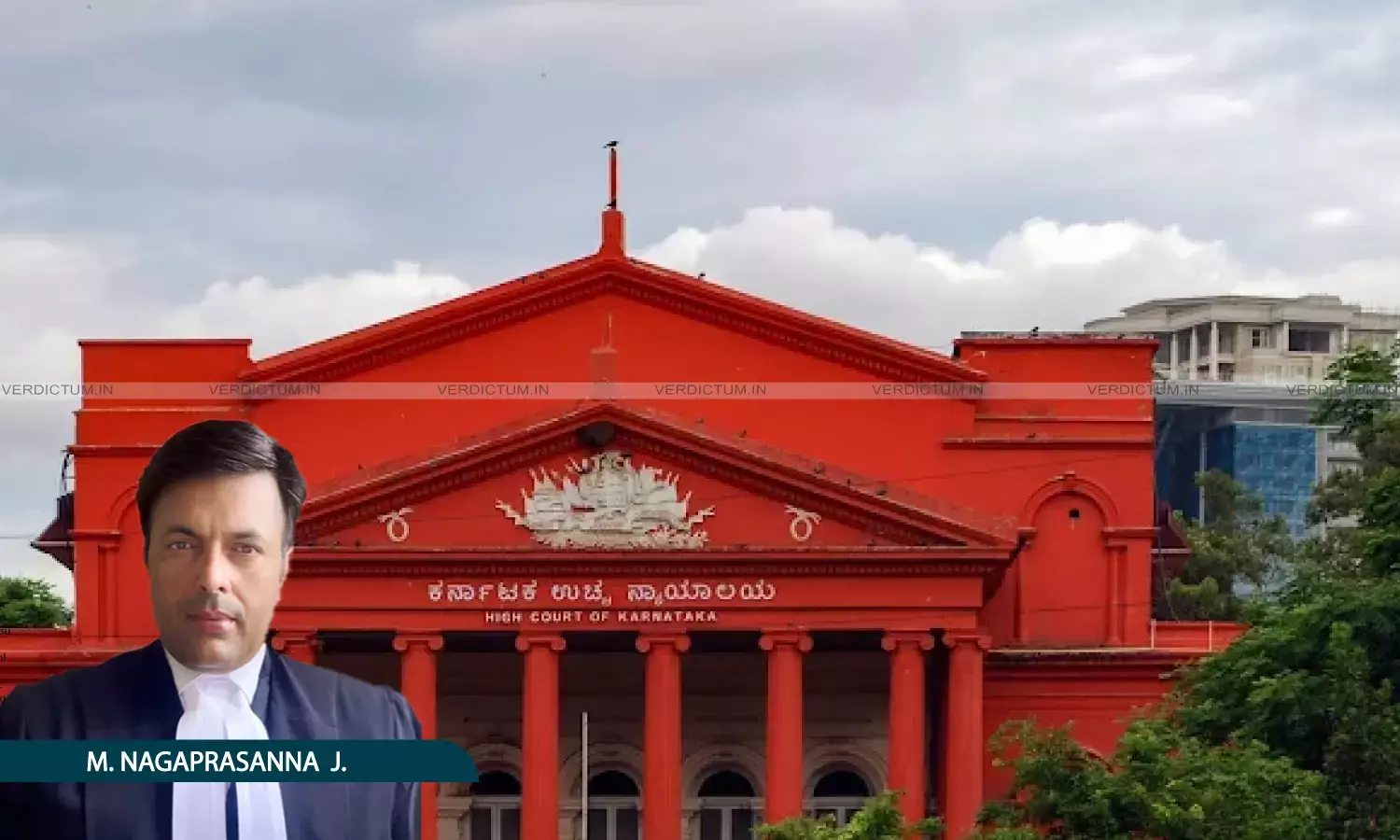
Justice M. Nagaprasanna, Karnataka High Court
The Karnataka High Court has held that the power to seize a motor vehicle under Section 11A Karnataka Motor Vehicles Taxation Act, 1957 is not an “unbridled” executive authority but a conditional statutory power that can be exercised only after strict adherence to the procedure prescribed by law. The Bench made a categorical remark that a remedy that the statute otherwise contemplates, as a last resort, has, in the case at hand, deployed as the first.
Setting aside criminal proceedings initiated against the Lamborghini Huracan owner, the Court found that a Senior Motor Vehicle Inspector had acted in flagrant disregard of statutory safeguards by personally entering the petitioner’s premises and seizing vehicle without prior determination of tax liability or issuance of notice, and consequently quashed the FIR while directing initiation of departmental enquiry against the erring officer.
Justice M. Nagaprasanna observed, “…seizure is not an unbridled power; it is a conditional one, hedged in, by procedural safeguards and to be exercised only upon due determination…In the case at hand, the chronology of events reveals a startling inversion of statutory scheme. The crime is registered on 07-02-2026, and in the hottest haste the very next day, the 2nd respondent enters petitioner’s residence and takes away the vehicle. It is only thereafter that a demand notice is sought to be issued. The sequence of actions by the 2nd respondent has left the procedure stipulated in law topsy-turvy. What emerges is a situation where no lawful demand has been determined, no notice is served upon the petitioner calling upon him to make good the alleged deficit in tax and yet the most drastic measure, seizure of the vehicle, is resorted to, at the very threshold. A remedy that the statute contemplates, as a last resort, has, in the case at hand, deployed as the first”.
Advocate Venkatesh S. Arbatti appeared for the petitioner and Senior Advocate M.S. Bhagwath appeared for the respondent.
The petitioner had purchased the vehicle on September 1, 2025 for approximately ₹3 crore from an authorised dealer and obtained registration after payment of GST and road tax. A zero FIR was registered on February 7, 2026 alleging cheating and forgery concerning the vehicle’s registration.
The very next day, the Senior Motor Vehicle Inspector, who was also the complainant, entered the petitioner’s premises, seized the vehicle without prior notice, and shifted it to a police station.
The petitioner challenged both the FIR and seizure contending that even if tax evasion was suspected, the procedure under the Karnataka Motor Vehicles Taxation Act, 1957 required issuance of notice and opportunity of hearing before any coercive action could be taken.
Tracing the statutory framework, the Court analysed provisions relating to taxation cards, recovery of escaped tax under Section 8A, and seizure powers under Section 11A. It held that seizure is a conditional power exercisable only after lawful determination of unpaid tax.
“If, at any point in time, it is discovered that the tax remitted for a given period, falls short of what is lawfully payable under the Taxation Act, the Competent Authority is empowered, but only after issuing due notice to the registered owner or the person in possession or control of the vehicle and affording such person, a reasonable opportunity of being heard, to recover the differential amount of tax from such owner”, it noted.
“The vehicle is neither stolen nor unlawfully possessed; it is a duly registered vehicle, taken from the custody of its registered owner, without adherence to any prescribed procedure. There is, therefore, now arrant to relegate the petitioner to the remedy under Sections 497 or 503 of the BNSS”, the Bench held further.
The Court noted that the crime is registered, initially as a zero FIR and subsequently, transmitted to the jurisdictional police. "The 2nd respondent who is the complainant, proceeds to personally effect seizure of the vehicle from within the petitioner’s premises. It is disquieting that a complainant would in such fashion, traverse the boundary between accusation and execution, thereby assuming powers that the law does not contemplate nor the law conferred upon him. Such conduct betrays a manifest and egregious abuse of authority, the departure from established procedure is not merely technical; it is fundamental, striking at the very root of due process. The safeguards enshrined in law, have not merely been overlooked, they have been rendered illusory, all acts attributable to the 2nd respondent”, it categorically observed further.
The Court holding the seizure patently illegal, ordered restoration of the vehicle to the petitioner and directed initiation of departmental enquiry against the concerned officer.
“A direction must necessarily issue for initiation of a departmental enquiry against the said respondent for having acted in flagrant disregard of law and for overstepping the bounds of his Authority. Equally, the undertaking furnished by the learned State Public Prosecutor that those responsible for deletion of the records in the Regional Transport Officer, shall be brought to books – must be give full effect”, it observed.
Cause Title: H1 Car Care v. State Of Karnataka & Ors. Criminal Petition No.2309 OF 2026
Appearances:
Petitioner: Venkatesh S. Arbatti, Advocate.
Respondents: B.A. Belliappa, SPP, B.N. Jagadeesha, Addl. SPP, M.S.Bhagwath, Sr. Advocate Satish K., Advocate.