

“Paper-Based" Compliance Mechanism Renders Article 21 Illusionary: Jharkhand High Court Directs Establishment Of Burn Units Across State In 120 Days
The petition sought establishment of units across State following an unfortunate 2021 incident in Hazaribagh where highly inflammable, adulterated kerosene supplied through the Public Distribution System caused a fire.

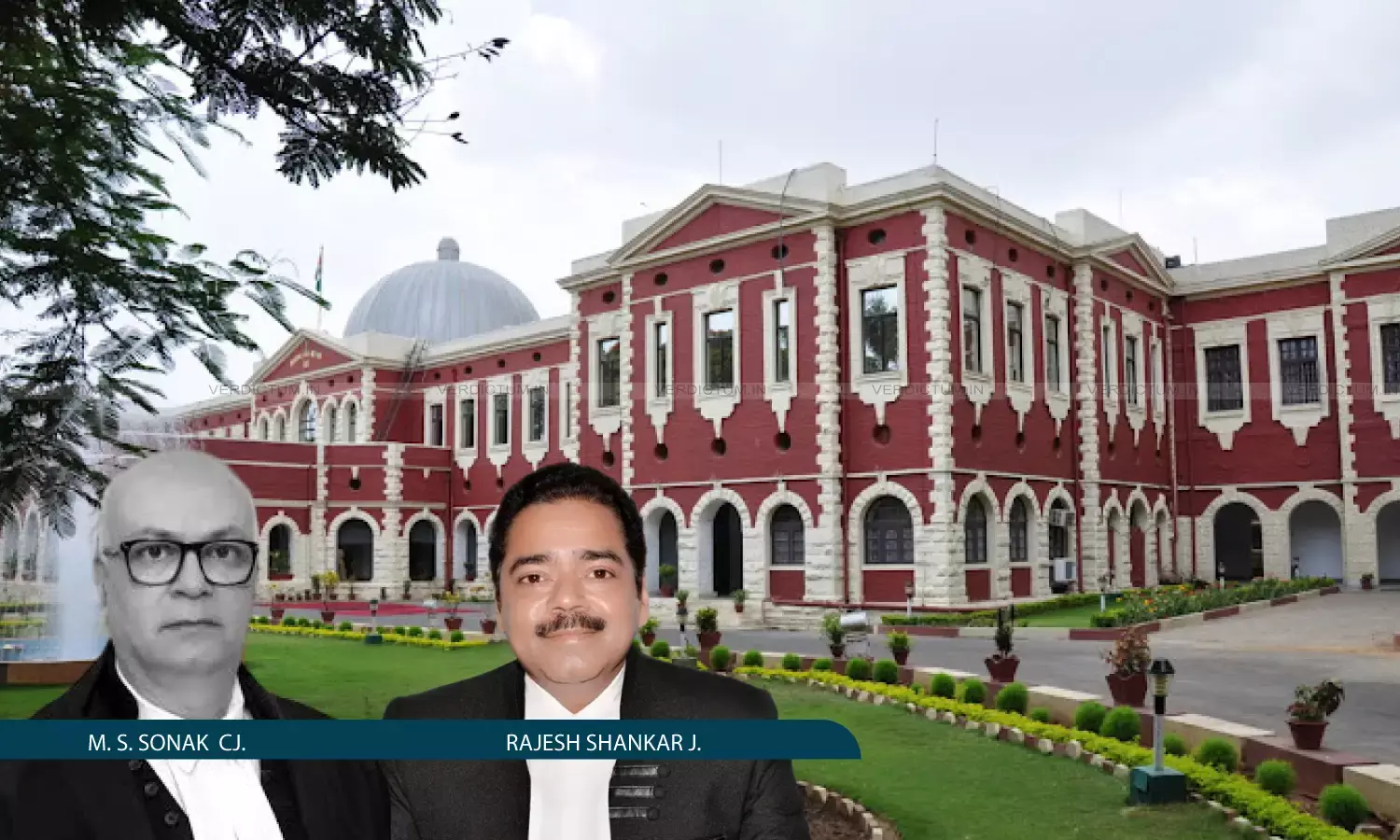
The Jharkhand High Court has directed the State to make dedicated burn units fully functional in all district hospitals and medical colleges within 120 days, ensuring they are adequately staffed and stocked with essential supplies. The State is also directed to conduct capacity-building training for staff within 90 days and operationalize the State Monitoring Committee under NPPMBI guidelines within four weeks.
The directions came in a petition seeking establishment of units across State following an unfortunate 2021 incident in Hazaribagh where highly inflammable, adulterated kerosene supplied through the Public Distribution System caused a fire resulting in four deaths and fifteen grievous injuries. The Bench observed that a careful examination of Annexure-I provided by the State exposed significant inconsistencies in the State’s claims. Although the State asserted that burn wards were operational in all 24 districts, the table listed only 22 units. This discrepancy was compounded by duplication, as Jamshedpur appeared twice under different hospitals, indicating that even with multiple entries for one district, several districts remained unaccounted for.
A Division Bench comprising Chief Justice M. S. Sonak and Justice Rajesh Shankar categorically observed, “We find it difficult to reconcile the State’s current claim of ‘adequate logistics’ with the definitive findings of the Audit, especially when the latest Annexure-I fails to provide a transparent accounting of the very units previously flagged by the CAG in its performance audit report on District Hospital Outcomes in Jharkhand in the year 2021. Such a ‘paper-based’ compliance mechanism, where infrastructure exists in budgetary allocations and structural completions but remains absent in clinical practice, risks rendering the fundamental right to health under Article 21 illusory”.
Diksha Dwivedi appeared as Amicus Curiae and Piyush Chitresh, A.C. to A.G. appeared for the respondent.
The petitioner, Onkar Vishwakarma, highlighted that victims, including minors, were denied adequate treatment at Sadar Hospital, Hazaribagh, due to the absence of specialized burn care, forcing families to procure life-saving medicines from the open market. Laboratory reports revealed the kerosene's flash point was 13.5 degree Celsius, far below the safety minimum of 35 degree Celsius.
Noting the statistics, the Bench observed, “These statistics are not mere numbers; they represent a persistent and profound challenge to the realisation of the ‘Right to Health’ and ‘Right to Effective Medical Care’ guaranteed under Article 21 of the Constitution of India. It has been time and again held by the Hon’ble Supreme Court that the right to life does not mean a mere animal existence”.
The Court clarified that the State cannot bypass its primary obligation to provide emergency health infrastructure by pleading a lack of financial funds, especially when dealing with conditions that carry the world’s highest mortality and disability burden.
“In view of the exhaustive constitutional and statutory framework discussed hereinabove, it is evident that the ‘Right to Health’ is not a static concept but a dynamic obligation that evolves with the availability of specialized medical knowledge and the State's own policy commitments…”, it noted.
“The ‘Right to Health’ under Article 21 is a positive mandate that requires the State to provide specialized, time-sensitive medical infrastructure, particularly for burn trauma, a condition where mortality and disability are directly linked to the immediacy of specialized care”, it further noted.
In its reasoning, the Court relied on landmark precedents like Paschim Banga Khet Mazdoor Samity v. State of West Bengal, (1996) 4 SCC 37 and Parmanand Katara v. Union of India, reported in (1989) 4 SCC 286, to reaffirm that securing the health of an injured person is a paramount obligation.
Accordingly, the Bench directed, “The State Government, through the Secretary, Department of Health, Medical Education and Family Welfare, shall ensure that dedicated burn units are made fully functional in all district hospitals and government medical colleges across the State of Jharkhand within a period of 120 days from the date of this judgment, in accordance with applicable guidelines, including those issued under the National Programme for Prevention and Management of Burn Injuries (NPPMBI)”.
Regarding the Hazaribagh victims, the Court directed the District Legal Services Authority to facilitate compensation claims under the Victim Compensation Scheme within a three-month timeframe.
Cause Title: Onkar Vishwakarma v. State of Jharkhand & Ors. [Neutral Citation: 2026:JHHC:9192-DB]
Appearances:
Petitioner: Diksha Dwivedi appeared as Amicus Curiae.
Respondent: Piyush Chitresh, A.C. to A.G.