Wakaf By User Does Not Require Formal Dedication; Religious Use Sufficient Under J&K Wakaf Act: J&K And Ladakh High Court
The Court clarified that while a wakaf ordinarily arises from permanent dedication by a person professing Islam, the law equally recognises “wakaf by user,” where long-standing religious use itself is sufficient to confer wakaf character even in the absence of formal dedication.
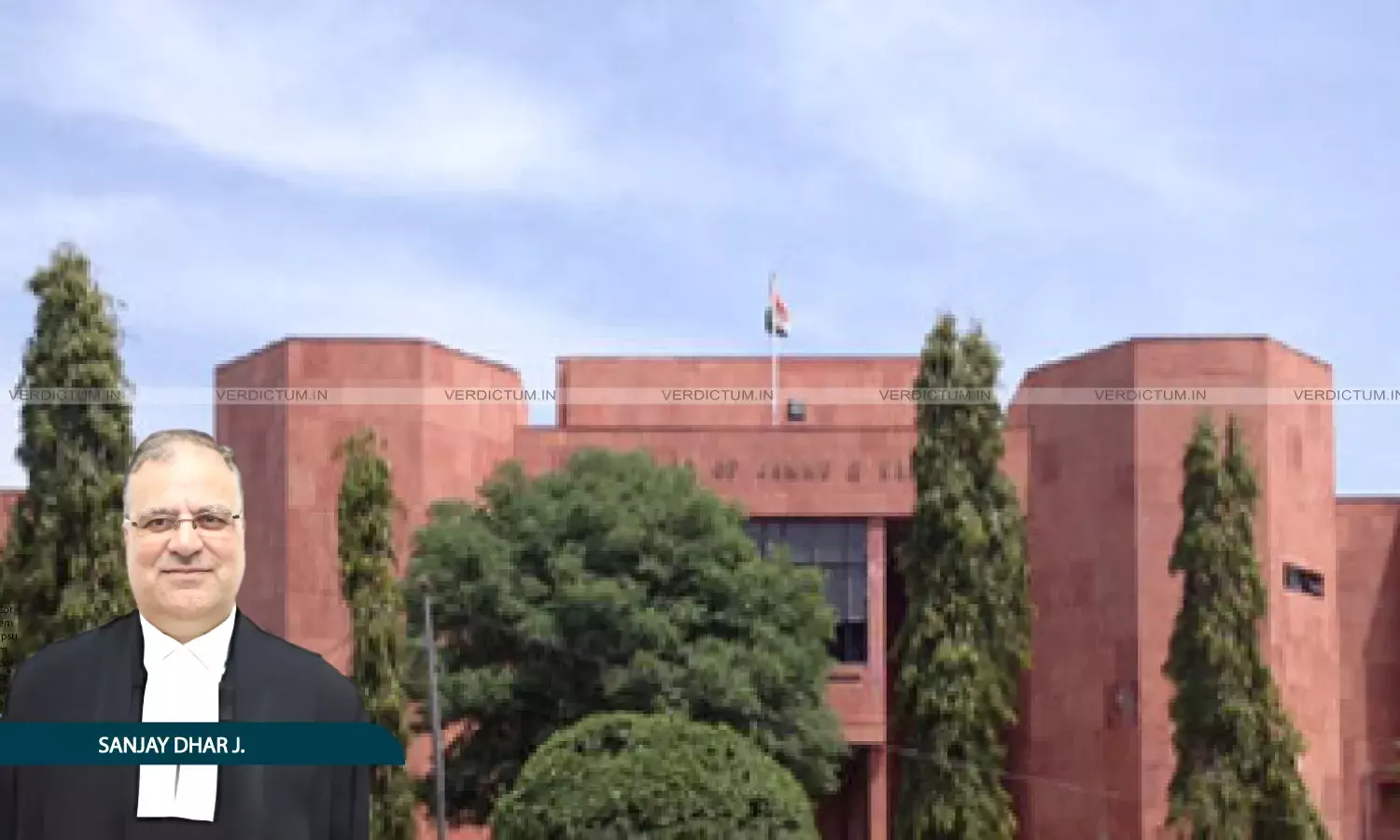
The Jammu & Kashmir and Ladakh High Court held that a wakaf, under the J&K Wakaf Act, 1978, denotes a permanent dedication of property for purposes recognised under Muslim law as religious, pious, or charitable, and that such dedication must ordinarily be made by a person professing Islam.
The Court clarified that properties that have acquired a religious character through consistent usage, such as shrines, graveyards, or mausoleums, would qualify as wakaf even without any formal act of dedication.
The Court was hearing writ petitions concerning a dispute over the management, control, and ownership of properties attached to two religious shrines situated in Kishtwar, where the petitioners claimed hereditary rights as Sajjada Nasheens and asserted personal ownership over the properties.
The Bench of Justice Sanjay Dhar, while referring to Section 3(d) of the Jammu & Kashmir Wakafs Act, 1978, observed, “… a Wakaf would mean permanent dedication of any property, movable or immovable, for any purpose recognised by Muslim Law or usage as religious, pious or charitable. Thus, there has to be a dedication by a person professing Islam of any property movable or immovable for the aforesaid purpose, …however, the Wakaf also includes a Wakaf by user such as Masjid, Idgah, Dargah, Khankah, Maqbara, Graveyard, Grave, Rauza, Mausoleum, Takia, Sarai, Yatim Khana, Madrasa and Shafakhana.
Thus, the Bench added, “not only a property, which has been dedicated for the purpose recognised by Muslim Law or usage as religious, pious or charitable, but even the Wakafs by user of the nature as mentioned in sub-clause (i) quoted above would become a wakaf without there being any dedication”.
Senior Advocates Altaf Haqani and P.N. Raina appeared for the petitioners and respondents, respectively.
Background
The dispute pertained to two shrines, where the petitioners asserted hereditary rights over management and offerings, claiming that the properties attached to the shrines were private properties devolved upon them through their ancestors. They contended that no valid dedication had ever been made to create a wakaf and that the properties could not be treated as wakaf assets.
The petitioners further relied on historical documents and earlier reports of authorities to argue that the shrines were independent institutions outside the purview of wakaf administration.
The respondents, on the other hand, contended that the properties were wakaf in nature, emphasising revenue records and long-standing religious usage. It was asserted that the shrines qualified as wakaf properties irrespective of formal dedication, particularly as they were used for religious purposes by the public over a long period.
Court’s Observation
The Court undertook a detailed examination of the statutory definition of wakaf under the applicable law and clarified the dual modes through which a wakaf may come into existence.
It held that wakaf is generally created through “permanent dedication by a person professing Islam of any property… for any purpose recognised by Muslim law as religious, pious or charitable.”
However, the Court emphasised that the statutory framework also recognises wakaf by user, observing that “not only a property… dedicated for the purpose recognised by Muslim Law… but even the Wakafs by user… would become a wakaf without there being any dedication.”
Expanding on this principle, the Court noted that institutions such as mosques, dargahs, graveyards, and mausoleums acquire the character of wakaf by virtue of their continuous religious use, and such character does not depend upon proof of formal dedication by an identifiable individual.
The Court further held that even documents relied upon by the petitioners referred to the properties as “Rauza,” which falls within the category of wakaf by user, thereby reinforcing the conclusion that the properties possessed wakaf character irrespective of the absence of formal dedication.
Addressing the petitioners’ contention regarding the lack of dedication by the original owner, the Court clarified that such an argument loses significance where the property independently qualifies as wakaf by user.
The Court also referred to its own decision in Intizamiya Committee Dargah (I) & Anr Vs. Ut of J&K (2025) and concluded that “Wakaf can be created by permanent dedication by a person professing Islam with respect to his property for any religious, pious or charitable purposes recognized by Muslim law”, and that “the properties like Masjid, Dargah etc. by virtue of their user as such are also Wakafs and no formal declaration to declare such properties as 'Wakaf' is required under the Act of 1978.”
Conclusion
The Court concluded that the properties attached to the shrines qualified as wakaf properties, holding that the petitioners failed to establish personal ownership or rebut the presumption arising from long-standing religious usage and revenue records.
Accordingly, the writ petitions were dismissed, and the classification of the properties as wakaf was upheld.
Cause Title: Syed Lutfullah Shah & Anr v. A.W. Kirpak & Ors
Appearances
Petitioner: Altaf Haqani, Sr. Advocate, Aasif Wani, Advocate, Dinesh Singh Chauhan, Advocate, Damini Chauhan, Advocate.
Respondents: P.N. Raina, Sr. Advocate, J.A. Hamal, Advocate. A.A. Hamal, Advocate, Ayjaz Lone, Advocate.