

Vaishno Devi Adhoc Pujari’s Termination Dispute Not Amenable To Writ Jurisdiction; Lacks Public Law Element: Jammu & Kashmir High Court
The petitioner questioned the constitutional validity of provisions under the Shri Mata Vaishno Devi Shrine Act, 1986.

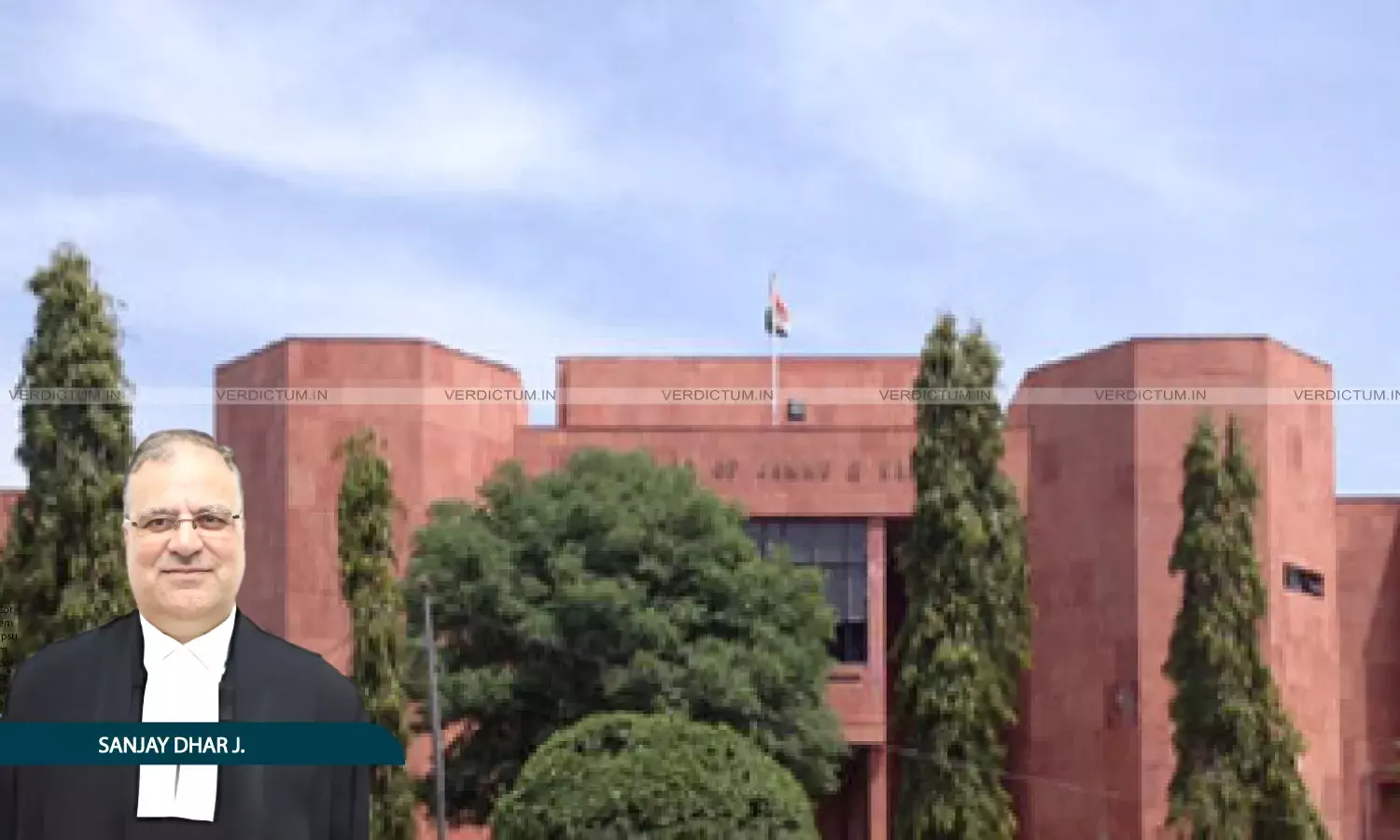
The Jammu & Kashmir and Ladakh High Court has held that a writ petition challenging termination of service by the Shri Mata Vaishno Devi Shrine Board is not maintainable where the dispute arises purely out of a private contractual relationship devoid of any public law element. Further, the Bench held that the Shrine Board is not “State” under Article 12 of the Constitution of India due to lack of governmental control, financial, functional, or administrative.
The petitioner had challenged his disengagement and sought reinstatement, contending that his termination violated Articles 14, 16, and 311 of the Constitution of India, and that no inquiry had been conducted before terminating his services. He further questioned the constitutional validity of provisions under the Shri Mata Vaishno Devi Shrine Act, 1986.
Justice Sanjay Dhar Even deciding a long-pending matter remanded by the Supreme Court, dismissed the writ petition filed by the pujari whose services were discontinued in 1988, holding that the claim essentially pertained to enforcement of a private service contract. It observed, “…if it is assumed that the present writ petition is maintainable still then the petitioner does not have a case on merits as well. A perusal of the impugned order of disengagement would reveal that the petitioner has been disengaged along with two more employees as their services were no more required by the Board. The impugned order does not cast any stigma on the petitioner and it is not punitive in nature. Admittedly, the engagement of the petitioner as Pujari with the respondent-Board was purely on adhoc basis. An adhoc appointee has no vested right to the post against, which he has been appointed…”.
“…Employment of an adhoc appointee ends the moment the purpose or term for which such an employee was hired comes to an end. The respondents have clearly indicated in the impugned order that services of the petitioner along with two more employees are no more required by the respondent-Board. The petitioner does not have a right to continue on the post having regard to the fact that nature of his employment is purely adhoc. He, therefore, cannot seek an order for continuation in service against the respondents”, the Bench noted.
Advocate Harpreet Singh appeared for the petitioner and Advocated Adarsh Sharma appeared for the respondent.
The Court, relying on precedents including Pradeep Kumar Biswas v. Indian Institute of Chemical Biology (2002) 5 SCC 111 and Chain Singh v. Mata Vaishno Devi Shrine Board and Anr. 2004 (8) SCALE 348, observed that the Shrine Board is not “State” under Article 12 of the Constitution of India due to lack of governmental control, financial, functional, or administrative.
At the same time, the Court clarified that under Article 226 of the Constitution of India, writ jurisdiction can extend even to non-State bodies if they perform public duties. Citing Board of Control for Cricket in India v. Cricket Association of Bihar & Ors, (2015) 3 SCC 251, it reiterated that the scope of Article 226 is wider than Article 12 of the Constitution of India.
However, the crucial test was whether the dispute involves a public law element, therefore, drawing from Anandi Mukta Sadguru Shree Muktajee Vandas Swami Suvarna Jayanti Mahotsav Smarak Trust and Ors Vs. V.R. Rudani and Ors, 1989 (2) SCC 691 the Court emphasised that writs cannot be issued to enforce purely private rights arising from contracts unless a public duty is involved.
“…it appears that in a case where the rights sought to be enforced are purely of a private character, the writ petition would not lie. Thus, the guiding factor is the nature of duty imposed upon the person or body against whom a writ is being sought. If the nature of duty imposed on a body is public in nature, it is amenable to writ jurisdiction under Article 226 of the Constitution of India but if the rights sought to be enforced are purely of a private character, mandamus cannot be issued against such body”, it noted.
On merits as well, the Court found no illegality in the termination. It observed that the petitioner was an adhoc appointee with no vested right to continue in service. The disengagement order was neither punitive nor stigmatic, and clearly indicated that his services were no longer required.
Accordingly, the Court dismissed the petition, concluding that no relief could be granted either on maintainability or merits.
Cause Title: Subash Raina v. State of J&K & Ors [Neutral Citation: 2026:JKLHC-JMU:797]
Appearances:
Petitioner: Harpreet Singh, Advocate.
Respondent: Atul Verma, Advocate vice, Adarsh Sharma, Advocate.