

Appellant Has Unfettered Right To Withdraw Appeal: J&K And Ladakh High Court
The High Court held that once an appellant chooses to withdraw an appeal without seeking liberty for fresh proceedings, the appellate court has no discretion to compel continuation of the appeal where an appeal is dismissed as withdrawn under Order XXIII Rule 1 CPC.
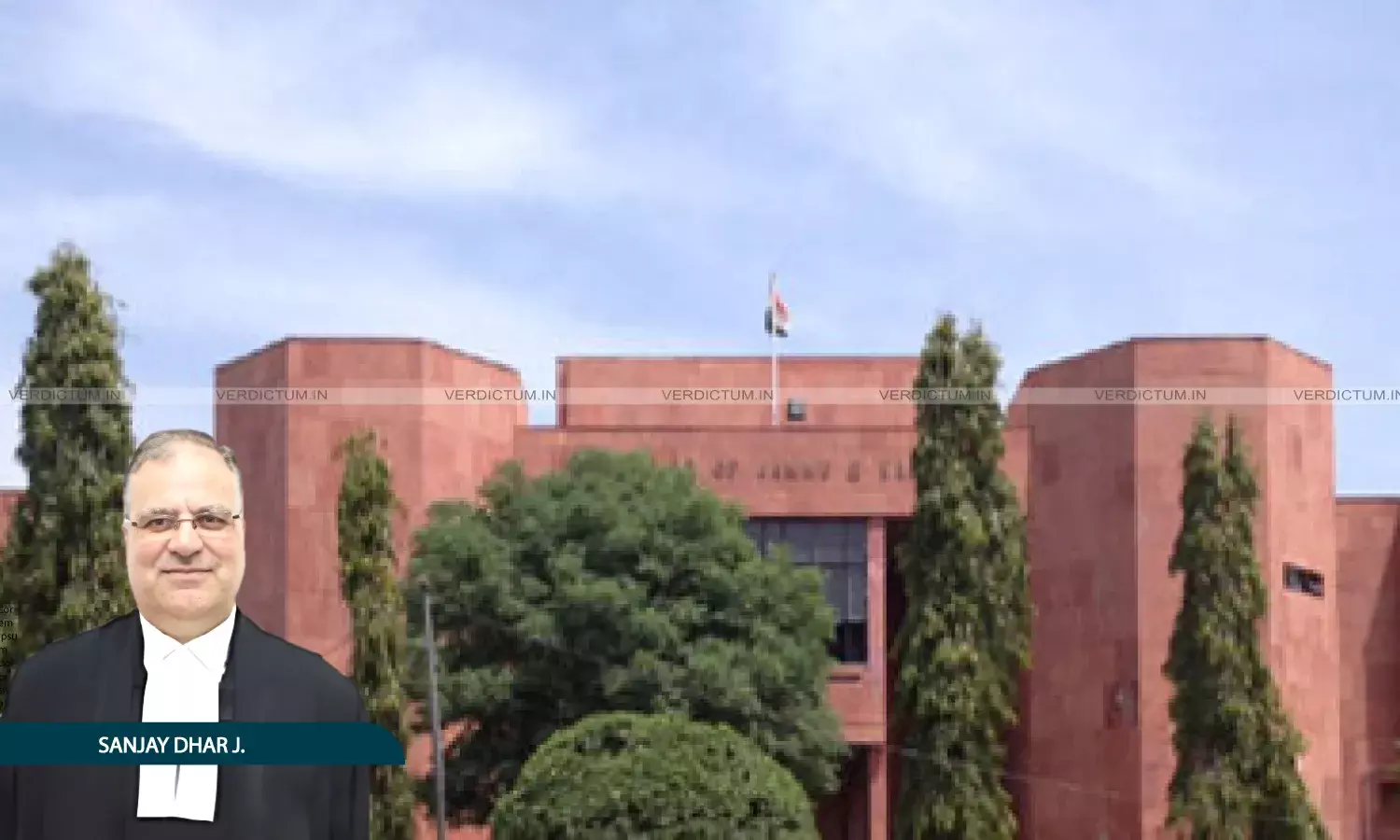
The High Court of Jammu & Kashmir and Ladakh has observed that the right of an appellant to withdraw an appeal without seeking liberty to file a fresh appeal is unfettered, and the appellate court is bound to dismiss the appeal as withdrawn once such intention is expressed.
The Court further held that in the absence of a decree passed in terms of a compromise, the appellate court cannot later recall the order of withdrawal by invoking Order XXIII Rule 3 or Section 151 of the Code of Civil Procedure.
The Court was hearing two petitions under Article 227 of the Constitution challenging an order of the Principal District Judge, Kulgam, by which an appeal earlier dismissed as withdrawn was restored on the premise that the compromise placed on record had not been validly proved.
A Bench of Justice Sanjay Dhar, while stating that the “right to withdraw a suit or appeal without any liberty for institution of fresh suit or appeal is an unfettered right of the plaintiff/appellant”, observed: “Since the learned Appellate Court did not pass any decree in terms of the compromise and simply dismissed the appeal as withdrawn by exercising his powers under Order XXIII Rule 1 CPC, the contesting respondents/defendants could not have objected to passing of the said order. The learned Appellate Court, while restoring the appeal of the appellant in terms of the impugned order, is, in effect, compelling the appellant to pursue her appeal, which cannot be done as an appellant has an unfettered right to withdraw his/her appeal unless he/she seeks permission to file a fresh suit/appeal”.
Senior Advocate ZA Shah represented the appellants, while Senior Advocate Jahangir Iqbal Ganai represented the respondents.
Background
A suit was instituted by one of the parties challenging an earlier decree. The suit was dismissed by the trial court by judgment and decree dated 27.03.2018. Aggrieved, the plaintiff preferred an appeal before the Principal District Judge.
During the pendency of the appeal, the parties informed the appellate court that they had entered into a compromise and produced a written compromise deed. The appellate court noted that the appellant did not wish to pursue the appeal and, on her request, dismissed it as withdrawn. No decree was passed in accordance with the compromise, nor were the parties' statements recorded.
More than six years later, the contesting respondents filed an application before the appellate court seeking recall of the compromise and restoration of the appeal, alleging fraud, lack of signatures, non-recording of statements, and subsequent revenue entries made based on the compromise. The appellate court allowed the application, recalled the earlier order, and restored the appeal, leading to the present proceedings.
Court’s Observation
The J&K and Ladakh High Court first examined the nature of the order passed by the appellate court. On a plain reading of the order, the Court found that the appellate court had not passed any decree in terms of the compromise. It had merely taken the compromise deed on record and dismissed the appeal as withdrawn at the request of the appellant.
The Court then analysed the scheme of Order XXIII CPC and held that a valid compromise under Rule 3 requires a lawful agreement in writing, proof of such compromise to the satisfaction of the court, recording of statements of the parties, and passing of a decree in accordance with the compromise. In the absence of these steps, the order cannot be treated as one passed under Order XXIII Rule 3 CPC.
The Court held that the order squarely fell within the scope of Order XXIII Rule 1 CPC, which permits a plaintiff or appellant to abandon a suit or appeal at any stage. It reiterated that the provisions of Order XXIII Rule 1 CPC apply equally to appeals and that the right to withdraw a suit or appeal without liberty to institute fresh proceedings is unfettered.
The Court emphasised that once the appellant chose not to insist on a decree in terms of the compromise and remained satisfied with the withdrawal of the appeal, the appellate court was bound to dismiss the appeal as withdrawn. In such circumstances, the court had no jurisdiction to later compel the appellant to pursue the appeal by restoring it.
Addressing the invocation of Section 151 CPC, the Court held that inherent powers cannot be exercised to override an express provision of law or to undo an order passed within jurisdiction. “If the revenue authorities or any other authority has mistaken the order of dismissal of appeal as a decree passed on the basis of the compromise arrived at between the parties, the remedy for the contesting respondents/defendants lies somewhere else and not to reopen the issue with regard to dismissal of the appeal by taking resort to either the provisions contained in Order XXIII Rule 3 CPC or Section 151 of CPC”, the Court remarked.
The Court concluded that the appellate court had erred in construing the order of withdrawal as one passed under Order XXIII Rule 3 CPC. This erroneous appreciation of law, the Court observed, resulted in an order passed beyond the competence and jurisdiction of the appellate court, warranting interference under Article 227 of the Constitution.
Conclusion
The High Court allowed the petition filed by the appellant and set aside the order restoring the appeal. The connected petition seeking restitution was dismissed. The Court directed that the records of both courts below be returned, along with a copy of the judgment
Cause Title: Mehraj Ahmad Ganai & Anr. v. Mst. Sara Begum & Ors.
Appearances
Petitioners: Senior Advocate Z. A. Shah with Advocates A. Hanan, G. A. Lone, Mujeeb Andrabi
Appellants: Jahangir Iqbal Ganai, Senior Advocate, with Murfad, Advocate
