Test Identification Parade Only Corroborative; Dock Identification Is Substantive Evidence: J&K And Ladakh High Court
The High Court held that Test Identification Parade functions only as a safeguard to support sworn testimony, and where witnesses had sufficient opportunity to observe the accused, dock identification alone may suffice.
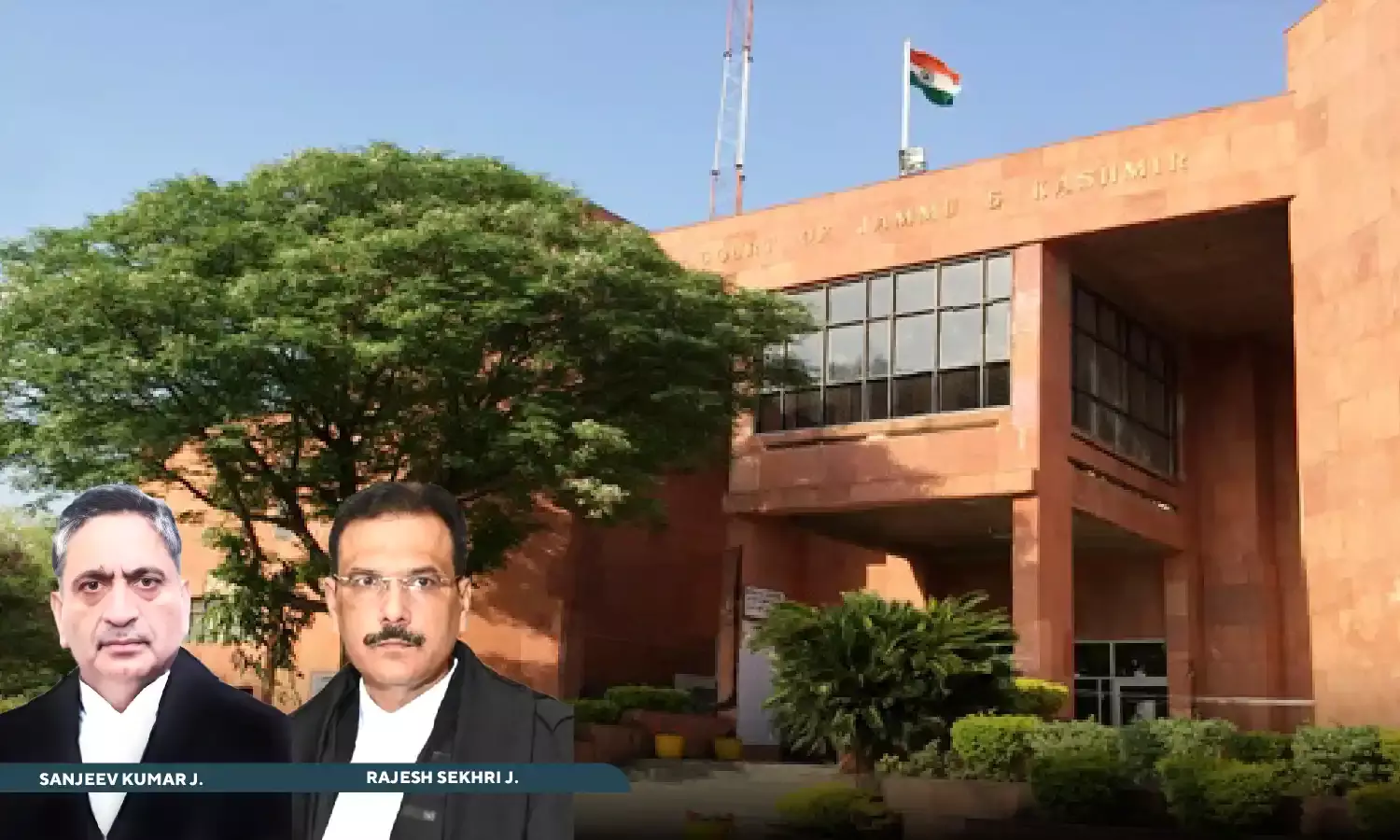
The Jammu & Kashmir and Ladakh High Court has held that a Test Identification Parade (TIP) is not substantive evidence but merely a corroborative tool to support the identification of an accused.
The Court observed that the primary evidence is the identification made by a witness in the courtroom and that TIP serves only a prudential purpose, subject to exceptions.
The Court was hearing a criminal appeal arising out of a conviction under Sections 302 and 34 of the Indian Penal Code. The appellants challenged the conviction, inter alia, on the ground that no Test Identification Parade was conducted and therefore the oral identification of the accused in the dock could not be relied upon.
A Division Bench comprising Justice Sanjeev Kumar and Justice Rajesh Sekhri examined the settled legal principles governing identification evidence and reiterated: “The purpose of Test Identification Parade is, to test the observation, grasp, memory, capacity to recapitulate, of a witness as seen earlier and to ascertain if it would be used as corroborative evidence of a witness identifying the accused or not. Therefore, the Test Identification Parade is a corroborative piece of evidence, whereas evidence of dock identification is substantive evidence. In other words, the fact which establishes the identity of an accused is relevant under Section 9 of the Evidence Act. As such, as a general rule, the substantive evidence of a witness is the statement made in court. Test Identification Parade is considered a safe rule of prudence, to look for corroboration of the sworn testimony of the witnesses in the court as to the identity of the accused”.
Advocate Anmol Sharma appeared for the petitioner, while Dewakar Sharma, Deputy Advocate General, represented the respondents.
Background
The case arose from an incident in which the accused were alleged to have caused the death of the deceased with criminal intention and common object. During the investigation, witnesses did not participate in any Test Identification Parade. However, during the trial, they identified the accused persons in the courtroom, stating that they had interacted with or observed them at the time of the occurrence.
The defence argued that in the absence of a prior identification procedure, dock identification could not be safely relied upon. They submitted that failure to hold a TIP created serious doubt regarding the correctness of identification and necessitated acquittal.
The prosecution, on the other hand, contended that the witnesses had ample opportunity to observe the accused at the time of the occurrence and their testimony in court was trustworthy, requiring no further corroboration.
Court’s Observation
The J&K and Ladakh High Court undertook a detailed analysis of Section 9 of the Indian Evidence Act, explaining that facts establishing the identity of an accused are relevant facts and may be proved through substantive oral testimony at trial. It held that while a Test Identification Parade is a useful method to test a witness’s memory, observation, and ability to recall, its evidentiary value remains corroborative in nature.
The Court recorded that holding a TIP is a rule of prudence and not a mandatory requirement of law. The absence of a TIP is not fatal where the court is satisfied regarding the reliability of the witness’s identification in the dock. Such satisfaction must stem from evidence showing that the witness had sufficient opportunity to interact with the accused or observe their distinctive features during or before the commission of the offence.
The Court emphasised that the substantive evidence is the sworn testimony given in court, and TIP merely assists in evaluating its reliability. In appropriate cases, depending on the circumstances surrounding the encounter between the witness and the accused, the Court may dispense with the requirement of TIP and rely solely on dock identification.
The Court reiterated that insistence on Test Identification Parade is context-dependent and rests upon whether the facts of the case justify such corroboration.
Apart from examining the evidentiary value of the Test Identification Parade, the Court evaluated the testimonies of the prosecution witnesses and found them to be consistent on material particulars. The sequence of events narrated during the trial sufficiently established the presence and participation of the appellants in the occurrence.
The Court recorded that none of the answers elicited in cross-examination created doubt on the credibility of these witnesses or on the chain of circumstances relied upon by the prosecution.
The Court further observed that dock identification, supported by the overall evidentiary record including medical evidence and other circumstances brought on record, provided a satisfactory basis to uphold the findings of the Trial Court. It held that no material had been demonstrated to show that the findings recorded by the Trial Court suffered from any perversity, illegality, or misappreciation of evidence.
Accordingly, the Court concluded that the conviction was based on proper appreciation of the evidence on record and did not warrant interference.
Conclusion
The High Court found the testimony of the eyewitnesses trustworthy and accepted the dock identification as a valid means of establishing the identity of the accused. The conviction and sentence recorded by the learned trial court were upheld, and the appeal was dismissed.
Cause Title: Arvind Verma & Anr. v. State of J&K
Appearances
Appellants: Advocate Anmol Sharma
Respondents: Dewakar Sharma, Deputy Advocate General