

Procedural Irregularities Cannot Defeat "Mubarat" Divorce Once Mutual Consent Is Admitted: Gujarat High Court
The Court sets aside Family Court’s “hyper-technical” approach and holds that Family Courts are competent to declare marital status.

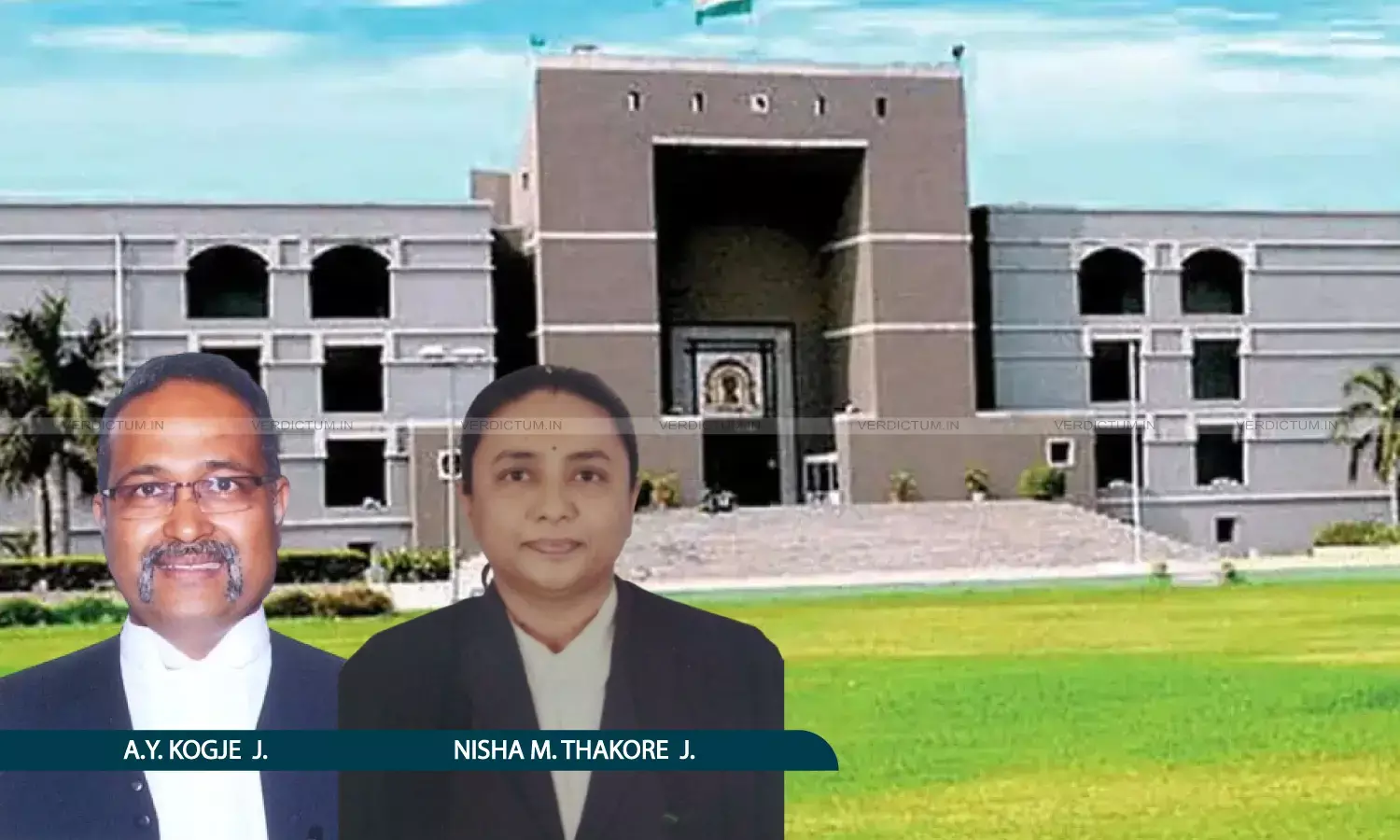
The Gujarat High Court has held that procedural irregularities cannot override substantive justice in cases of Mubarat divorce, observing that once mutual consent between the parties to dissolve the marriage is clearly established and admitted, courts must give effect to such dissolution, even without a formal written agreement.
The Division Bench criticising the Family Court’s “hyper-technical” approach, set aside the refusal to grant a declaration, the Court emphasised that technical objections, such as issues relating to procedure or documentation, cannot defeat a valid mutual consent divorce under Muslim personal law, especially when the parties themselves acknowledge the separation. The Court reiterated that under Section 7 of the Family Courts Act, 1984, Family Courts have jurisdiction to declare marital status, including in cases of Mubarat divorce.
Justice A.Y. Kogje and Justice Nisha M. Thakore while referring to Zohara Khatoon v. Mohd Ibrahim 1981 (2) SCC 509 noted, “…parties to the Muslim marriage can dissolve their Nikah mutually by entering into an agreement. It is also observed that the register maintained by the local body recognized by the religious institution merely acknowledges the declaration of such agreement entered upon between the parties and, as such registration is not essential to the personal law. Similarly, the Court has also observed and held that there is no process, by which, the written agreement is essential requirement for Mubarat”.
“…it is no more res integra that, in view of Section 2 read with Section 7 of the Act of 1984, the Family Courts are vested with the jurisdiction to declare the marital status of the parties, even in a case of mutual consent divorce in the form of Mubarat executed under the Muslim Law, even without a written agreement”, the Bench further noted.
Advocate Ashish M Dagli appeared for the appellant and Advocate Parth B. Chauhan appeared for the defendant.
The matter pertained to an appeal filed by a husband challenging the dismissal of his suit by the Family Court, Nadiad, which had refused to declare his marriage dissolved despite a mutual divorce deed executed between the parties on June 20, 2022. The Family Court had rejected the plea on technical grounds, including doubts over the power of attorney, absence of the wife, and lack of certain supporting materials like photographs.
Before the Court, it was established that the parties had married on March 19, 2022 as per Muslim rites but separated within a few months due to incompatibility. They executed a mutual divorce deed (Mubarat) and later, the wife remarried on January 1, 2024. Importantly, the wife appeared before the High Court and filed an affidavit affirming that the divorce deed was executed voluntarily and that she had no objection to the grant of a formal declaration of dissolution.
Referring to Asif Daudbhai Karva & Anr. v. None 2025 Supreme (Guj) 1304, the Bench observed, “Having noted the procedure recognized for dissolution of Nikah by way of talaq, ila, zihar, lian, khula and mubaraat, the Court has noted the distinct features of the aforesaid diBerent forms of dissolution of marriage. The Court has made reference of Text Book of Family Law, which suggests that the roots of the Mubarat can be traced into Holy Quran. The Court has also referred to the Text Book of Mohammedan Law and has compared the divorce at the request of wife as Khula as against the divorce by mutual agreement as Mubarat”.
Accordingly, the Court quashed the Family Court’s order and declared that the marriage stood dissolved with effect from June 20 2022, the date of execution of the mutual divorce deed.
Cause Title: X v. Z [Neutral Citation: 2026:GUJHC:19473-DB]
Appearances:
Appellant: Ashish M Dagli, Advocate.
Defendant: Parth B. Chauhan, Advocate.