

Pujari Is Servant Of Deity; Cannot Claim Proprietary Rights Or Adverse Possession Over Temple Land: Gujarat High Court
The High Court ruled that possession by a pujari is not hostile, proprietary, or adverse to the true owner, and cannot mature into title under the doctrine of adverse possession.
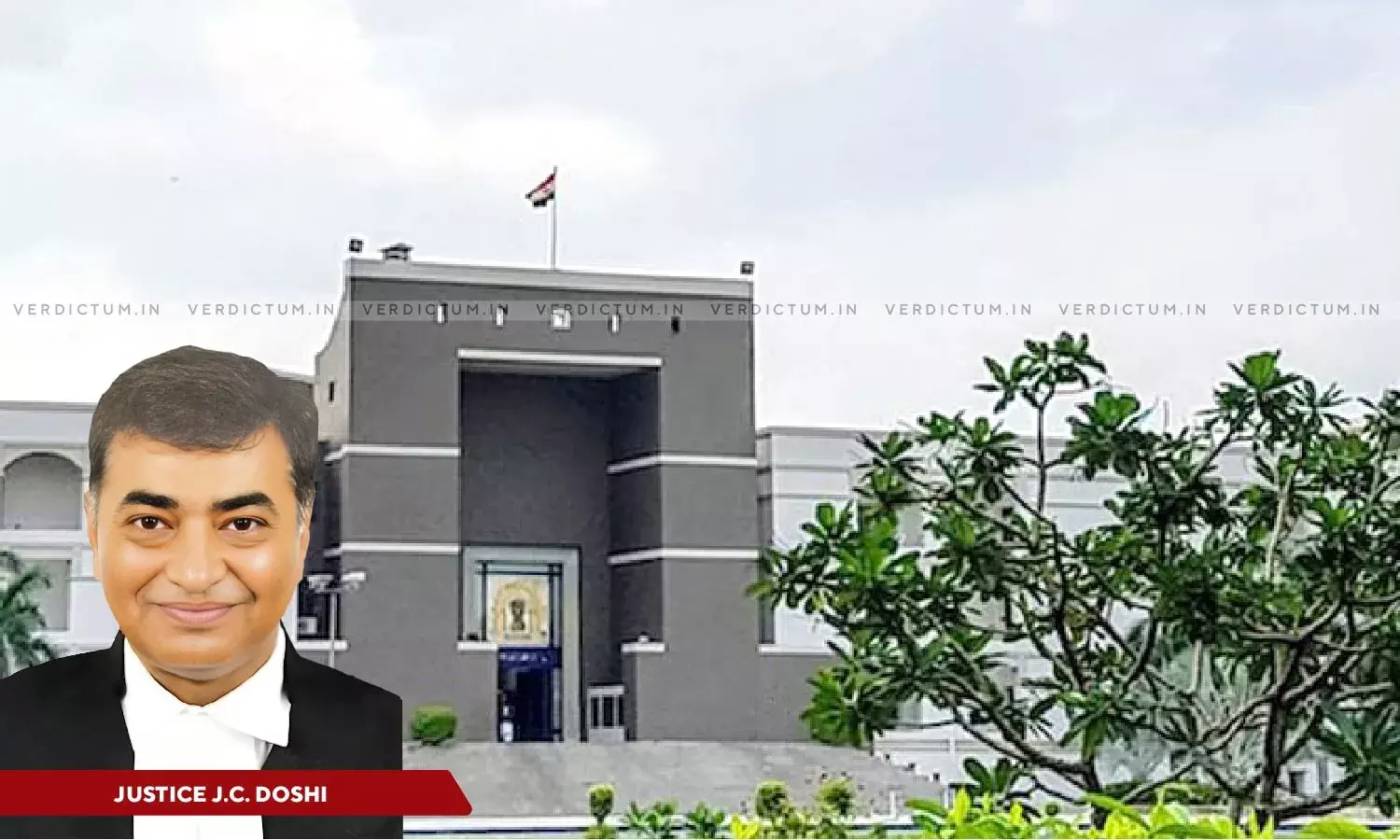
Justice J.C. Doshi, Gujarat High Court
The Gujarat High Court has held that a pujari does not acquire any proprietary right over temple land and cannot claim title by adverse possession merely based on long association with the temple or performance of religious duties.
The Court observed that a pujari remains a servant of the deity and cannot assert ownership or hostile possession against the true owner.
The Court was hearing a second appeal challenging concurrent findings of the trial court and the first appellate court, which had decreed a suit in favour of the plaintiff for removal of unauthorised construction and a permanent injunction in respect of land forming the access road to the plaintiff’s property.
A Bench of Justice J.C. Doshi examined whether a pujari could claim proprietary rights over the land or perfect title by adverse possession, and held: “the defendant was just ‘pujari’, he has no proprietary right over the suit property, he is not holding any possession being notorious possession adverse to the title of the owner. He is not Bhumiswami; he is just a servant of the deity. A servant thus has no right to claim that his possession over the suit property is on behalf of his master and matured into title on the principle of adverse possession”.
Background
The plaintiff had instituted a civil suit claiming ownership over plots purchased through a registered sale deed. The suit property had a 6-metre-wide access road on its northern side for ingress and egress.
According to the plaintiff, the defendants attempted to raise a Ganesh temple and associated structures on the entrance road leading to the suit property. Upon receiving an invitation card for the inauguration of the temple, the plaintiff visited the site and objected to the construction, alleging encroachment and illegal occupation of the access road.
As the objections were not heeded, the plaintiff approached the authorities and ultimately filed a civil suit seeking a declaration, permanent injunction, and mandatory injunction for the removal of the alleged illegal construction.
One defendant contested the suit, claiming to be the pujari of the temple. He contended that the temple was of ancient origin, that he had been performing puja for several years, and that he had been residing in a house attached to the temple along with his family. He further asserted that he had perfected title over the land by adverse possession due to long, uninterrupted occupation and use of the premises.
The trial court decreed the suit in favour of the plaintiff, restraining the defendants from further construction and directing the removal of the unauthorised structure from the access road. The first appellate court dismissed the appeal and confirmed the decree, with a modification directing immediate removal of all illegal constructions on the suit property and the entrance road.
Aggrieved, the pujari filed a second appeal before the High Court.
Court’s Observation
The High Court first examined the legal status of the appellant and found that he was only a pujari of the temple. The Court categorically rejected the contention that performance of religious duties or long association with the temple could confer proprietary rights. It noted that a pujari is merely a servant or appointee of the deity and does not acquire any independent ownership rights over temple property.
Relying on settled Supreme Court jurisprudence, the Court reiterated that temple property belongs to the deity, and the pujari’s role is limited to performing religious functions and maintaining the temple. The Court observed that a pujari cannot be treated as owner, occupier, or bhumiswami, nor can he claim independent proprietary rights merely because he performs puja or resides in premises attached to the temple.
On the plea of adverse possession, the Court held that the doctrine requires strict pleading and proof of classic elements, including hostile possession, open and continuous occupation, knowledge of the true owner, and possession adverse to title. The Court found that none of these requirements was satisfied. It noted that possession of a pujari is inherently permissive and on behalf of the deity, not hostile to the true owner.
The Court further observed that no trustee or lawful representative of the temple had claimed ownership or title over the land. It was only the pujari who was asserting such rights, which the Court found legally untenable.
On the scope of the second appeal, the Court reiterated that under Section 100 CPC, interference is permissible only where a substantial question of law arises. Concurrent findings of fact cannot be disturbed unless they are perverse, based on no evidence, or contrary to settled law. The Court found that the trial court and appellate court had properly appreciated the evidence and applied settled legal principles.
The Court also took note of Supreme Court precedents emphasising a strict approach against illegal constructions, particularly on public roads and access pathways, and held that unauthorised religious structures cannot be protected under the guise of faith or long usage.
Conclusion
The High Court held that the appellant, being only a pujari, had no locus to claim proprietary rights over the land or to assert adverse possession. It found no substantial question of law arising in the second appeal and refused to interfere with the concurrent findings of the courts below.
Accordingly, the second appeal was dismissed at the admission stage, and the decree directing the removal of unauthorised construction and grant of permanent injunction in favour of the plaintiff was upheld.
Cause Title: Rameshbhai Umakant Sharma v. Ashaben Kamleshkumar Modi & Ors. (Neutral Citation: 2026:GUJHC:3973)
Appearances
Appellant: Vijal P. Desai, Advocate
