

Digging Beyond One Foot In Protected Monument Area Barred U/S 19 AMASR Act: Gujarat High Court Rejects Plea Seeking Burial Rights Near Tomb
The High Court held that even if a religious or customary right to burial is claimed, such a right cannot override statutory restrictions under the Ancient Monuments and Archaeological Sites and Remains Act, 1958.
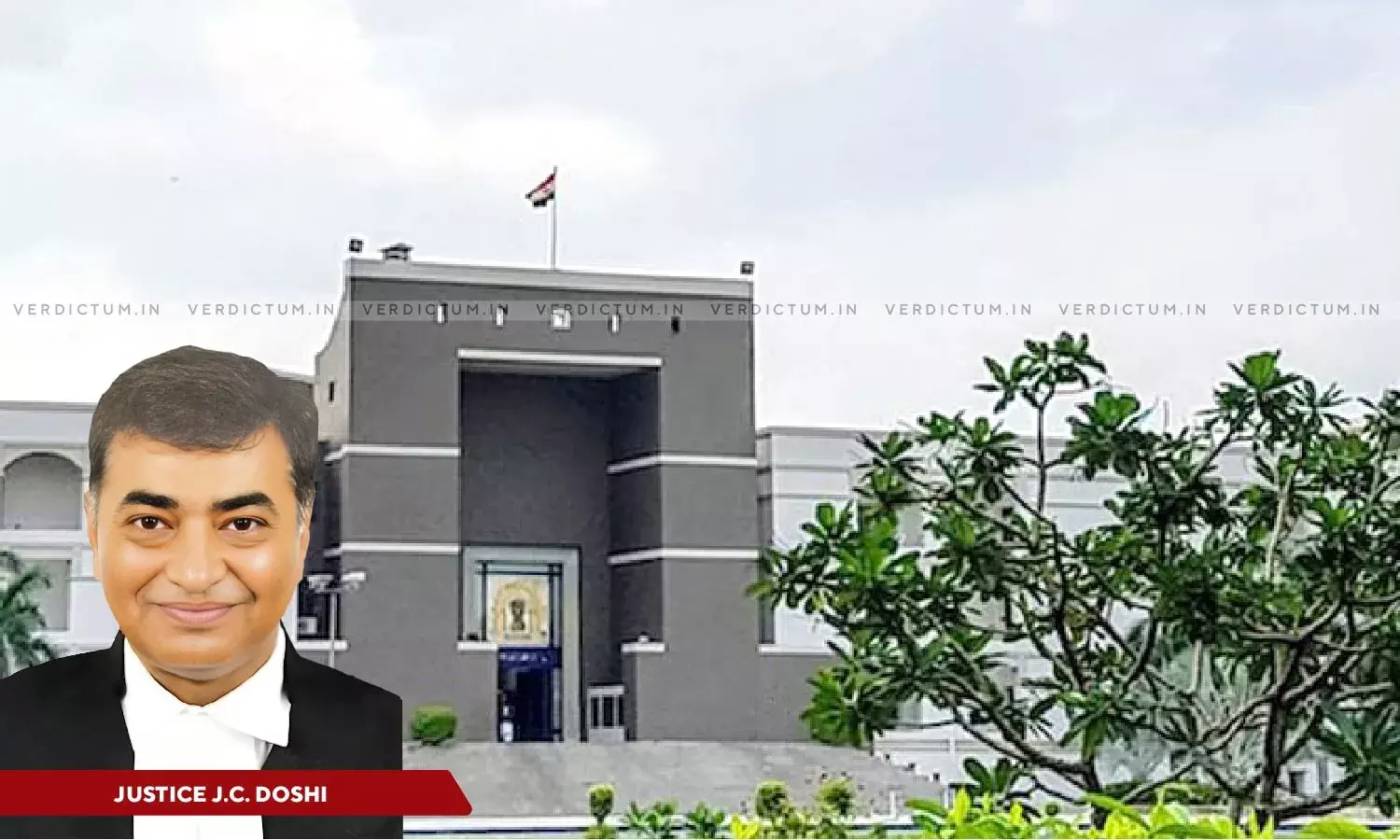
Justice J.C. Doshi, Gujarat High Court
The Gujarat High Court, while rejecting a plea seeking protection of the right to conduct burial near a tomb, observed that the proviso to Section 19 of the Ancient Monuments and Archaeological Sites and Remains Act, 1958, restricts digging in protected areas beyond one foot from the surface, even if customary or religious rights are claimed.
The Court was hearing a second appeal challenging the dismissal of a civil suit seeking a declaration and an injunction against action taken by the State authorities restraining burial activities in the vicinity of a protected monument.
A Single Judge Bench of Justice J. C. Doshi observed that “Proviso to Section 19 recognises the right to cultivate and prohibits digging of prohibited area for not more than one foot from the soil in the surface. The plaintiff intends to dig the surface of the soil for more than one foot for the burial and for making a Mazar thereof. The right, even if it exists, is clearly barred under Section 19 of the ‘Act of 1958’.”
Background
The dispute arose from a civil suit filed to seek a declaration and a permanent injunction against a notice issued by state authorities, which restrained certain activities within the land surrounding a historical tomb situated in Vadodara.
The plaintiff claimed that he was the religious leader associated with the tomb and that the premises had historically been used for religious observances and the burial of family members and disciples. It was asserted that the surrounding land of the tomb had been used for burial activities as a matter of custom and tradition.
According to the plaintiff, the State authorities interfered with these activities by issuing a notice restraining any burial or related activity within the premises on the ground that the area constituted a protected monument under the relevant law.
The trial court initially decreed the suit in favour of the plaintiff. However, the appellate court reversed the decree and dismissed the suit after examining documents and records relating to the status of the monument and the land in question.
Aggrieved by the reversal of the decree, the plaintiff approached the High Court through a second appeal under Section 100 of the Code of Civil Procedure.
Court’s Observation
The Court first examined the scope of interference in a second appeal and reiterated that the High Court can interfere only when the case involves a substantial question of law or where findings of the lower courts are contrary to law or based on inadmissible evidence.
Addressing the contention that the appellate court relied on unexhibited documents, the Court noted that the documents in question had originally been produced by the plaintiff himself during the trial proceedings. These documents included revenue records, notifications, and orders issued by authorities relating to the status of the monument.
The Court held that the appellate court was justified in referring to such documents, particularly when they constituted public documents and were already part of the record. The Court observed that a party cannot disown documents that were produced by him in support of his own pleadings.
The Court further noted that historical records and government notifications established that the tomb had long been recognised as a protected monument, even before independence, and that such protection continued under the statutory framework governing ancient monuments.
The Court also examined the claim of customary or religious right to burial in the surrounding area. It was observed that the plaintiff had failed to produce evidence establishing such a customary right or proving lineage entitling him to exercise any exclusive control over the premises.
Importantly, the Court referred to Section 19 of the Ancient Monuments and Archaeological Sites and Remains Act and observed that the statute restricts digging in protected areas beyond a limited depth. The Court noted that burial activities necessarily involve digging beyond the permitted limit and therefore fall within the statutory prohibition.
The Court held that even if any religious or customary practice were assumed to exist, such a practice cannot override the statutory restrictions imposed for the protection and preservation of monuments.
Conclusion
The High Court held that the appellate court committed no error in reversing the decree of the trial court and dismissing the suit. The Court concluded that the plaintiff had failed to establish any enforceable right to carry out burial activities within the protected monument area and that such activities would, in any event, be barred under the statutory restrictions governing protected monuments.
Accordingly, the second appeal was dismissed.
Cause Title: Pirzada Saiyed Bahaudin B Kadri v. State of Gujarat
Appearances
Appellant: MTM Hakim, Advocate.
Respondents: Urvashi Purohit, Assistant Government Pleader for the State.
Click here to read/download Judgment