Statutory Cooling-Off Period U/s 13B HMA Is Directory; Courts Can Waive It Off If Satisfied: Gujarat High Court Reiterates
The High Court has reiterated that the six-month cooling-off period prescribed under Section 13B of the Hindu Marriage Act, 1955, is directory in nature, and that rejection of a petition for divorce by mutual consent solely on the ground of non-completion of such period is unsustainable.
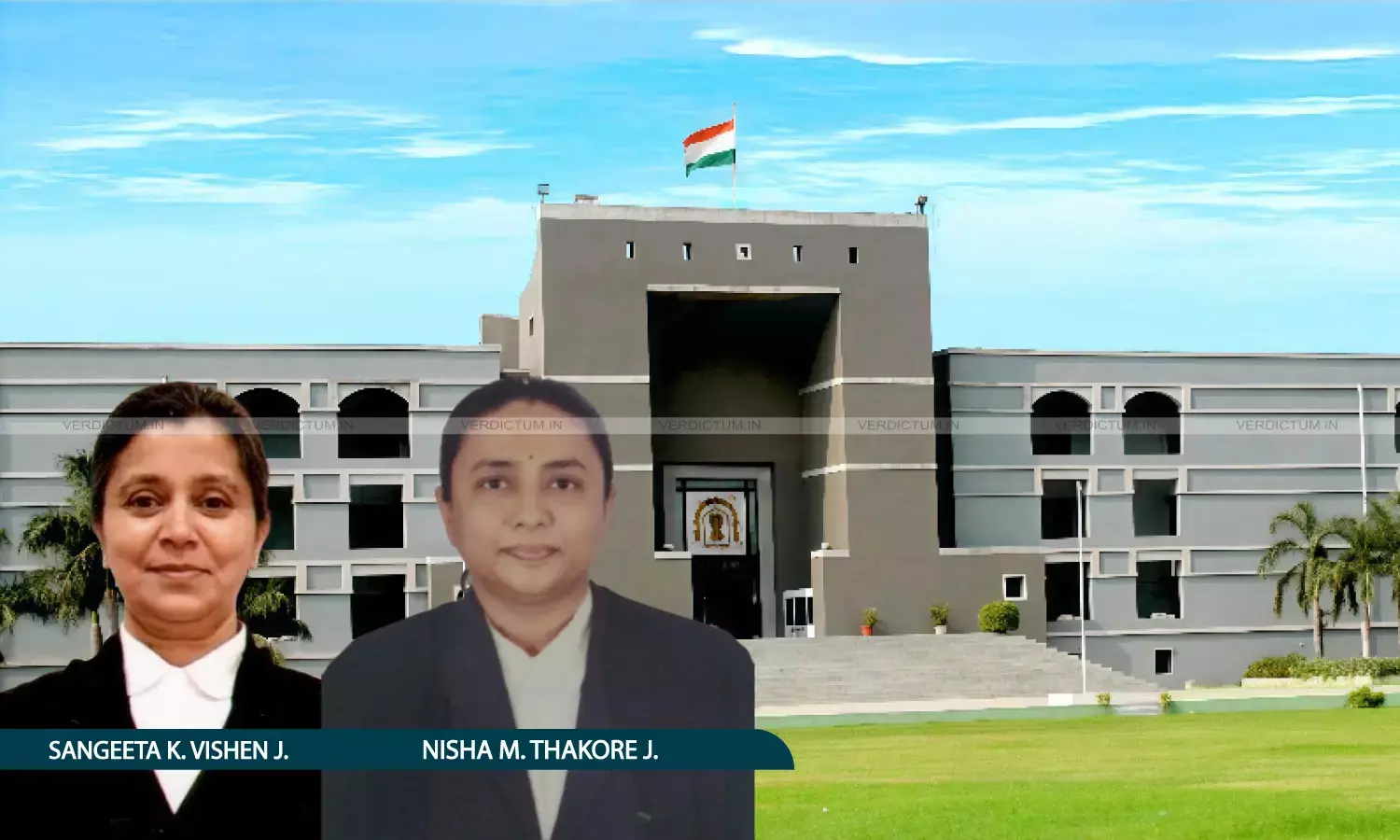
The Gujarat High Court has held that the statutory cooling-off period under Section 13B of the Hindu Marriage Act, 1955, is directory and not mandatory in nature, and that the Court dealing with the matter can waive the statutory period if it is satisfied that a case is made out to do so.
The Court was hearing a first appeal arising from the rejection of a petition filed under Section 13B of the Hindu Marriage Act, 1955, whereby the Family Court had declined to grant divorce by mutual consent on the reasoning that the cooling-off period was mandatory and that no waiver application had been moved.
A Division Bench of Justice Sangeeta K. Vishen and Justice Nisha M. Thakore, while examining the scope and object of Section 13B, observed that “it is well-settled that the six months period enumerated in Section 13B of the Act of 1955 is directory and not mandatory”, while further clarifying that the issue is no longer res integra in view of authoritative pronouncements of the Supreme Court.
Background
The parties to the marriage had approached the Family Court seeking dissolution of the marriage by mutual consent under Section 13B of the Hindu Marriage Act, 1955. It was not disputed that the parties had been living separately for more than one year and had jointly expressed their intention to dissolve the marriage.
The Family Court rejected the application on the ground that the statutory six-month cooling-off period prescribed under Section 13B(2) had not elapsed and that no application seeking waiver of the said period had been filed. Aggrieved by the rejection, the parties approached the High Court in appeal.
Court’s Observation
The High Court examined the statutory scheme of Section 13B of the Hindu Marriage Act, 1955, which provides for divorce by mutual consent and prescribes a cooling-off period of six months between the first and second motions.
Relying on the decision of the Supreme Court in Amardeep Singh v. Harveen Kaur, the Court noted that the object of the cooling-off period is to allow the parties to reconsider their decision and explore the possibility of reconciliation. The provision, the Court clarified, was not intended to perpetuate a marriage that had irretrievably broken down or to prolong the agony of the parties where reunion was not possible.
The Bench observed that the Supreme Court has conclusively held that the six-month period under Section 13B(2) is directory and not mandatory, and that a Family Court has the discretion to waive the same upon being satisfied that the statutory conditions laid down by the Supreme Court are fulfilled.
"The Apex Court while considering the object behind and provisions of the Act has held that the Court dealing with the matter if is satisfied that a case is made out to waive the statutory period under Section 13B(2), it can do so after considering the parameters indicated in paragraph 19, ...the Apex Court, has also observed that it would be open to the parties to file an application seeking waiver of the cooling-off period one week after the first motion, giving reasons for the prayers", the Bench added.
The Court further observed that where parties have been living separately for a substantial period, have mutually agreed to dissolve the marriage, and have settled all ancillary issues, insistence on the cooling-off period would serve no useful purpose and would only prolong their suffering.
In the facts of the present case, the High Court noted that there was no scope for reunion between the parties and that both were firm in their decision to seek divorce by mutual consent. The Court held that the Family Court ought to have afforded the parties an opportunity either to file a waiver application or to have the matter adjourned, instead of outrightly rejecting the petition.
Conclusion
Accordingly, the High Court held that rejection of a petition under Section 13B of the Hindu Marriage Act, 1955, solely on the ground of non-completion of the six-month cooling-off period or non-filing of a waiver application unsustainable.
Consequently, the appeal was allowed. The judgment rejecting the petition for divorce by mutual consent was set aside, and the Family Suit was restored to its original file, with a direction to the Family Court to decide the matter afresh in accordance with law, uninfluenced by the earlier rejection.
Cause Title: AMY v. NA (Neutral Citation: 2025:GUJHC:74569-DB)
Appearances
Appellants: Pooja D. Baswal, Advocate
Respondent: Bhakti M. Joshi, Advocate