

Not A Fly-By-Night Operator; Had Positive Duty To Verify: Delhi HC Refuses to Quash Criminal Proceedings Against Due Diligence Firm In ₹6 Crore Bank Loan Fraud Case
Says scope at charge stage limited to assessing strong suspicion, not proof of guilt

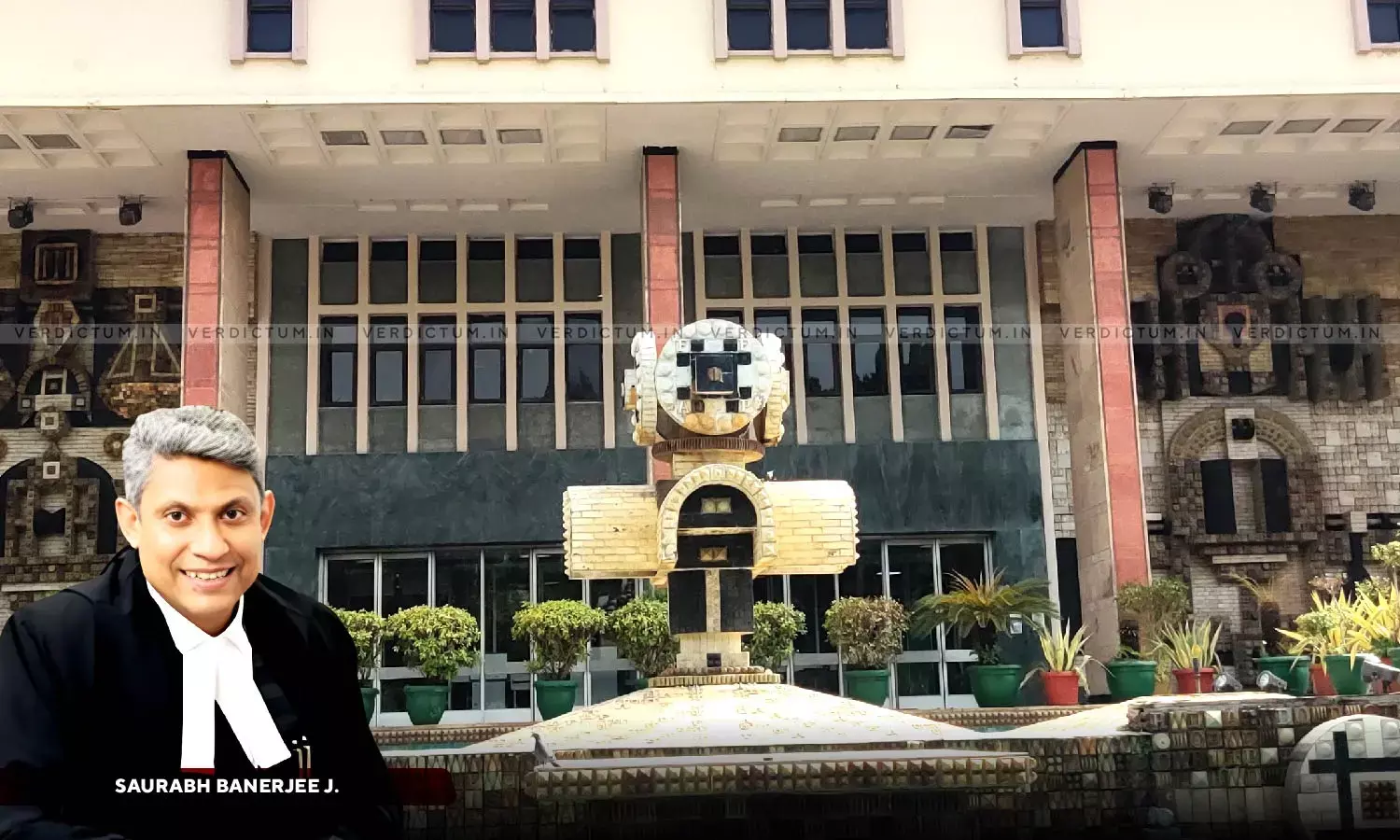
The Delhi High Court has refused to quash criminal charges against a due diligence firm and its authorised signatory in a ₹6 crore bank loan fraud case, observing that the agency was “not dealing with a fly-by-night operator” and was under a positive duty to independently verify the borrower’s credentials.
Therefore, holding that the firm’s positive report despite glaring irregularities and internal contradictions raises grave suspicion of its involvement, the Court said that the matter must proceed to trial rather than be terminated at the threshold stage.
The Bench reiterating settled principles governing discharge and framing of charge under Sections 227 and 228 CrPC, observed that at the stage of framing charges, the Court is not concerned with proof of guilt but with the existence of strong suspicion.
Justice Saurabh Banerjee observed, “As such in view of the positive Report submitted by the petitioners despite the glaring irregularities and contradictions, there arises grave suspicion regarding involvement of the petitioners in the alleged offence and which can be only tested in trial and thus this Court, at this stage, not deems it appropriate to interfere with the charges framed by the learned Trial Court vide the impugned order dated 07.09.2022”.
“As apparent therefrom, the same casted/ imposed a positive duty upon the petitioners to independently verify and form a considered opinion regarding the genuineness of the borrower’s identity/ integrity/ market standing/ financial position for preparation of their Report. Therefore, it is hard to believe that the petitioners were only expected to merely rely upon the documents supplied by the Bank or the borrower. The petitioners were not dealing as/ with a fly by night operator. As such, the role of the petitioners and the Report submitted by them assumed substantial significance in consideration and sanction of the loan proposal”, the bench further observed.
Accordingly, the bench dismissed the petition challenging the order of the Special Judge (PC Act), Rouse Avenue Courts, which had framed charges under Sections 120B, 420, 468 and 471 of the IPC, along with Section 13(2) read with Section 13(1)(d) of the Prevention of Corruption Act, 1988.
Advocate Naman Gupta appeared for the petitioner and Anuram S. Sharma, SPP appeared for the respondent.
In the matter an FIR was registered by the Central Bureau of Investigation on a complaint by a Deputy General Manager of Corporation Bank.
It was alleged that in March 2013, a person posing as proprietor of M/s Shree Balaji Overseas secured a working capital loan of ₹600 lakhs from the Bank’s Vasant Kunj branch on the basis of forged and fabricated documents, including title deeds offered as collateral.
According to the prosecution, subsequent inquiry revealed that the borrower firm and its proprietor were fictitious. The petitioners, who were empanelled as an external due diligence agency, had submitted a favourable Due Diligence Report dated 29-03-2013, allegedly without conducting genuine physical and financial verification.
The petitioners argued that they had conducted over 1100 due diligences for the Bank and had no role in any conspiracy. They contended that they relied on documents supplied by the Bank and borrower, were not authorised to conduct forensic audits or independently verify statutory records, and derived no monetary benefit from the transaction. They further claimed that Income Tax Returns could not be verified due to lack of login credentials, a fact, they said, was recorded in their report.
Opposing the plea, the CBI submitted that the report had material misrepresentations and pointed out that the report claimed physical verification had been conducted by an employee who later denied having carried out any such inspection. Additionally, although the report noted non-availability of Income Tax login credentials, it simultaneously recorded verification of Income Tax Returns under the heading “Records of Originals Verified,” revealing internal contradiction, the CBI said.
The Court noted that the Bank’s empanelment terms and circulars imposed a positive duty upon the petitioners to independently verify the borrower’s identity, integrity, market standing and financial position.
Cause Title: Vikas Garg & Anr. v. The State Through Central Bureau Of Investigation [Neutral Citation: 2026:DHC:1359]
Appearances:
Petitioner: Naman Gupta, Mansi Goyal, Advocates.
Respondent: Anuram S. Sharma, SPP, Harpreet Kalsi, Vashisht Rao, Ripudaman Sharma, Riya Sachdeva and Amisha, Advocates.