

Merely Terming Hypertension A Lifestyle Disorder Insufficient To Deny Disability Pension: Delhi High Court
The Union challenged the AFT’s grant of disability pension for hypertension, claiming it was a lifestyle disorder.
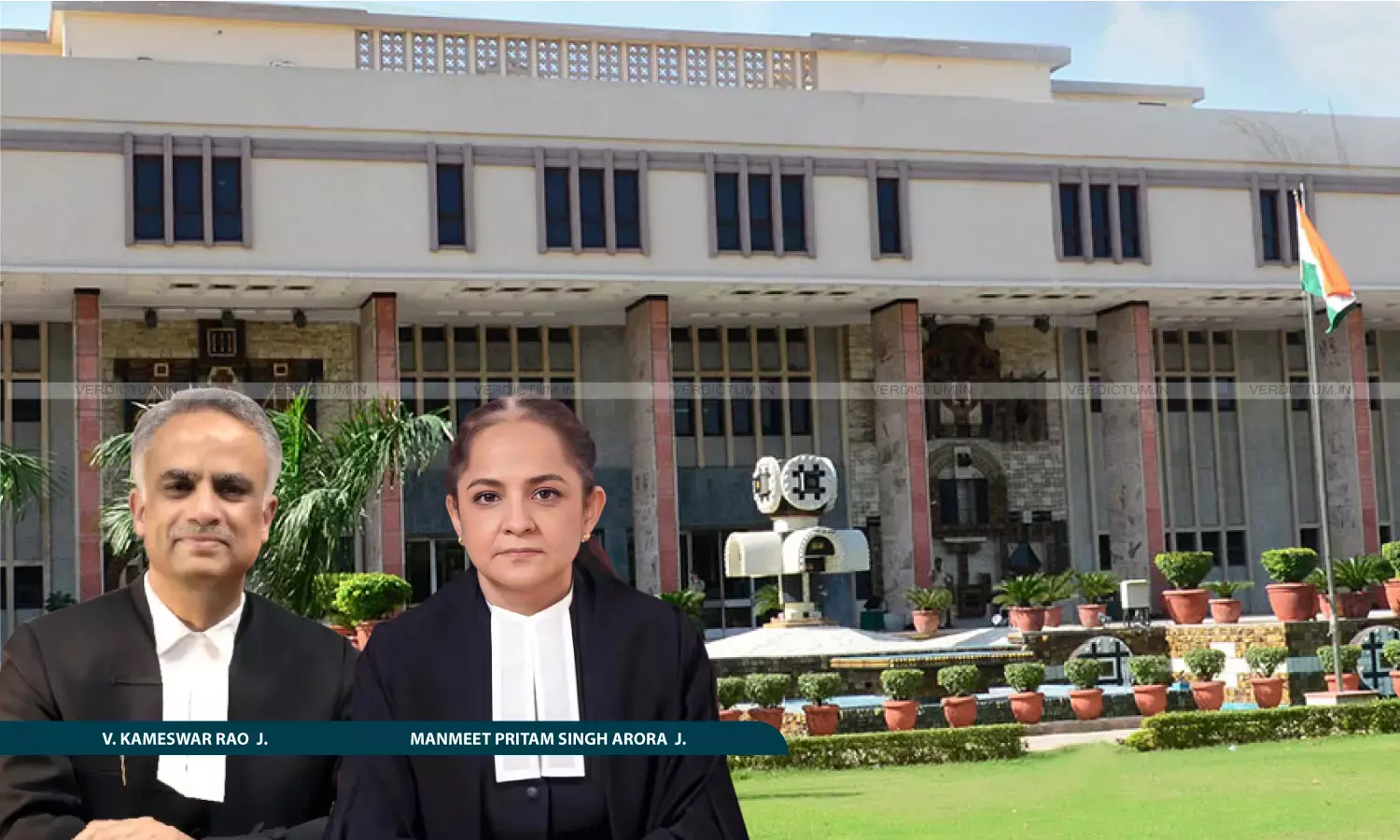
The Delhi High Court has clarified that merely labeling a medical condition such as hypertension as a “lifestyle disorder” cannot, by itself, justify the denial of disability pension to Air Force personnel.
A Division Bench of Justice V. Kameswar Rao and Justice Manmeet Pritam Singh Arora observed, “lifestyle varies from individual to individual. Hence, a mere statement that the disease of a lifestyle disorder cannot be a sufficient reason to deny the grant of Disability Pension unless the Medical Board has duly examined and recorded the particulars relevant to the individual concerned.”
A petition was filed by the Union of India challenging an order passed by the Armed Forces Tribunal (AFT). The Tribunal had granted disability pension to a former Indian Air Force personnel who had been discharged after completing more than 37 years of service in a low medical category. The disability pension had been awarded on account of “Primary Hypertension,” which was assessed at 30 percent and broad-banded to 50 percent.
The authorities had earlier rejected the respondent’s claim for disability pension, asserting that hypertension was an idiopathic or lifestyle-related disorder and was neither attributable to nor aggravated by military service. The Union of India argued before the High Court that the AFT’s decision was per incuriam, as it allegedly failed to consider the Entitlement Rules for Casualty Pensionary Awards to Armed Forces Personnel, 2008. According to the Union, these rules had done away with any general presumption in favor of service personnel.
Rejecting this contention, the High Court upheld the Tribunal’s reasoning and relied on its earlier judgment in Union of India v. Hav Ram Kumar. The Court reiterated that disability pension is a beneficial provision and must be interpreted liberally in favor of armed forces personnel. It emphasized that under the 2008 Entitlement Rules, the burden lies on the employer to establish, through cogent and convincing reasons, that the disease in question was neither attributable to nor aggravated by military service.
The Bench noted, “It is a conceded case that he did not suffer from any disability at the time of appointment in the Indian Air Force.” However, it added, “Suffice to state, while ascertaining the disability of Hypertension, the Release Medical Board has not given any reasons to support its conclusion that the disability of Primary Hypertension was not relatable to military service. It does not even give any reasons to relate the disability to lifestyle.”
The Court observed that such an unreasoned medical opinion could not form the basis for denying disability pension. In the absence of any individualized assessment or supporting rationale, the rejection of the claim was found to be arbitrary and contrary to the governing rules.
The Delhi High Court dismissed the Union of India’s plea and affirmed the order of the Armed Forces Tribunal granting disability pension to the former Air Force personnel.
Cause Title: Union Of India v. 627281 EX MWO(HFO)Tejpal Singh, [2026:DHC:470-DB]
Appearance:
Petitioner: Advocates Archana Gaur, Riddhima Gaur, Deepu Kumar
