

Utterances Not Made In ‘Public View’ Do Not Attract SC/ST Act Offence; Delhi High Court Acquits Officer Accused Of Abusing His Subordinate
For an offence under the SC/ST Act to be made out, the alleged insult or intimidation must occur in a place within “public view”; absence of this statutory requirement is fatal to the prosecution's case, the High Court held while setting aside the conviction.
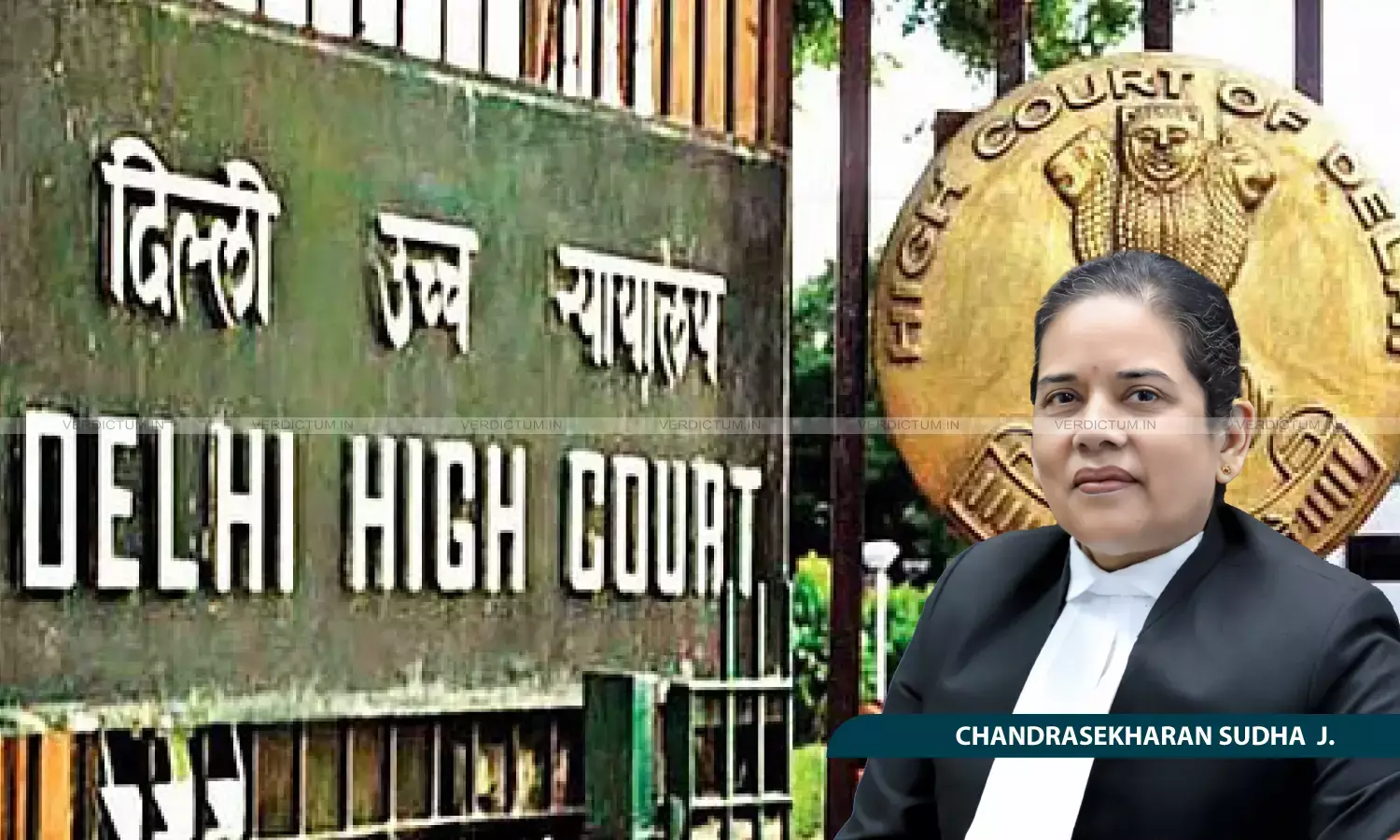
The Delhi High Court, while acquitting an officer for abusing a subordinate belonging to the SC/ST community, held that where the prosecution fails to establish that the alleged utterances were made in a place within “public view”, as contemplated under the SC/ST Act, the essential ingredient of the offence is not satisfied and the conviction cannot be sustained.
The Court was hearing a criminal appeal filed by the accused challenging his conviction under the SC/ST Act by the trial court.
A Single Judge Bench of Justice Chandrasekharan Sudha, while allowing the appeal, observed that “to be a place within “public view”, the place should be open where members of the public can witness or hear the utterances made by the accused to the victim; if it is done in a place where members of the public are not present, it cannot be said that it has taken place at a place within public view as contemplated under the Section”.
Advocate F.K. Jha appeared for the appellant, while Pradeep Gahalot, Additional Public Prosecutor, appeared for the respondents.
Background
The appellant was tried and convicted by the trial court for the offence punishable under Section 3(1)(x) of the Scheduled Castes and Scheduled Tribes (Prevention of Atrocities) Act, 1989, on the allegation that caste-based derogatory remarks were made with the intent to humiliate.
The prosecution case was initiated based on a complaint, following which an FIR was registered and an investigation was conducted by the police. The case was committed to the Court of Session, a charge was framed, and multiple prosecution witnesses were examined.
Upon conclusion of the trial, the trial court found the appellant guilty and imposed a sentence. Aggrieved, the appellant preferred the present appeal under the Code of Criminal Procedure.
Before the High Court, the appellant challenged the conviction on several grounds, including absence of particulars in the complaint regarding the place of occurrence, delay in complaining, lack of independent witnesses, and the failure of the prosecution to establish that the alleged incident occurred in a place within public view, which is a mandatory ingredient of the offence under the SC/ST Act.
Court’s Observation
The High Court examined the statutory ingredients of Section 3(1)(x) of the SC/ST Act as it then stood, and emphasised that the offence requires proof that the alleged insult or intimidation was committed in a place within “public view”.
The Bench analysed the complaint and noted that it did not disclose the date, time, or place of the alleged incident, nor did it state that the utterances were made in a place where members of the public were present.
The Court held that the mere naming of certain persons at the foot of the complaint was insufficient to establish that the alleged incident took place in public view, particularly when the complaint did not state that those persons had witnessed or heard the utterances.
Relying on binding precedents of the Supreme Court, the Court reiterated that “public view” requires the presence of members of the public who can witness or hear the utterances, and that an incident occurring in a private setting or in the absence of the public does not satisfy this statutory requirement.
The High Court further took note of the delay in complaining and held that, while delay by itself is not fatal, in the present case it assumed significance in light of other circumstances casting doubt on the prosecution's version.
The Bench also examined the defence version and documentary material on record, and noted that the defence case regarding prior departmental action against the complainant was supported by material, thereby lending credence to the plea that the complaint was an afterthought.
The Court further observed that no independent public witnesses were examined to establish that the alleged utterances were made in public view, and that the testimonies relied upon by the prosecution amounted to improvements over what was stated in the original complaint.
Furthermore, while taking note that the complaint was initiated by the complainant pursuant to the appellant/accused issuing a memo for the dereliction of his duties to him, the Court observed that the other witnesses were also served with the Circular and memo for failing to report for work.
Accordingly, Justice Sudha concluded: “In these circumstances, doubts arise in the mind of the Court regarding the prosecution's case. Hence, I find that the trial court went wrong in relying on the unsatisfactory evidence on record to find the accused guilty. I find that the accused is entitled to the benefit of doubt.”
Conclusion
The High Court allowed the criminal appeal and set aside the judgment of conviction passed by the trial court. The appellant was directed to be set at liberty, and the bail bond was ordered to stand cancelled.
All pending applications, if any, were directed to stand closed.
Cause Title: Udaiveer Singh v. Government of NCT of Delhi (Neutral Citation: 2026:DHC:624)
Appearances
Appellant: F.K. Jha, Advocate; Gaurav Jha, Advocate; Shalini Jha, Advocate; Aaryamaan Singh, Advocate
Respondent: Pradeep Gahalot, Additional Public Prosecutor
