

Posting Obscene Content Of Minors On Social Media Causes Lasting Damage To Dignity Creating Harm That Far Exceeds Statutory Punishment: Delhi High Court
The Court observed that uploading inappropriate material of a minor on Instagram causes lasting damage to their dignity and psychological well-being.

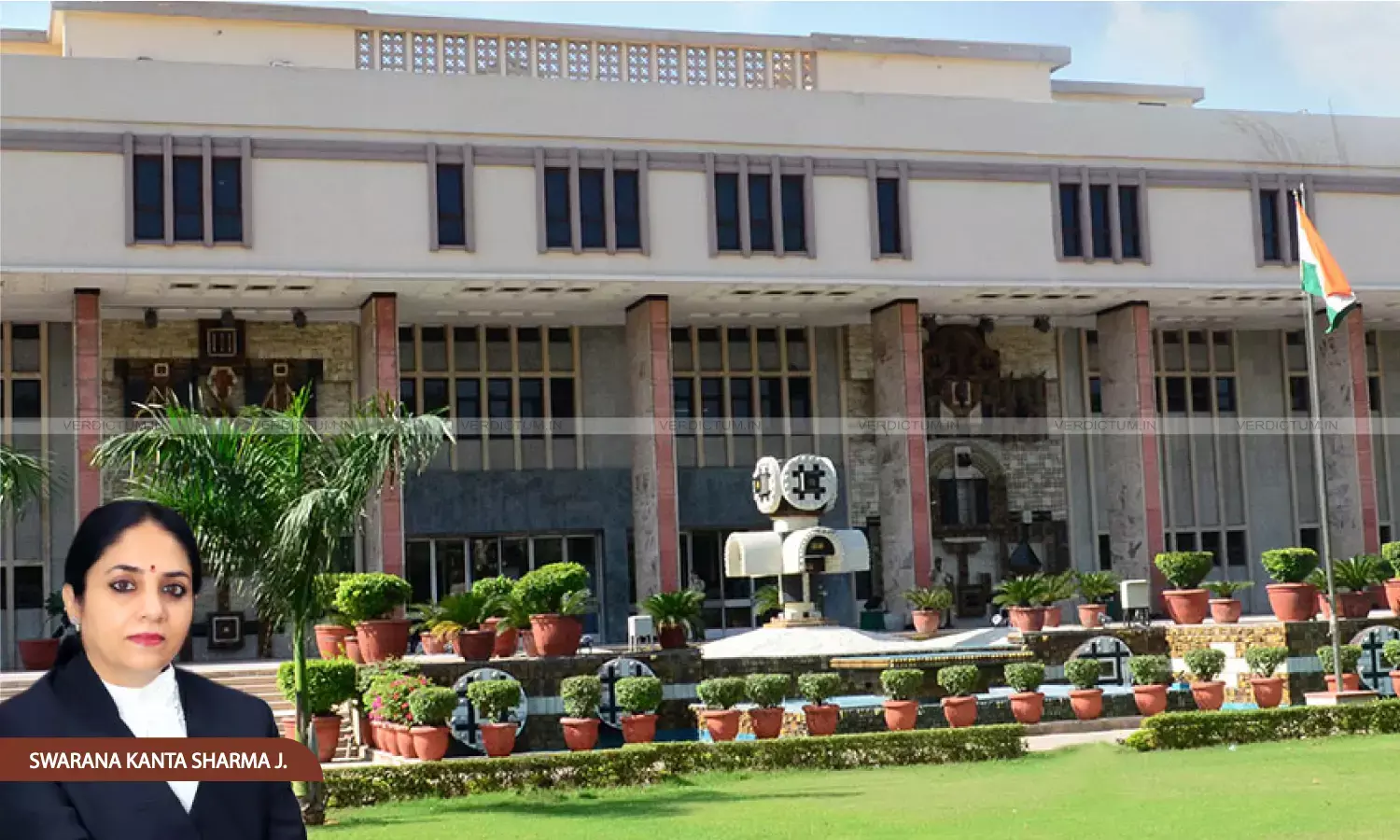
The Delhi High Court dismissed a regular bail application filed by an accused charged with sexual assault and the unauthorized distribution of obscene photographs of a minor.
The Court highlighted that in the digital age, the rapid circulation of such material creates harm that far exceeds statutory legal punishment, impacting the victim's social life and future prospects.
Despite the applicant's claims of a consensual relationship and a delay in filing the FIR, the Bench found the allegations of blackmail and the creation of fake social media accounts serious enough to warrant continued custody, especially noting the applicant's involvement in another criminal case in Uttar Pradesh.
The Bench of Justice Swarna Kanta Sharma observed, “This Court also cannot lose sight of the fact that posting inappropriate photographs and videos of a person, particularly a minor, on social media platforms such as Instagram has far-reaching consequences. In the present digital age, once such material is uploaded, it can be circulated, shared, and replicated widely within a short span of time, often beyond the control of the person affected. The harm caused by such acts cannot be assessed merely in terms of the punishment that the offence may attract under law. Such acts have the potential to inflict deep and lasting damage upon the dignity, privacy, and psychological well-being of the victim, and may also seriously affect the future prospects and social life of the young victim and her family.”
Advocate Mahavir Singh appeared for the Petitioner, while APP Naresh Kumar Chahar appeared for the Respondent.
Facts of the Case
The applicant sought the grant of regular bail in a case arising from an FIR registered under Sections 376 and 506 of the Indian Penal Code (IPC).
The facts stated that the FIR was registered based on a complaint by the prosecutrix, "T." She alleged that about six years before the FIR, when she was 15 years old, the accused, Sumit, lived as a tenant across from her house. She claimed that he often called her to his room to play video games on his phone. On one occasion, he gave her a cold drink that made her lose consciousness. She alleged that he then sexually assaulted her while his brother, Shivam, recorded obscene videos. She further stated that the applicant blackmailed and assaulted her for six years, created fake Instagram accounts in her name, and circulated her private photos and videos to her friends and family.
During the investigation, a medical examination was conducted at GTB Hospital, though her mother refused an internal examination. The prosecutrix supported her allegations in a statement recorded before a Magistrate under Section 183 of the BNSS. Police arrested the co-accused, Shivam, in April 2025, but the Sessions Court later granted him bail. School records confirmed the prosecutrix was a minor at the time the incidents began, and phone records showed frequent contact between her and the applicant.
After his anticipatory bail was dismissed, the applicant was arrested on June 19, 2025. The police eventually filed a charge sheet under the IPC and the POCSO Act.
Contentions of the Parties
The Applicant argued that the accused was falsely implicated and had already spent over nine months in custody. He contended that the relationship was consensual and known to both families, and that the FIR was filed only after a personal dispute and a six-year delay. The Applicant also pointed out that the police recovered no obscene videos and found that the fake Instagram accounts were linked to a phone belonging to a witness named Yogesh, not the applicant. Since the applicant's brother was already out on bail, the counsel requested the same for his client.
The State opposed the bail application due to the serious nature of the charges involving a minor. It was argued that the applicant used Yogesh's phone number to operate the fake Instagram accounts and circulate obscene material. It was noted that both Yogesh and the prosecutrix provided statements that supported the prosecution's case. Because the court had not yet framed charges, the State argued that the applicant should remain in custody, given the gravity of the evidence.
Observations of the Court
The Court rejected the applicant's argument regarding the mobile number used for the fake Instagram accounts. Although the number belonged to a man named Yogesh Kumar, Yogesh stated to the police that the applicant actually used the number.
The Court also denied the request for parity with the co-accused brother. It ruled that the applicant played a much larger role; while the brother only allegedly recorded the videos, the applicant was accused of both sexual assault and the active distribution of the media online.
The Court emphasized the severe impact of uploading private material to social media. It noted that such digital content spreads rapidly and causes lasting damage to a young victim's dignity, privacy, and psychological health. The Court stated that this harm went far beyond simple legal punishment.
The Court said, “The allegation against the co-accused is limited to recording obscene videos and photographs of the prosecutrix, whereas the allegations against the applicant herein are two-fold: firstly, of sexually assaulting the prosecutrix and secondly, of creating fake Instagram accounts in her name and posting her inappropriate videos and photographs on the said platforms. In view thereof, the applicant Sumit cannot claim parity with the co-accused Shivam.”
The Court noted that the applicant was already involved in another criminal case in Uttar Pradesh. Given the seriousness of the allegations and the fact that the trial had not yet started, the Court found no reason to grant bail.
The application was dismissed, though the Court clarified that these observations did not constitute a final opinion on the case's merits.
Cause Title: Sumit v. State of NCT of Delhi [Bail Application No. 538/2026]
Appearances:
Petitioner: Advocates Mahavir Singh, Panchajanya Batra Singh and Himalaya Singh
Respondent: APP Naresh Kumar Chahar