

Right Of Daughter-in-Law To Reside In Matrimonial Household Under Domestic Violence Act Is Protective, Not Perpetual Or Ownership-Based: Delhi High Court
The High Court held that while a woman has a statutory right to seek residence-related protection under the Protection of Women from Domestic Violence Act, 2005, such a right cannot override the rights of senior citizens to live peacefully in their own property.
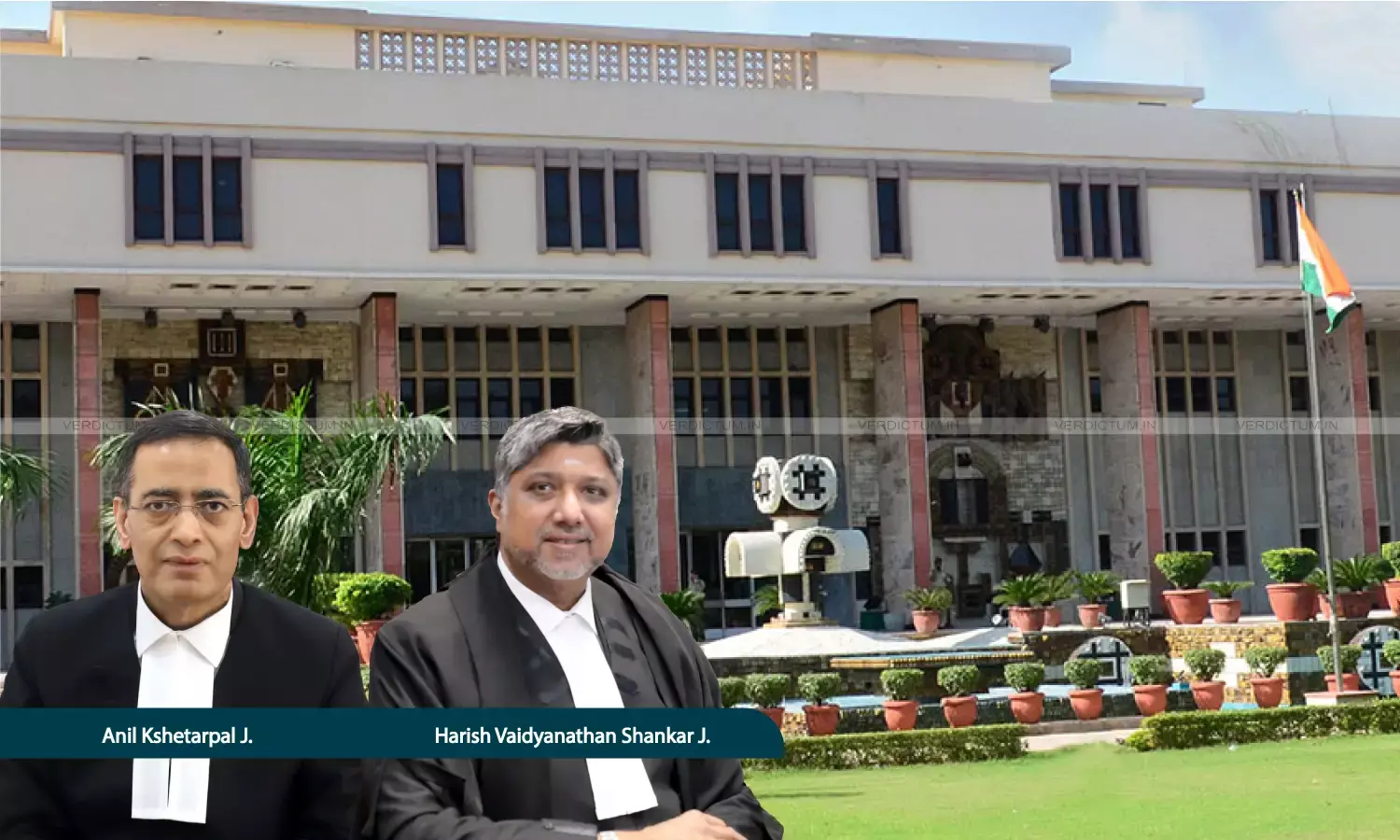
Justice Anil Kshetarpal, Justice Harish Vaidyanathan Shankar, Delhi High Court
The Delhi High Court has held that Section 17 of the Protection of Women from Domestic Violence Act, 2005, confers a right of residence in a shared matrimonial household as a measure of protection, not an absolute right to reside indefinitely in property exclusively owned by in-laws.
The High Court clarified that this right cannot be stretched to a claim of entitlement or perpetual residence when continued occupation causes demonstrable harm to senior citizens residing in the same premises.
The Court was hearing appeals arising out of proceedings under the PWDV Act where the daughter-in-law sought residence orders in the shared household of her in-laws, despite disputes with the husband and the elderly parents claiming harassment and distress due to her continued stay.
A Bench of Justice Anil Kshetarpal and Justice Harish Vaidyanathan Shankar, upon examining the material placed on record, observed: “This Court is conscious that the Appellant, as a daughter-in-law, may justifiably claim residence-related protection under the PWDV Act. However, such protection does not translate into an indefeasible right to reside in perpetuity in premises exclusively owned by the in-laws, particularly when continued residence results in demonstrable distress to senior citizens. The right under Section 17 of the PWDV Act is a right of protection, not a right of ownership or a licence to indefinitely occupy premises of the in-laws when such occupation causes demonstrable harm to senior citizens.”
Advocate Prashant Mendiratta represented the petitioner, while Senior Advocate Parag P. Tripathi represented the respondents.
Background
The appellant married respondent No.3 and began residing with him and the parents-in-law in the suit property. Children were born from the marriage. Over time, matrimonial disputes emerged, resulting in proceedings under the PWDV Act and other statutes.
The elderly parents instituted a suit for mandatory and permanent injunction claiming that, as senior citizens, their life and health were severely affected by the continued acrimony and that they were entitled to peaceful possession of their residential premises.
The Single Judge considered counsellor observations and medical records indicating deterioration in the health of respondent No.2 due to domestic stress, and directed the appellant to move out within a stipulated time.
To safeguard her protective rights, the Single Judge directed respondents No.1 and 2 to arrange an alternate residence for the appellant and children on specific terms, including payment of rent, brokerage, security deposit, advance rent, maintenance and utilities, and shifting costs.
Aggrieved by the eviction direction, the appellant approached the Division Bench.
Court’s Observation
The Delhi High Court held that the PWDV Act does not confer indefeasible property rights in premises where the woman has no proprietary stake. Instead, the legislation ensures that she is not rendered shelterless while addressing domestic violence concerns. The Court noted that alternate accommodation, being provided at the cost of respondents No.1 and 2, adequately secured her protective entitlement.
While relying on the judgment of the Delhi High Court in Manju Arora v. Neelam Arora & Anr., the Bench reiterated that when the property is exclusively owned by the in-laws and co-residence has become unworkable or detrimental, arranging a separate living space is an appropriate legal and equitable solution, particularly when it does not compromise the woman’s well-being.
The Division Bench examined the medical material showing respondent No.2’s ailment and observed that maintaining a toxic environment in a single residential unit would aggravate the distress to senior citizens. It found that the Single Judge’s direction sought to minimise conflict and preserve the dignity of elderly owners while ensuring protection to the appellant and the children.
On the appellant’s argument that the Single Judge granted relief effectively determining the merits, the Court held that in cases of irreparable harm, interim mandatory orders are permissible to prevent escalation of injury pending trial. It clarified that the findings were prima facie, and all issues of title and long-term residence would be decided during the trial of the suit.
The Court further noted that the welfare of the children was considered, as their schooling and daily routine aligned with the alternate accommodation arrangement. It found that the arrangement ensured continuity for the children while shielding them from an emotionally adverse atmosphere.
The Bench concluded that the balance of convenience, prima facie case and irreparable loss considerations were properly evaluated, and there was no perversity or illegality warranting appellate interference.
Conclusion
Allowing the appeals, the Supreme Court affirmed the eviction direction passed in favour of the senior citizens under the 2007 Act and set aside the order granting residence in their property.
The Court, however, clarified that its judgment does not prevent the respondent from seeking appropriate alternative residence relief against her husband in accordance with the law.
All pending applications were disposed of.
Cause Title: S.M. v. R.M. & Others (2025:DHC:10984-DB)
Appearances
Appellant: Advocates Prashant Mendiratta, Malvika Choudhary, Neha Jain, Taarak Duggal, Sneha Mathew and Vaishnavi Saxena
Respondents: Senior Advocate Parag P. Tripathi, with Advocates Prabhjit Jauhar, Nattasha Garg, Aadarsh Kothari, Utpal Sharma, Rini Mehra, Arjun Syal, Naman Verma
