Probationers Are ‘Workmen’ Under Industrial Disputes Act; Employer Cannot Recover Section 17-B Wages Even If Termination Upheld: Delhi High Court
The High Court held that there is no distinction between permanent and temporary or probationary employees under the definition of ‘workman’ in Section 2(s) of the Industrial Disputes Act, 1947, and that as long as a person is employed to perform manual, skilled, technical, operational, clerical or supervisory work for hire or reward, such person is entitled to the protection of the Act.
The Delhi High Court has held that probationary or temporary employees are not excluded from the definition of ‘workman’ under the Industrial Disputes Act, 1947, and that denial of such status on the ground of probation is contrary to binding Division Bench precedent.
The Court further held that even where termination of service is ultimately upheld as legal, the employer has no right to recover wages paid to a workman under Section 17-B of the Industrial Disputes Act during the pendency of proceedings.
The Court was hearing an intra-court appeal challenging a Single Judge order which had set aside an award of reinstatement but had directed that wages paid under Section 17-B shall not be recovered.
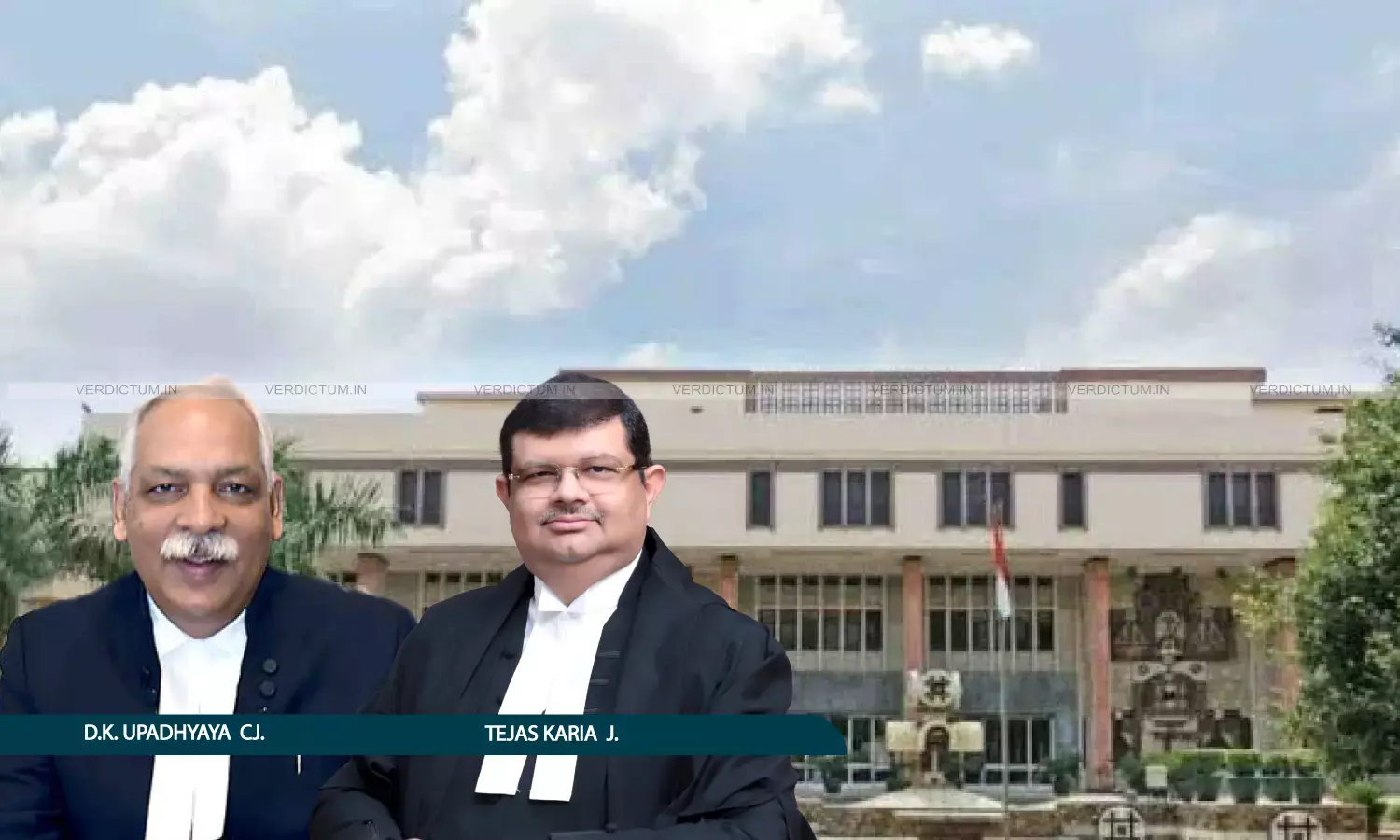
A Division Bench of Chief Justice Devendra Kumar Upadhyaya and Justice Tejas Karia, while relying on a previous decision of the Delhi High Court, reiterated that “in terms of the definition of ‘workman’ occurring in Section 2(s) of the Act, there is no distinction between a permanent employee and a temporary employee in industrial law.”
In its previous decision in Delhi Cantonment Board v. Central Government Industrial Tribunal & Ors, the High Court had held that “as long as a person is employed to do any manual, unskilled, skilled, technical, operational, clerical or supervisory work for hire or reward, he is a ‘workman’ under the Act and will get the benefit of that Act”.
Background
The appellant’s services were terminated during probation. The Industrial Tribunal held that the termination was illegal and directed reinstatement with full back wages and continuity of service.
The employer challenged the award before the High Court. The learned Single Judge set aside the award, holding that the termination was valid and that the appellant was not a ‘workman’ within the meaning of Section 2(s) of the Industrial Disputes Act on account of her probationary status.
However, the Single Judge directed that wages paid to the appellant under Section 17-B of the Act during the pendency of proceedings shall not be recovered.
Aggrieved, the appellant preferred an intra-court appeal, challenging the finding that she was not a ‘workman’ and supporting the direction restraining recovery of Section 17-B wages.
Court’s Observation
The High Court first examined whether the termination order was punitive or termination simpliciter. Applying the principles laid down in Pavanendra Narayan Verma v. Sanjay Gandhi PGI of Medical Sciences, the Court held that the order was termination simpliciter, as there was no full-scale inquiry, no finding of guilt, and no punitive foundation.
The Court upheld the Single Judge’s finding that the termination order was not stigmatic and that it was motivated by alleged conduct but not founded on misconduct in the legal sense.
The Court then examined whether a probationer could be excluded from the definition of ‘workman’. The Court noted that the Single Judge relied on certain Single Bench decisions to hold that probationers are not workmen.
However, the Division Bench held that this approach was contrary to the binding precedent of a Division Bench in Delhi Cantonment Board v. Central Government Industrial Tribunal & Ors., which clearly held that there is no distinction between permanent and temporary employees under Section 2(s) of the Act.
Accordingly, the Court set aside the finding of the Single Judge holding that the appellant was not a workman.
The Court then examined the employer’s challenge to the direction restraining recovery of Section 17-B wages. Relying on Dena Bank v. Ghanshyam and Dilip Mani Dubey v. Siel Ltd., the Court held that wages paid under Section 17-B are statutory in nature and cannot be recovered even if the termination is ultimately upheld.
The Court held that Section 17-B is intended to mitigate hardship during the pendency of proceedings and that payments made under the provision are not refundable.
“It has been held by the Hon’ble Supreme Court that if the Courts/Tribunal eventually upholds the termination order as being legal against the ‘workman’, yet the employer will have no right to recover the amount already paid to the ‘workman’ pursuant to the orders passed under Section 17-B of the Act during the pendency of such proceedings”, the Court reaffirmed.
Conclusion
The Delhi High Court upheld the validity of the termination order and affirmed that the termination was termination simpliciter.
However, the Court set aside the finding that the appellant was not a ‘workman’ and held that probationary employees are covered within the definition of ‘workman’ under Section 2(s) of the Industrial Disputes Act.
The Court further upheld the direction that wages paid to the appellant under Section 17-B of the Industrial Disputes Act shall not be recovered, even though the termination was upheld.
Accordingly, the impugned judgment was modified to the extent of recognising the appellant as a workman while maintaining the restraint on recovery of Section 17-B wages.
Cause Title: Sarita Tiwari v. Deccan Charters Private Limited (Neutral Citation: 2026:DHC:636-DB)
Appearances
Appellant: Rishi Raj Singh, Advocate
Respondent: Praveen Kumar, Advocate; Rishi Raj, Advocate