

Prosecutrix Testimony Not Of Sterling Quality: Delhi High Court Acquits Sonu Punjaban In Trafficking Case
The Court noted that the entire prosecution case rested substantially on the testimony of the prosecutrix.

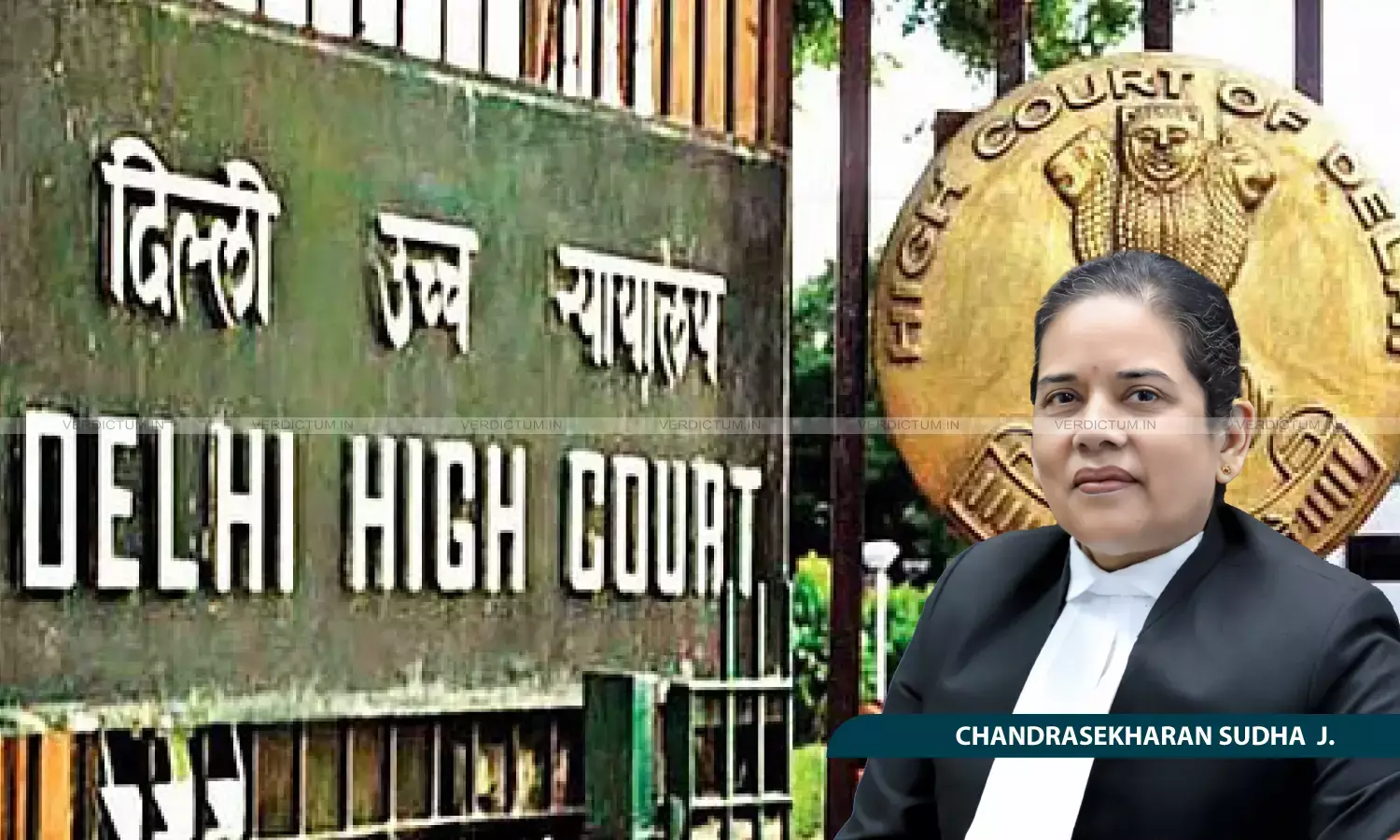
The Delhi High Court has acquitted Geeta Arora, popularly known as Sonu Punjaban, in a case involving allegations of trafficking, sexual exploitation and forced prostitution, holding that the prosecution failed to establish guilt beyond reasonable doubt in view of serious inconsistencies in the testimony of the prosecutrix.
The Bench, at the outset, noted that the entire prosecution case rested substantially on the testimony of the prosecutrix. It reiterated the settled position that a conviction can be based on the sole testimony of a victim of sexual offences if such testimony is of “sterling quality” and inspires confidence. However, where such testimony is riddled with material contradictions, inconsistencies and improvements, the Court is duty bound to seek corroboration before sustaining a conviction.
Justice Chandrasekharan Sudha observed, “A cumulative reading of the aforesaid FIRs shows that PW1 has, at different points of time, made allegations of a similar nature against different individuals, each time asserting that she was lured, intoxicated and sexually exploited. The fact that in one of the FIRs she subsequently resiled from her allegations and in another she even used a different name (Exbt. PW1/D3), casts a serious doubt on the consistency and reliability of her version. The pattern emerging from the FIR series thus indicates repeated allegations of a similar nature against different persons, coupled with subsequent retraction in at least one case and inconsistency in identity in another. This Court is of the view that such conduct casts a serious shadow on the reliability of PW1 and disentitles her from being treated as a witness of sterling quality”.
On noting the contradictions, and consistent development, the Bench further noted, “…These improvements are not minor embellishments but introduce entirely new facets to the prosecution story. It is true that when a young girl/woman after being administered drinks laced with intoxicants is subjected to repeated sexual assault by different people at different places, then it may not be possible to recall the entire facts in the correct sequence or recollect the exact dates, months or years. In the case on hand, PW1 has no such case that she is unable to recall the details because of the traumatic experience. As noticed earlier, her version keeps changing with every statement recorded during the course of the inquiry/investigation, and trial of the case”.
Senior Advocate Vikas Pahwa appeared for the appellant and Utkarsh, APP appeared for the respondent.
As per the facts, on allegations that the victim, a minor at the relevant time, had been enticed away and subsequently trafficked through multiple individuals, eventually being forced into prostitution at different locations. The prosecution claimed that Sonu Punjaban was one of the persons who kept the victim in her custody, administered intoxicating substances, and compelled her to engage in sexual acts for money. On the basis of the victim’s statement and other material, the trial court found her guilty and imposed substantial sentences upon the accused.
On a comparative analysis of the statements of the prosecutrix, namely, the FIR, her statement under Section 164 CrPC, and her deposition before the trial court, the Court found glaring inconsistencies that went to the root of the prosecution case. While the FIR and the statement under Section 164 CrPC referred to the incident as having occurred in the year 2006, the prosecutrix, during trial, asserted that the incident took place in 2009 and sought to explain the earlier version as a mistake.
The Court held that such a discrepancy was not a minor contradiction but one that affected the very genesis of the prosecution story, particularly in light of the timeline of the alleged trafficking and the missing complaint lodged by her father.
The Court further noted that the version of the prosecutrix regarding the alleged sexual assault underwent substantial changes. In the FIR, she had alleged that one of the accused had raped her; however, in her statement under Section 164 CrPC, there was no such allegation. During her deposition before the Court, she introduced an altogether new version that she had consumed a cold drink, lost consciousness, and later came to know from another person that she had been raped. The Court held that this version was based on hearsay and not on her own perception, thereby falling foul of the requirement of direct evidence under Section 60 of the Indian Evidence Act, 1872.
While referring to Sat Paul v. Delhi Administration, AIR 1976 SC 294, the Bench on Section 154(1) Indian Evidence Act noted, “Section 154(1) of the Evidence Act say that the Court may, in its discretion, permit the person who calls a witness to put any question to him which might be put in cross-examination by the adverse party. This discretion conferred by Section 154 on the court is unqualified and untrammelled, and is apart from any question of hostility. It is to be liberally exercised whenever the court from the witness’s demeanour temper, attitude, bearing, or the tenor and tendency of his answers, or from a perusal of his previous inconsistent statement, or otherwise, think that the grant of such permission is expedient to extract the truth and to do justice…”.
“…Sections 137 and 138 of the Evidence Act clearly delineate the stages of examination of a witness, namely, examination-in-chief by the party calling the witness, cross examination by the adverse party, and re-examination thereafter. The statute does not contemplate a situation where a party may ‘cross-examine’ its own witness. The expression “cross examination” is specifically defined as examination by the adverse party and therefore, permitting the prosecution to “cross examine” its own witness is a contradiction in terms. The correct legal position is that where a witness does not support the case of the party calling him, the remedy lies under Section 154 of the Evidence Act, which enables the Court, in its discretion, to permit the party calling the witness to put such questions as might be put in cross-examination by the adverse party. After such permission is granted, the examination conducted would still be examination in-chief and not cross-examination”, it noted further.
Accordingly, the Court set aside the conviction recorded by the trial court under Sections 366A, 370, 372, 373, 328, 342 and 120B IPC, as well as under Sections 4, 5 and 6 of the Immoral Traffic (Prevention) Act, 1956.
Cause Title: Sandeep Bedwal v. The State [Neutral Citation: 2026:DHC:2435]
Appearances:
Appellant: Akshay Bhandari, Megha Saroa, Kushal Kumar, Janak Raj Ambavat, Anmol Sachdeva, Vikas Pahwa, Senior Advocate with Preeti Pahwa, Neena Nagpal, Malak Bhatt, A. Singh Rawat, Jasmeet S. Chadha, Priyal Jain and Nishta Juneja, Advocates.
Respondent: Utkarsh, APP with SI Pramod Kumar, Cyber Cell, Crime Branch.