

Complete Reservation In BCD Elections Impermissible: Delhi High Court Rejects Plea To Reserve 6 Seats For Junior Lawyers
Out of 23 posts in the Bar Council of Delhi, 12 are reserved for advocates with over 10 years of experience and 5 for women advocates.
The Delhi High Court has dismissed an intra-court appeal challenging the dismissal of a writ petition seeking reservation of seats for advocates with less than ten years of practice in the Bar Council of Delhi (BCD) Election 2026.
The appellant, appearing in person, had challenged a notification dated December 24, 2025 issued by the Bar Council of Delhi, under which out of 23 posts, 12 were reserved for advocates with over 10 years of experience and 5 for women advocates. The appellant sought a direction that the remaining 6 posts be reserved exclusively for advocates with less than 10 years of practice.
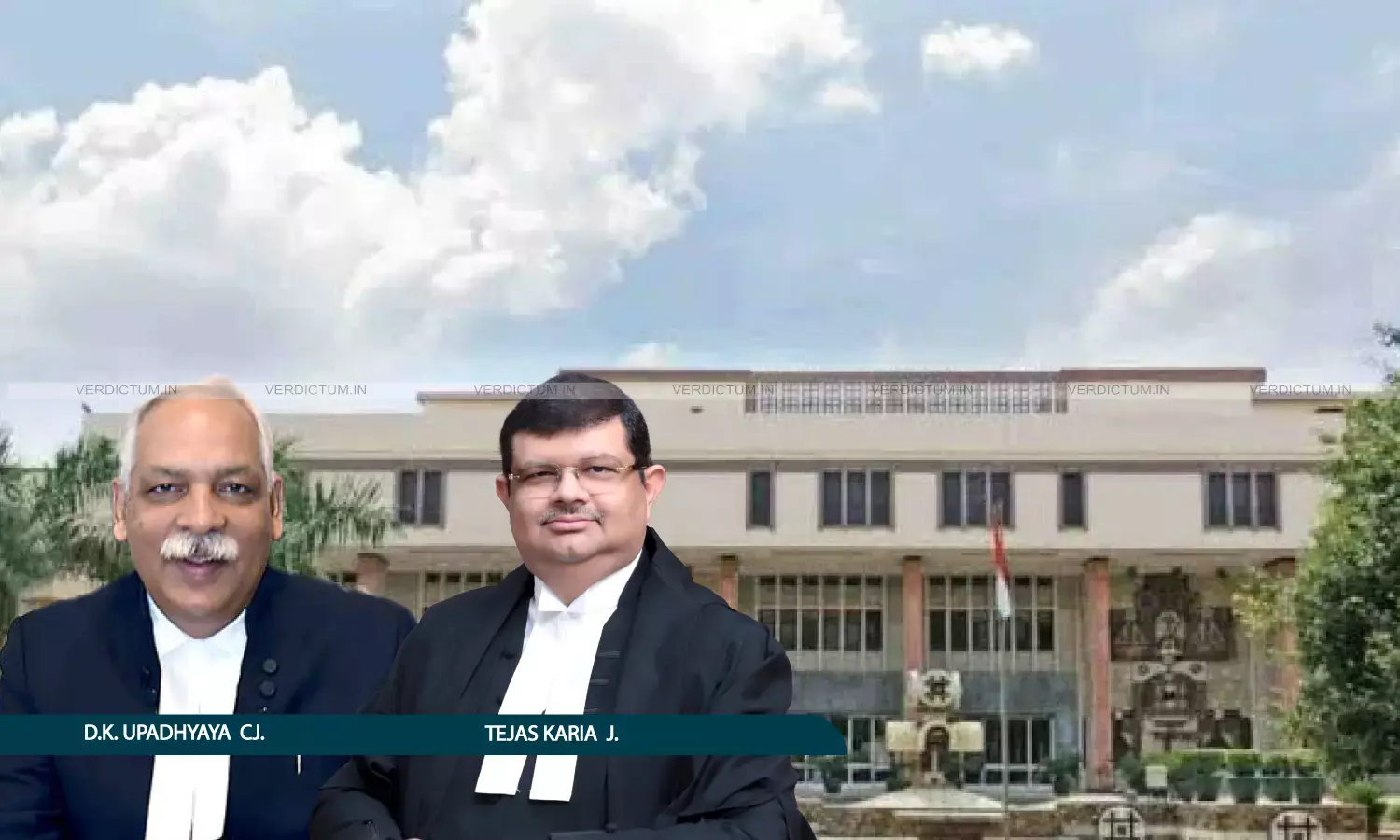
A Division Bench of Chief Justice Devendra Kumar Upadhyaya and Justice Tejas Karia held, “In any event, the relief sought by the Appellant cannot be granted since a complete reservation for all the posts of BCD is not permissible. The 50% reservation for advocates with more than ten years of practice, as stipulated in Section 3(2)(b) of the Advocates Act, together with the 30% reservation for women advocates directed by the Supreme Court in Yogamaya MG v Union of India & Ors, must not be construed to imply that the remaining 20% positions are reserved for advocates with less than ten years of experience. Such an interpretation would lead to complete reservation for all posts, which is inconsistent with the provisions of the Advocates Act.”
Advocate Preetpal Singh appeared for the Respondents.
The Court held that the writ petition was not maintainable in view of directions issued by the Supreme Court of India in M. Varadhan v. Union of India, under which the entire election process, including counting of votes, is controlled and monitored through the direct supervision of the High-Powered Election Committees.
It was contended that allowing senior advocates to contest unreserved seats would “result in squeezing out the young practitioners,” allegedly violating principles of fair representation under the Advocates Act, 1961 and Articles 14 and 19(1)(g) of the Constitution of India.
However, the Court noted that the writ petition was filed much after the BCD Election 2026 had been conducted and the counting process had commenced, and therefore suffered from delay and laches. It also observed that having participated in the election process, the appellant was precluded from challenging the notification at a later stage.
The Bench held that Section 3(2)(b) of the Advocates Act mandates that one-half of the elected members must be advocates having at least 10 years of practice, and there is no vested right in favour of advocates with less than 10 years’ experience to seek reservation for the remaining posts.
The Bench held that the appellant did not possess any enforceable right to claim such reservation and that the writ petition was rightly dismissed.
Accordingly, the Court held that no interference is required with the impugned order and dismissed the appeal along with pending applications, without any order as to costs.
Cause Title: Ramesh Chandra Singh v. Bar Council Of Delhi & Anr., [2026:DHC:2855-DB]
Appearance:
Respondents: Advocates Preetpal Singh, Tanupreet Kaur, Medha Sharma, Simran Kumar, Pooja and Gaurav
