

Delhi High Court Quashes Income Tax Proceedings Against Radhika And Prannoy Roy; Imposes Costs On IT Department
The Delhi High Court held that subjecting an assessee to reassessment proceedings a second time for the very same transaction and substantially the same issue is arbitrary, without jurisdiction, and violative of Articles 14, 19(1)(g), and 300A of the Constitution of India.
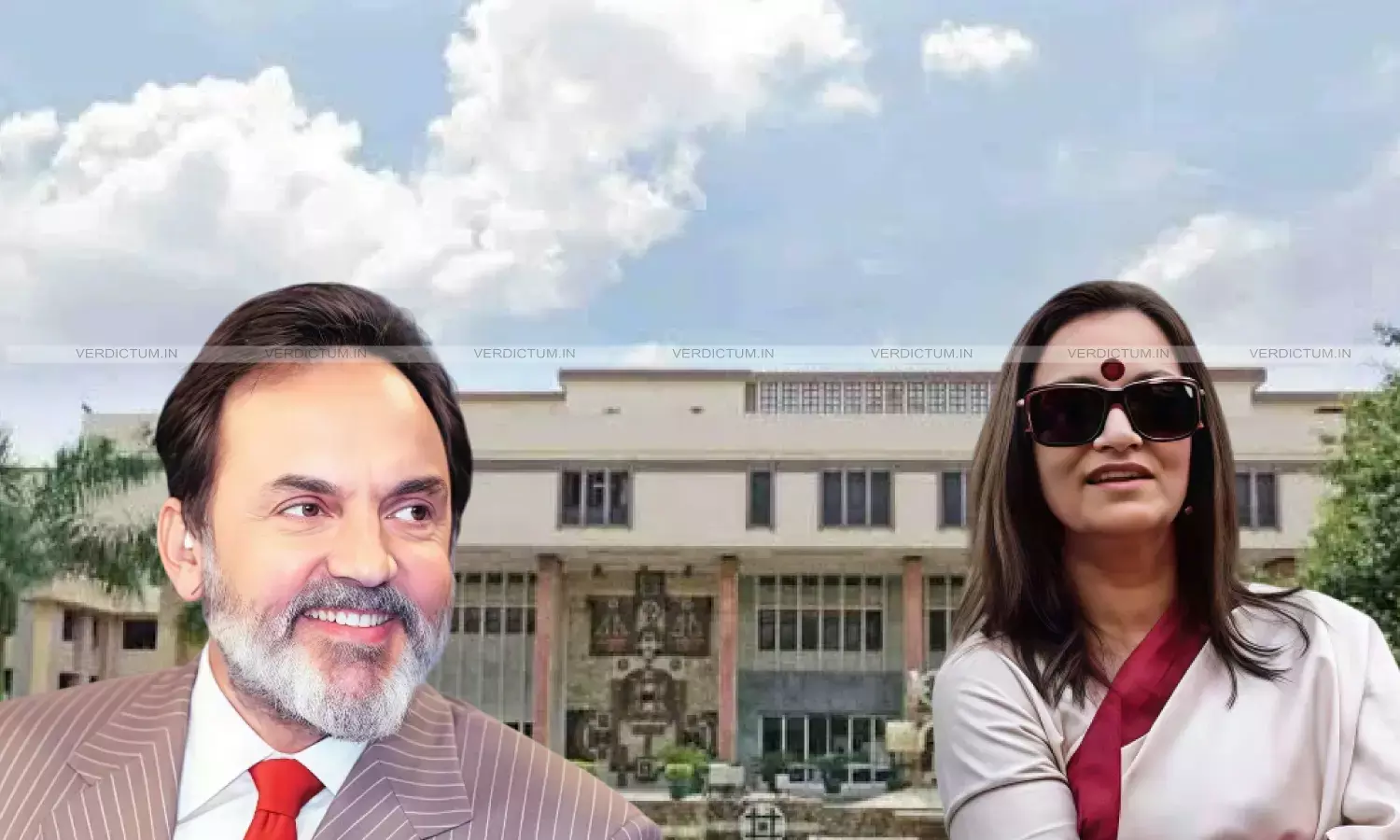
While quashing second reassessment notices issued against senior journalists Radhika Roy and Prannoy Roy, the Delhi High Court held that the Income Tax Department could not initiate reassessment proceedings repeatedly on the same foundational facts merely by re-characterising the legal provision under which income is sought to be taxed.
Holding that such action amounted to a change of opinion and an abuse of jurisdiction under Sections 147 and 148 of the Income Tax Act, 1961, the Court also imposed costs on the Income Tax department.
The Court was hearing two writ petitions challenging reassessment notices issued for the Assessment Year 2009–10, despite an earlier reassessment having already been completed on the very same transaction.
A Bench comprising Justice Dinesh Mehta and Justice Vinod Kumar, upon examining the material placed on record, observed that “subjecting the petitioner to reassessment proceedings a second time for the selfsame transaction and practically for the same issue is arbitrary and without jurisdiction” while adding that the proceedings “fall foul to petitioner’s fundamental and constitutional rights guaranteed under Article 14, Article 19(1)(g) and Article 300A of the Constitution of India”.
Senior Advocate Sachit Jolly represented the petitioners, while N. P. Sahni, Special Counsel, represented the respondents.
Background
The petitioners had filed their respective returns of income for Assessment Year 2009–10, which were initially processed and accepted. Thereafter, reassessment proceedings were initiated under Sections 147 and 148 of the Income Tax Act, 1961, on the allegation that income had escaped assessment in relation to transactions involving the purchase of shares of a listed company through a holding company.
During the first reassessment, the Assessing Officer specifically examined the issue of interest-free loans advanced by the holding company to the petitioners, who were directors and shareholders therein. Notices were issued, books of accounts were produced, and detailed explanations were furnished.
By an order passed under Section 147 read with Section 143(3) of the Act, the Assessing Officer consciously chose not to make any addition in respect of the interest-free loans, despite having specifically raised the issue.
Nearly three years later, the petitioners were served with fresh reassessment notices under Section 148 for the same assessment year, again premised on the alleged taxability of the very same interest-free loans, albeit this time sought to be taxed under a different deeming provision.
Aggrieved, the petitioners approached the High Court challenging the jurisdiction to reopen assessments already concluded on the same material.
Court’s Observation
The Delhi High Court undertook a detailed examination of the statutory framework governing reassessment under Sections 147 and 148 of the Income Tax Act, 1961, and reiterated that these provisions constitute an exception to the finality of assessments and must be strictly construed.
The Court noted that the receipt of interest-free loans by the petitioners from the holding company was the very issue that had formed the basis of the earlier reassessment proceedings. The Assessing Officer had not only been aware of the transaction but had expressly called for explanations and examined the books of accounts before deciding not to make any addition.
Rejecting the Revenue’s contention that the subsequent proceedings were justified based on “fresh information” received by way of complaints, the Court held that the so-called information did not disclose any new or previously undisclosed material fact. It merely reiterated the same transaction that had already been scrutinised, the Court observed.
“Initiation of reassessment proceedings in such circumstances leads to unnecessary harassment of an assessee on the one hand and gives rise to unpredictability/uncertainty, if not anarchy on the other”, the Bench further remarked.
While stressing that reassessment proceedings cannot be initiated merely because a different officer forms a different opinion on the same set of facts, the Bench cautioned that “merely because the new incumbents in the chair feel themselves to be wiser and they hold another opinion which their predecessor did not or could not take, an already settled assessment cannot be unsettled and the petitioner cannot be made to face the rigmarole or harassment of the assessment proceedings again and again.”
On the plea that the petitioners had failed to make full and true disclosure of material facts, the Court found that all primary facts relating to the interest-free loans were disclosed during the earlier reassessment. Relying on settled law, the Court reiterated that an assessee is obligated only to disclose primary facts, and not the inferences that the Assessing Officer may draw therefrom.
The Court further held that the invocation of the extended period of limitation on the ground of alleged non-disclosure was wholly unsustainable, as the audited balance sheets and notes to accounts had clearly recorded the interest-free loans, concluding that “issuance of the notice is clearly contrary to Section 149 of the Act of 1961 and thus fundamentally and inherently without jurisdiction”.
Conclusion
Holding that the impugned reassessment notices sought to reopen concluded assessments on the same transaction and substantially the same issue, the Delhi High Court allowed both writ petitions, quashed the reassessment notices and all consequential proceedings.
Furthermore, while stating that “no amount of cost can be treated enough for these cases”, the Court imposed token costs of ₹1,00,000 per case on the Income Tax department, payable to each of the petitioners.
Cause Title: Radhika Roy v. Deputy Commissioner of Income Tax Circle 18(1) & Anr. (Neutral Citation: 2026:DHC:441-DB)
Appearances
Petitioners: Sachit Jolly, Senior Advocate, with Advocates Viyushti Rawat, Devansh Jain, and Sarthak Abrol
Respondents: N. P. Sahni, Special Counsel, with Indruj Singh Rai, Senior Standing Counsel, Sanjeev Menon, Junior Standing Counsel, Rahul Singh, Junior Standing Counsel, andGaurav Kumar, Advocate.
