

Consent Cannot Be Retrospectively Withdrawn: Delhi High Court Upholds Discharge Of Advocate In Rape Case; Rejects Victim's Plea That She Was Unaware Of His Religious Identity
Inter-faith relationships are not prohibited by law but has consequences

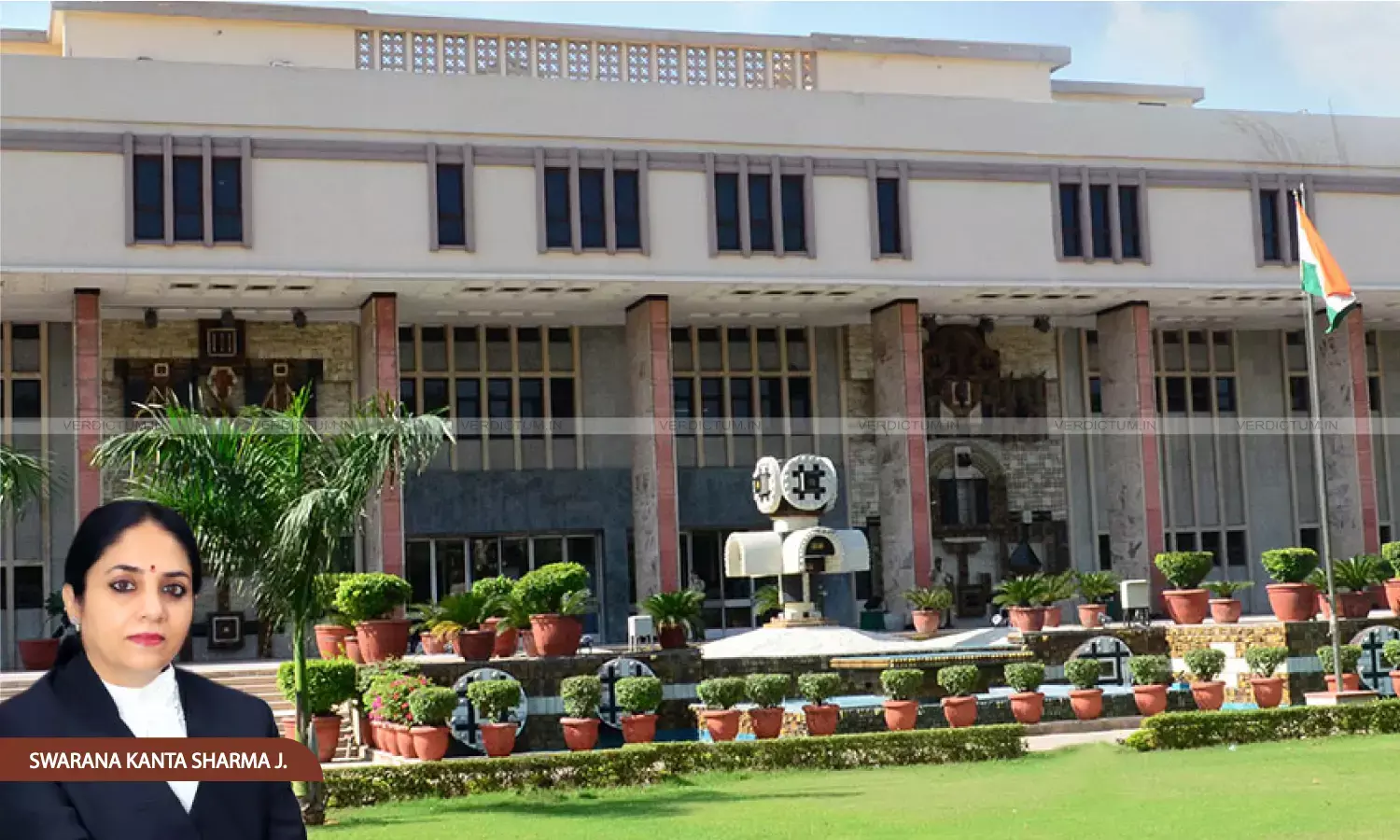
The Delhi High Court has upheld the discharge of an Advocate accused of rape and deceitful marriage in an 11-year relationship with another practising advocate, holding that criminal law cannot be invoked to “undo conscious decisions taken with open eyes”, particularly where the material indicates knowledge of religious identity and voluntary participation.
Importantly, the Court noted that inter-faith relationships are not prohibited by law. However, noting that the two were Advocates, who regularly filed Vakaltnama, it further observed that when two consenting adults choose to enter such a relationship with full awareness of material facts, that choice carries legal and personal consequences which cannot later be recast as criminal deceit in the absence of prima facie material.
Dr. Justice Swarana Kanta Sharma observed, “The prosecutrix, as a legally trained person, would also have been conscious of the implications of personal laws, religious practices, and marital norms, as well as the legal consequences flowing from such a relationship. Where an adult, educated individual knowingly enters into a relationship, participates in ceremonies under different religious customs, and continues that relationship over a long period, the law cannot later be invoked to erase the consequences of that choice merely because the relationship has soured. Courts are not forums to undo conscious decisions taken with open eyes…this Court deems it crucial to observe that criminal law, particularly in cases arising out of intimate relationships, must be applied with circumspection. Consent, when freely given with full awareness of material facts and sustained over a considerable period, cannot be retrospectively withdrawn so as to convert a consensual relationship into a criminal offence merely because the relationship has broken down”.
“This Court is also conscious that relationships between consenting adults, including inter-faith relationships, are not prohibited by law. However, such relationships are not insulated from consequences that may follow. When two adults consciously choose to enter into a relationship that cuts across faiths, personal laws, or customs, that choice must be informed, deliberate, and honest. It operates with known legal and personal implications, which cannot later be wished away when the relationship turns sour”, the bench further observed.
In pointed observations, the Court remarked that criminal law must remain “a shield for the vulnerable, not a weapon in the hands of the disenchanted”. It emphasised that the justice system cannot be turned into a forum to rewrite the history of a long, publicly acknowledged relationship between consenting adults.
Advocate Nitesh Saini appeared for the petitioner and Advocate Naresh Kumar Chahar appeared for the respondent.
In the matter, the complainant had alleged that the accused introduced himself as a Hindu and unmarried man when he met the victim in 2011 at Karkardooma Courts, and that she later discovered he was a Muslim and already married with children. She claimed that the relationship, subsequent marriage ceremonies, and sexual relations were vitiated by deception regarding his religion and marital status.
However, during discharge proceedings, the Sessions Court considered and verified a Nikahnama dated 14-12-2012, statements of the concerned Quazi, independent neighbourhood witnesses, and official documents including Aadhaar and voter ID cards reflecting the complainant’s address as “c/o” the accused and recording him as her husband.
The High Court noted that the material on record indicated that the complainant had solemnised a Nikah in 2012, had visited and lived at the accused’s residence where his first wife and children were present, and had openly resided with him for several years. In a prior complaint withdrawn by her, she had also acknowledged performing Nikah.
In this backdrop, the Court found it difficult to accept that she remained unaware of the accused’s religion or marital status for over a decade.
“It is also material to note that where a woman practising one religion chooses to marry a man practising another religion, with full knowledge of his identity, works alongside him as an advocate, and appears with him in courts of law, it is difficult to accept a later plea that she was unaware of his religious identity or was misled in that regard. The names of advocates appear on vakalatnama and court records, and such professional association over years cannot coexist with a claim of ignorance of basic personal facts. To suggest otherwise would be wholly unconvincing”, the bench noted in the judgment.
On the allegations of rape and unnatural offences, the Court held that consent, when “freely given with full awareness of material facts and sustained over a considerable period,” cannot be retrospectively withdrawn. The allegations of blackmail through obscene photographs remained unsubstantiated, with no recovery or specific details emerging during investigation.
Similarly, offences under Sections 493 and 495 IPC (deceitful marriage and concealment of former marriage) were held not to be made out in light of the verified material indicating knowledge and voluntary cohabitation.
However, since medical records showed a fracture injury contemporaneous with the FIR, the accused will face trial for offences under Sections 323 and 325 IPC relating to physical assault.
Therefore, dismissing the revision petition, the Court held that the discharge order suffered from no illegality and warranted no interference, while clarifying that its findings are confined to the stage of charge and will not influence the trial on the remaining assault charges.
Cause Title: MS A v. State & Ors. [Neutral Citation: 2026:DHC:1382]
Appearances:
Petitioner: Nitesh Saini and Dr. Ashwani Bhardwaj, Advocates.
Respondent: Naresh Kumar Chahar with Amisha Dahiya, Advocates with SI Rakhi. Rais Farooqui and M.Asad Beig, Advocates.