

Mere Averments in Pleadings Cannot Amount to Defamation: Delhi High Court Quashes Complaint
Court said that every incorrect statement in pleadings cannot trigger criminal prosecution for defamation

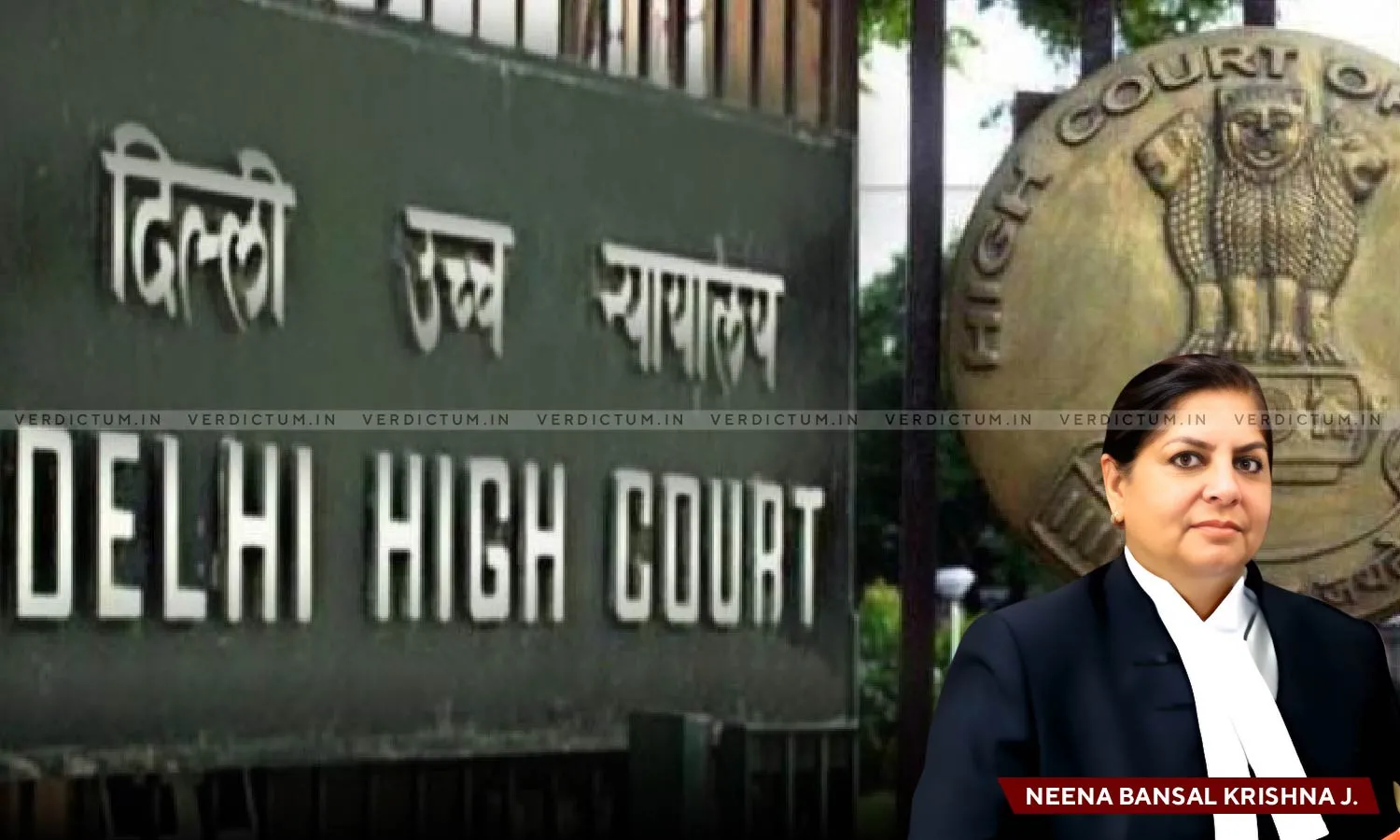
Justice Neena Bansal Krishna, Delhi High Court
The Delhi High Court has quashed a criminal defamation complaint filed under Sections 499 and 500 of the erstwhile Indian Penal Code (IPC), holding that allegations made in pleadings and complaints during the pendency of related civil and testamentary disputes cannot, by themselves, constitute defamation.
Th bench was of the opinion that if a litigant has the right to raise all lawful pleas while prosecuting or defending a case, and subjecting averments made in pending judicial proceedings to defamation scrutiny would deter parties from approaching the court without fear.
Justice Neena Bansal Krishna thus observed in the judgment, “Mere conjectures and surmises about the Petitioner being an author since the allegations were in reference to the disputes between the two families cannot be sufficient even to make out a prima facie case of defamation. In the absence of there being even an iota of evidence of the Petitioner being the author of this Letter, the contents of the same cannot be attributed to him so as to make a case for summoning him under Sections 499/500 IPC”.
The bench further noted that, “If a statement is made in a judicial proceeding and is alleged to be false, the appropriate remedy lies under Section 340 Cr.P.C. for the offence of perjury under Section 193 IPC and not by way of a separate Complaint for defamation. The intention of such statements is to state a legal claim or defense, not to harm the reputation of the other party within the meaning of Section 499 IPC”.
Advocate Lalit Gupta appeared for the petitioner and Ajay Vikram Singh, APP for the State appeared for the respondents.
The petitions were filed under Section 482 erstwhile Criminal Procedure Code (CrPC), seeking quashing of a complaint case and summoning order passed by a Metropolitan Magistrate under Section 200 CrPC, which had been upheld by the revisional court.
The defamation complaint was filed by the petitioner’s brother-in-law, alleging that the petitioner had made defamatory statements against him in (i) a police complaint, (ii) objections filed in a pending testamentary case before the High Court, and (iii) an anonymous letter allegedly circulated in the local Resident Welfare Association (RWA).
The parties are involved in multiple litigations concerning the estate of their deceased mother, including rival probate proceedings based on contested Wills, which remain pending adjudication.
The pertinent issue before the Court was, whether allegations made in judicial pleadings, police complaints, and related proceedings during the pendency of civil disputes could constitute criminal defamation under Section 499 IPC, warranting prosecution.
Allowing the petitions, the Court held that no offence of defamation was made out, even if the allegations in the complaint were taken at face value. Holding that continuation of the proceedings would amount to an abuse of process, the High Court quashed the criminal complaint, summoning order, and all consequential proceedings.
“Even if the entire allegations made in the Complaint filed by the respondent are accepted, no offence of defamation, as defined under Section 499 IPC, is made out”, the court thus observed.
The Court also reiterated that publication is a necessary ingredient of defamation, which was not established in the present case.
Cause Title: Harkirat Singh Sodhi v. State of NCT of Delhi [Neutral Citation: 2026:DHC:478]
Appearance:
Petitioner: Lalit Gupta, Rajat Asija, Mansi Singh, Anmol Ghai, Ishita Nautiyal and Shreeyam Kedia, Advocates
Respondents: Ajay Vikram Singh, APP for the State.