

A Person Can’t Seek To Secure Any Right Of Property Based On His Name Reflected In Allotment Letter: Delhi High Court
The Delhi High Court reiterated that a license does not create any interest in the property, and merely permits the licensee to use the property.
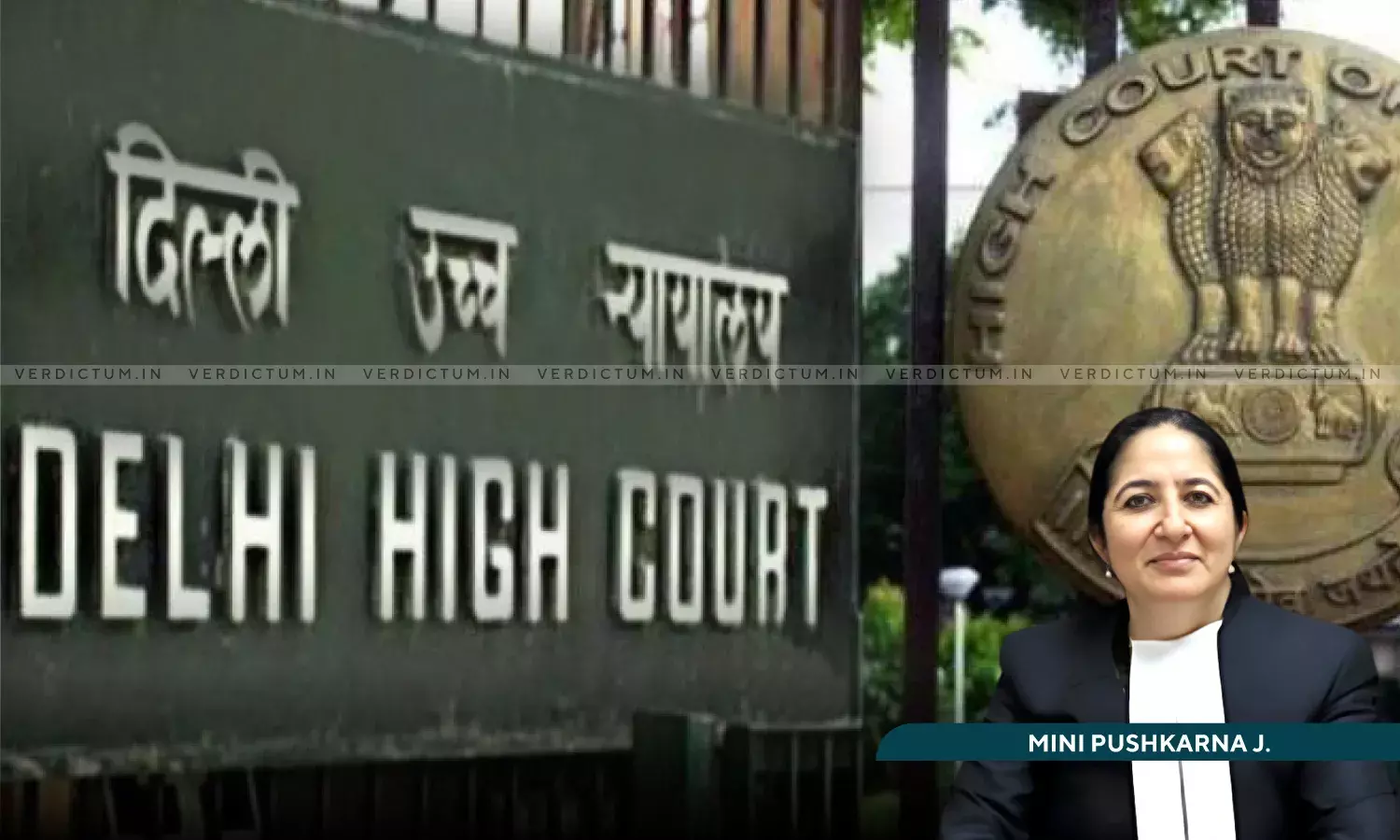
Justice Mini Pushkarna, Delhi High Court
The Delhi High Court held that a person cannot seek to secure any right in respect of a property on the basis of his name being reflected in the allotment letter.
The Court held thus in Regular First Appeals filed under Section 96 of the Civil Procedure Code, 1908 (CPC), seeking to set aside the Judgment of the District and Sessions Judge as regards the findings on ownership, possession, mesne profits, and permanent injunction.
A Single Bench of Justice Mini Pushkarna observed, “It was only upon the option given by the Government for purchase of the suit property and upon deposit of the requisite documents and the purchase amount, that proprietary rights were conferred qua the suit property. Before conferment of the proprietary right qua the suit property upon father of the respondent, Shri Ladha Ram, the suit property vested in the Government, for occupation of which, rent was payable to the Government. Mere issuance of allotment letter did not create any proprietary right in the suit property. Therefore, the appellant cannot seek to secure any right in his favour in respect of the suit property on the basis of his name being reflected in the allotment letter.”
The Bench reiterated that a license does not create any interest in the property, and merely permits the licensee to use the property and, therefore, the legal possession of the property still vests with the licensor.
Advocate Naresh K. Daksh represented the Appellant, while Advocate Charu Sharma represented the Respondent.
Factual Background
A Suit was filed by the Respondent-Plaintiff for possession, mesne profits/damages, and permanent injunction with respect to a property. The Trial Court decreed the suit by granting possession of the suit property in favour of the Plaintiff, on the ground that the he is the owner of the suit property. It dismissed the counter claim of the Appellant-Defendant, wherein the Defendant sought for declaration of ownership in relation to the portion of property in possession of the Appellant.
However, the Trial Court granted 90 days’ time to the Defendant to vacate the property. A decree of damages @ Rs. 5000/- per month, along with pendente lite and future interest @ 12% p.a. from June 1, 2010 till delivery of possession of the suit property, was passed in favour of the Plaintiff. A decree for permanent injunction was also passed in favour of the Plaintiff, thereby, restraining the Defendant from alienating or creating third party rights with respect to the suit property. Being aggrieved, the Defendant-Appellant was before the High Court.
Court’s Observations
The High Court in view of the facts and circumstances of the case, said, “The allotment letter/card dated 25th June, 1950, Ex. DW6/A, issued initially for occupation of the suit property, conferred only the right to reside in the suit property upon payment of rent. The said allotment letter did not confer any right or title over the suit property and that the possession in the suit property, pursuant to the allotment letter, was only in the nature of a tenant, for which rent was to be paid to the Government. Accordingly, the mere fact that name of the appellant was also reflected in the said allotment letter, does not inure to the benefit of the appellant in any manner, as the said allotment letter did not create any proprietary right over the suit property.”
The Court further reiterated that registered titled documents have a presumption of validity attached to it. It emphasised that testimonies of the related/interested witnesses have to be scrutinized with greater care and circumspection and as such have to be analyzed with greater caution for its credibility.
“Once, on the basis of the documents and evidence on record, it is established that the respondent is the owner of the suit property, no right can be claimed by the appellant through the Will and Agreement dated 24th September, 1996 executed by the respondent in favour of the appellant, since the said documents already stand cancelled/revoked by the respondent”, it noted.
The Court added that a Will qua a property can only be made by the owner of the property and since the Appellant has admitted the Will, the same connotes the admission of the Appellant to the ownership of the Respondent in the suit property.
“Even otherwise, a Will does not come into effect during the lifetime of the maker, and in the present case the maker of the Will, i.e., the respondent, is still alive. The appellant, in whose favour the said Will was made has already expired. Further, the said Will already stands cancelled on 08th July, 2009, Ex. PW-1/9. Therefore, no right can be said to flow in favour of the appellant from the said Will”, it remarked.
The Court observed that a Will comes into operation only after the demise of the maker of the Will, however, in the present case, the maker of the Will, i.e., the Respondent, is alive, while the beneficiary of the Will, i.e., the Appellant, has already expired.
“Besides, the ownership of the respondent in the suit property stands established, while the appellant has been unable to establish his right over the property in the absence of any evidence or document to suggest that the suit property was a joint property. Therefore, the said contention of the appellant does not hold water”, it held.
The Court was of the view that merely because the Appellant had been allowed to occupy the property by father of the Respondent earlier, in no way affected the right of the Respondent to file the suit in the year 2010.
“… a person who was a tenant under the custodian of evacuee property which ultimately formed part of the compensation pool or was an allottee thereof under the Evacuee Property Act, would be covered under Section 29 of the Displaced Persons Act”, it reaffirmed.
Conclusion
The Court also said that when a license has been acquired for an agreed term, the same would not affect the right of the licensor to revoke it at any time, where it is only a bare license.
“Consequently, in the absence of any evidence to ascertain mesne profits, this Court cannot make any calculations towards the mesne profits to be granted in favour of the respondent. Accordingly, the respondent is granted liberty to initiate appropriate legal proceedings for seeking mesne profits from the appellant for the period from passing of the impugned judgment dated 16th May, 2013, till handing over of the possession of the suit property to the respondent”, it concluded.
Accordingly, the High Court dismissed the Appeals and directed the Appellant to forthwith handover the portion of the suit property occupied by him, to the Respondent.
Cause Title- Kalyan Dass Through LRs v. Praveen Chawla (Neutral Citation: 2026:DHC:213)
Appearance:
Appellant: Advocate Naresh K. Daksh
Respondent: Advocates Charu Sharma and Nishant Nain.
