

Delhi High Court Upholds Conviction Of Police Officer & Lawyer For Falsely Implicating Man For Gang Rape & Custodial Violence
The Court held that the victim’s suffering and death before justice warranted a strong judicial response.

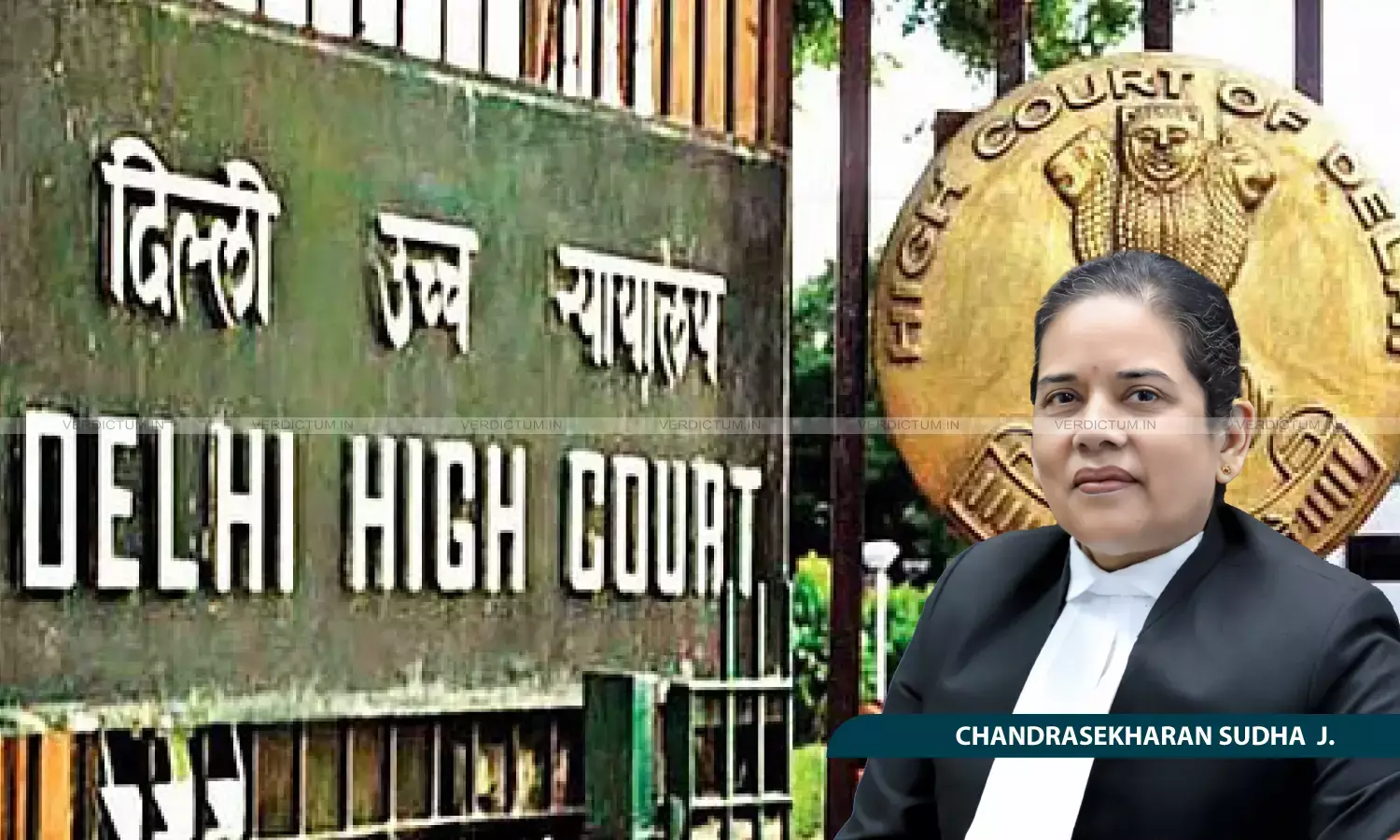
The Delhi High Court has upheld the conviction of a police officer and a lawyer for falsely implicating a man-Sushil Gulati, in a gang rape case, and then subjecting him to custodial torture, and undue harassment.
The Court addressed a dark chapter of abuse where police authority was weaponised for personal vendettas and extortion through the use of planted physical evidence. The Bench clarified that the defense cannot benefit from the death of a key witness when they themselves were responsible for delaying the cross-examination for over three years. The Court highlighted that the "extent of harassment and humiliation" suffered by the victim, who passed away before seeing justice, necessitated a strong judicial response to prevent such blatant abuses of the process of law.
Justice Chandrasekharan Sudha observed, “…PW12 Sushil Gulati was not only falsely implicated in a heinous crime of gang rape but was also subjected to custodial violence and undue harassment at the hands of the police. He was further harassed by being repeatedly summoned to court on multiple dates, only to be sent back without his cross-examination being conducted. It is a matter of great concern that the trial court also did not effectively step in to prevent the harassment. The request for adjournments for cross-examination is seen granted for the mere asking…”.
Advocate S.C. Buttan appeared for the appellant and Utkarsh, APP appeared for the respondent.
The case dates back to August 2000, when Haji Mohd. Altaf (A1), a lawyer, and Narender Singh (A2), then a Police Sub-Inspector, conspired with others to falsely implicate Sushil Gulati (PW12) in a gang-rape case to extort money.
The accused staged a "rescue" of a woman (PW1) who, acting under a fictitious name and tutored by the conspirators, alleged she was raped by Gulati in a moving car. Investigations later revealed that blood was planted in Gulati's car and on the woman's clothes to fabricate a physical crime scene. A subsequent probe by the Crime Branch proved Gulati’s innocence, leading to his discharge and the prosecution of the actual conspirators.
On February 25, 2016, the Additional Sessions Judge at Rohini Courts convicted A1 and A2 for criminal conspiracy, fabricating false evidence, and framing incorrect records under Sections 120B, 193, 195, and 218 IPC. They were sentenced to rigorous imprisonment for terms up to four years.
The appellants challenged this conviction before the High Court, primarily arguing that the testimony of the woman (PW1) and other accomplices was inadmissible because they were not formally granted pardon under Sections 306 or 307 CrPC.
The Court dismissed the defense's challenge to the admissibility of accomplice evidence, citing Section 133 of the Indian Evidence Act, 1872 which stipulates that an accomplice is a competent witness against an accused.
“…Not only was he falsely implicated in an offence of such heinous nature and later on beaten up/tortured in police custody, even after the matter came up before the trial court, no effective steps are seen taken to protect him or at least prevent harassment. On the other hand, he is seen to have been harassed to the maximum extent possible by making him appear before the court about 20 times, but sending him back without examining him. The trial court ought to have been more vigilant and ought not to have granted adjournments on the mere asking by the defence”, the Bench noted.
The Bench held that while such evidence must be treated with caution, the testimony of the witnesses was robustly corroborated by other evidence. Critically, the Court applied Section 33 of the Evidence Act to accept the testimony of the deceased victim, Gulati, noting that the defense had "more than ample time", nearly three years, to cross-examine him but instead chose to employ "delaying tactics" and seek repeated adjournments.
“A lawyer is an officer of the Court, whose duty is to defend his client and assist the court and not to indulge in such acts of implicating innocent persons in crimes. Likewise, A2, a police officer, whose duty is to prevent crimes, has in complete disregard to the same, indulged in acts which are in no way justifiable. This is a fit case in which a more stringent sentence ought to have been imposed so as to send a strong message to the people occupying such positions, be it a lawyer or a police officer, that Courts would not treat such crimes lightly or turn a blind eye to such blatant misuse of their position and authority…”, the Bench noted
“…In addition to all this, quite an insensitive argument is seen advanced on behalf of A1 and A2 before the trial court that - “they had no insight or supernatural knowledge that the witness would die later on.” Nobody need have such ‘insight or supernatural knowledge’. But they could have prevented such a situation by cross-examining PW12 promptly instead of seeking adjournment on every occasion possible. This is nothing but a clear abuse of the process of law”, the Bench remarked.
Accordingly, the Bench dismissed the appeals filed by the convicts, upholding their conviction and sentences. Addressing the appeal filed by Gulati’s legal representatives, the Court observed that the initial compensation was inadequate given the "enormous damage" to Gulati’s reputation. Consequently, the Court enhanced the compensation amount from ₹2,00,000/- to the entire fine amount of ₹3,00,000/- to be paid to the legal heirs of the deceased victim.
Cause Title: Haji Mohd. Altaf v. The State (Neutral Citation: 2026:DHC:2778)
Appearances:
Appellant: S.C. Buttan, Himanshu Buttan, Ojasvi Annadi Shambhu and Nikhil, Advocates.
Respondent: Utkarsh, APP.