

Junior Resident Doctor’s Remuneration Is Income For EWS Eligibility: Delhi High Court Upholds CAT Direction To Cancel Appointment To AIIMS
Holding that payments made to Junior Resident Doctors bear the attributes of compensatory income rather than scholarship, the High Court affirmed that such remuneration must be included while computing gross annual income for EWS eligibility.
The Delhi High Court has upheld an order of the Central Administrative Tribunal declaring invalid the Economically Weaker Section (EWS) certificate of a Senior Resident candidate after finding that the remuneration he received as a Junior Resident constituted income exceeding the prescribed eligibility ceiling.
The Court ruled that the nature of the payment, reflected as salary, was subject to statutory deductions, and, accompanied by regular service obligations, could not be treated as a scholarship meant solely to defray educational expenses.
The Court was hearing a writ petition challenging the Tribunal’s order, which had directed cancellation of the petitioner’s appointment as Senior Resident (Ophthalmology) at AIIMS and issuance of the seat to the next eligible EWS candidate, or, failing that, conversion of the seat to the Unreserved category for allocation in accordance with merit.
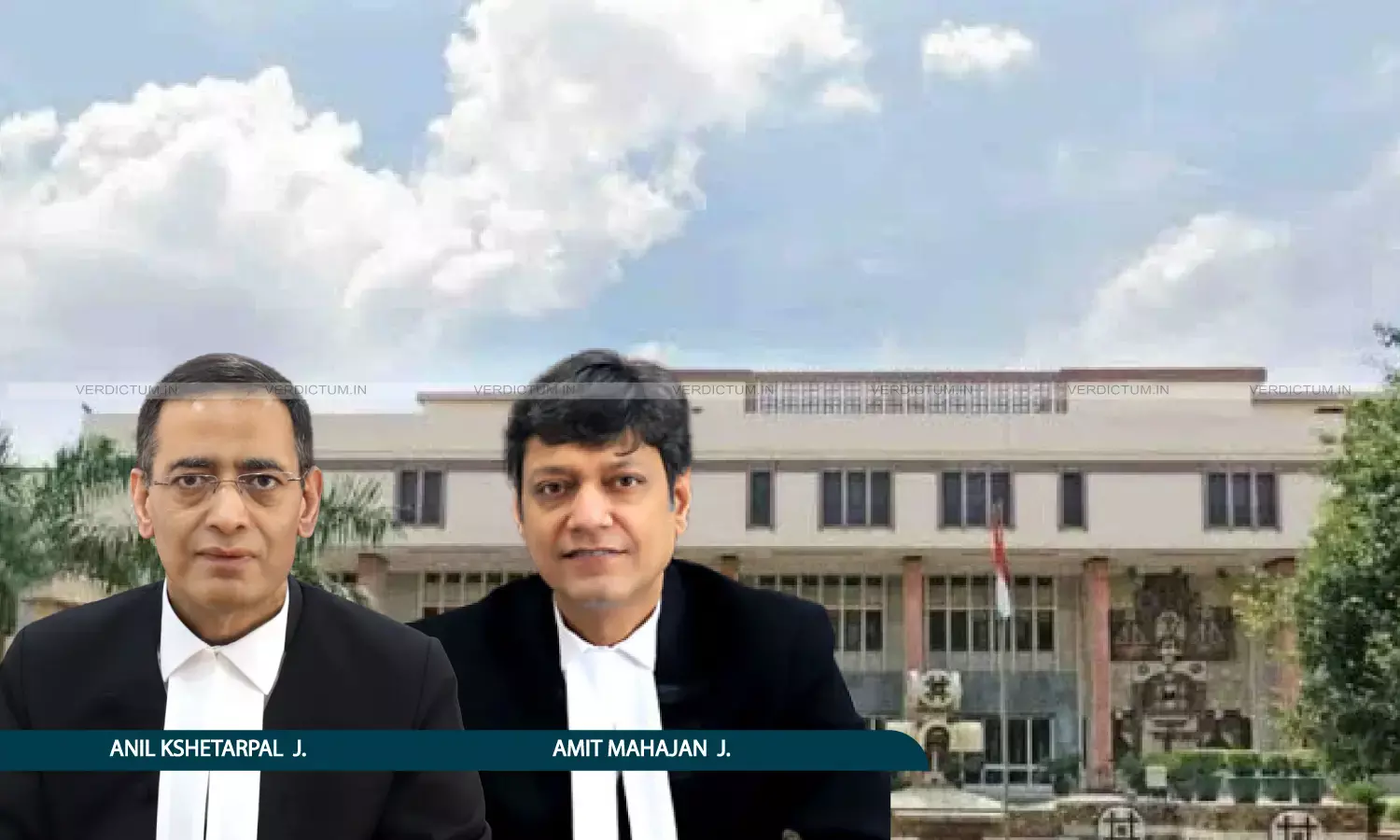
A Division Bench of Justice Anil Kshetrapal and Justice Amit Mahajan observed: “The fact that the remuneration was reflected in the pay slips as 'gross salary', subjected to statutory tax deductions and reported through Form-16, fortifies the conclusion that the payment was compensatory in nature and not a scholarship granted solely to defray educational expenses.”
Background
AIIMS issued a prospectus inviting applications for Senior Resident posts, including one seat reserved for the EWS category in the Department of Ophthalmology. The petitioner applied under the EWS category and furnished a certificate indicating that his family income fell within the prescribed limit. Upon selection, he was appointed to the reserved vacancy.
A competing candidate challenged the appointment, alleging that the petitioner’s remuneration as a Junior Resident, amounting to over ₹13 lakh in the relevant financial year, exceeded the EWS income ceiling of ₹8 lakh. Information obtained under the Right to Information Act included pay records and Form-16 documentation reflecting the remuneration as taxable income.
Parallel proceedings were initiated before the issuing authority, questioning the validity of the EWS certificate. While interim protection was granted against cancellation of the certificate, the dispute regarding eligibility proceeded before the Tribunal.
The Tribunal held that the petitioner’s remuneration constituted income for purposes of EWS eligibility, declared the certificate invalid in the recruitment context, and directed termination of the appointment with restoration of the selection process. The petitioner challenged this decision before the High Court.
Court’s Observations
The High Court examined the statutory framework governing EWS reservation, which requires the inclusion of gross annual income from all sources. The Court noted that the petitioner received fixed monthly payments reflected as salary in official records, subjected to tax deduction, and reported through statutory documentation.
Rejecting the argument that the payment was a stipend or scholarship, the Court emphasised the principle of substance over nomenclature. The record demonstrated that Junior Resident Doctors performed regular clinical duties, patient care responsibilities, and night shifts, creating a clear quid pro quo characteristic of compensatory remuneration.
The Bench observed that scholarships intended solely to meet educational expenses lack such reciprocal obligations. Here, the structured remuneration, contractual tenure, and service conditions supported the Tribunal’s conclusion that the payment constituted income arising from engagement.
The Court also rejected reliance on tax exemption provisions, clarifying that eligibility under the EWS policy is governed by reservation rules rather than income tax classifications. The Tribunal was therefore justified in treating the remuneration as part of gross annual income.
On the issue of the EWS certificate, the Court held that the Tribunal was competent to assess eligibility for recruitment purposes independent of administrative proceedings concerning the certificate. Interim protection granted by the issuing authority did not preclude examination of eligibility in a service dispute.
Addressing the Tribunal’s consequential directions, the Court held that once ineligibility was established, restoration of the merit-based selection process logically followed. Such directions neither exceeded jurisdiction nor offended principles of proportionality.
“The findings recorded by the Tribunal are founded upon a correct appreciation of the applicable policy framework governing EWS reservation, the material placed on record, and the settled principle that the substance of a transaction, rather than its nomenclature, must guide the determination of its true nature”, the Court concluded.
Conclusion
The High Court concluded that the “directions issued by the Tribunal for termination of the Petitioner‟s appointment as Senior Resident (Ophthalmology) and for offering the post to the next eligible candidate under the EWS category, and in the absence thereof, conversion of the post to the Unreserved category and offer to Respondent No.2 in accordance with the applicable prospectus and merit list, are consequential in nature and flow logically from the findings recorded.”
Finding no jurisdictional error or perversity, the Court upheld the directions cancelling the appointment and restoring the merit-based allocation of the vacancy.
The writ petition was dismissed, and pending applications were disposed of.
Cause Title: Dr Bahuballi N. Shetti v. All India Institute of Medical Sciences & Anr. (Neutral Citation: 2026:DHC:997-DB)
Appearances
Petitioner: Dr Amit George, Akshay Bhandari, Manu Jain, Rupam Jha, Medhavi Bhatia, Adhishwar Suri, Bhrigu A. Pamidighantam, Vaibhav Gandhi, Kartikay Puneesh, Advocates.
Respondents: Anand Varma and Ayush Gupta, Shrey Kapoor, Nishit Agrawal, Kanishka Mittal, Deepti Rathi, Advocates.
