

Stridhan, Inherited Property Or Family Gifts Cannot Be Treated As Income To Defeat Wife’s Maintenance Claim: Delhi High Court
The High Court clarified that maintenance must be assessed with reference to the wife’s present earning capacity and her ability to sustain herself in the standard of living enjoyed during the marriage, and not on the financial standing of her natal family.
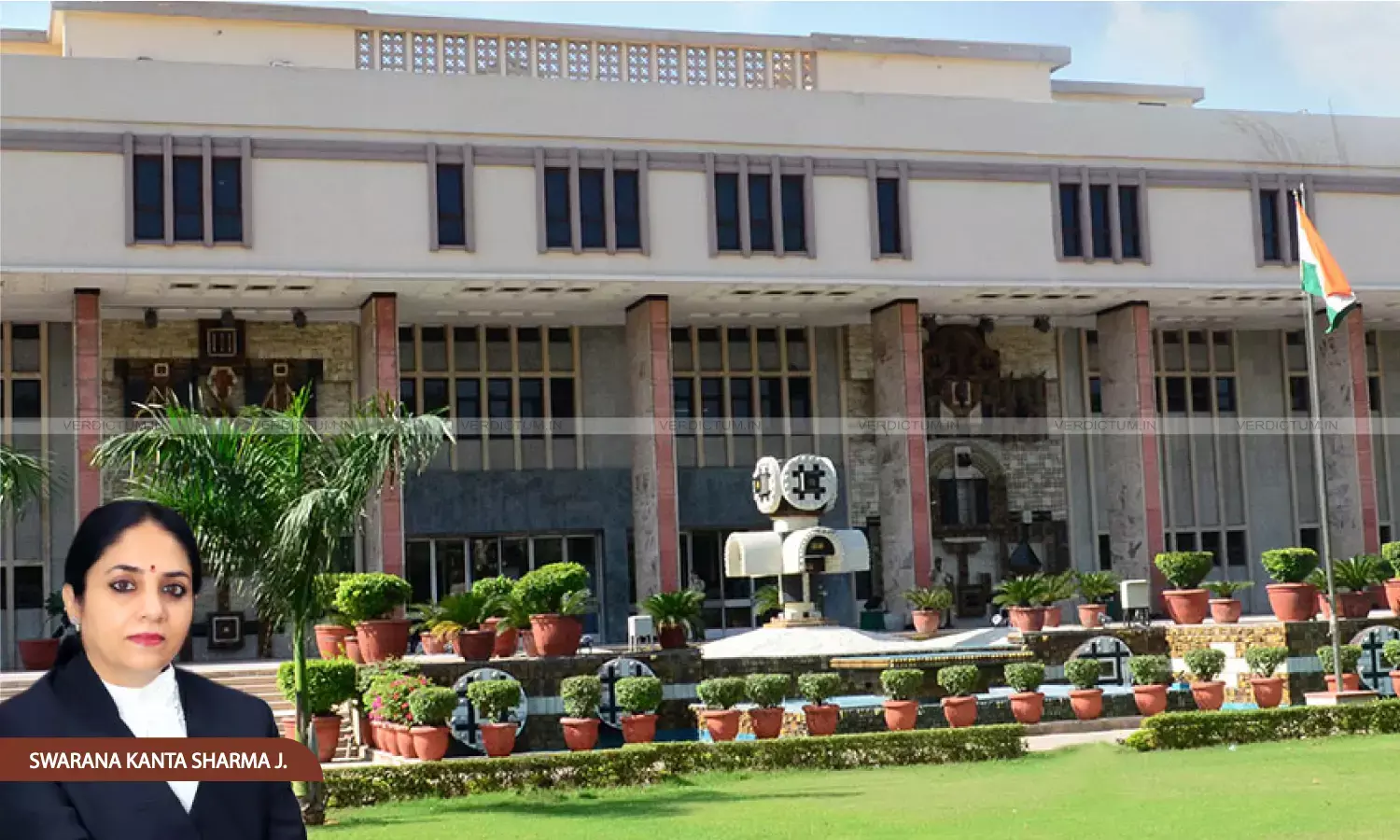
The Delhi High Court has held that a wife’s entitlement to maintenance cannot be defeated by relying on her stridhan, inherited property, or assets gifted by her parents or relatives, as such assets do not constitute income for the purpose of determining maintenance.
The Court was hearing a criminal revision petition filed by the husband challenging the dismissal of his statutory appeal against an order granting interim maintenance to the wife under the Protection of Women from Domestic Violence Act, 2005.
The matter was decided by Justice Swarana Kanta Sharma, who observed that “the stridhan, inherited property, or gifts received by a woman from her parents or relatives cannot be construed as a source of income so as to defeat her claim for maintenance.”
The petitioner-husband had questioned the concurrent findings of the Trial Court and the Sessions Court, which had directed him to pay interim maintenance of ₹50,000 per month to the respondent-wife.
Background
The marriage between the parties was solemnised in December 2018. Subsequently, disputes arose, and the wife alleged that she was subjected to physical, emotional, economic, and other forms of abuse during the subsistence of the marriage.
The wife then initiated proceedings under Section 12 of the Protection of Women from Domestic Violence Act, 2005. During the proceedings, an application seeking interim maintenance under Section 23 of the Act was filed.
The Trial Court, upon examining the income affidavits, bank statements, and material on record, granted interim maintenance of ₹50,000 per month. The husband’s appeal under Section 29 of the Act was dismissed by the Sessions Court, leading to the filing of the present revision petition before the High Court.
Court’s Observation
The Delhi High Court examined the petitioner-husband’s principal contention that the respondent-wife possessed substantial assets, investments, and financial backing from her parents and, therefore, could not be treated as financially dependent. The Court found that such a plea was legally unsustainable.
The Court observed that reliance on a wife’s inherited assets, family gifts, or stridhan to deny maintenance is contrary to settled law. It held that maintenance must be assessed with reference to the wife’s present earning capacity and her ability to maintain herself at a standard commensurate with the lifestyle enjoyed during the marriage, and not on the wealth or social standing of her parents.
The Court relied upon the decision of the Supreme Court in Manish Jain v. Akanksha Jain, holding that the financial position of the wife’s parents is immaterial for determining maintenance. The High Court reiterated that interim maintenance is contingent upon the spouse having no sufficient independent income for her support, and it is no answer to a claim of maintenance that the wife is educated or belongs to a financially sound family.
The Court further referred to Rajnesh v. Neha, where the Supreme Court clarified that mere educational qualifications or theoretical earning potential cannot substitute actual financial independence. The Court emphasised that “even where the wife is earning some income, the Court must determine whether her income is sufficient to enable her to maintain herself in a manner commensurate with the standard of living she enjoyed in her matrimonial home”.
Examining the husband’s claim of unemployment, the Court noted that the material on record contradicted such assertions. The husband’s bank statements reflected recurring financial transactions, and his income tax returns disclosed substantial income in earlier assessment years. The Court also took note of the lifestyle enjoyed by the parties during marriage, including residence in high-end accommodations, which belied the plea of financial incapacity.
The Court observed that income tax returns and self-declared affidavits may not always present a true picture of a businessman’s income and that courts are required to take a comprehensive view of all material, including lifestyle indicators and financial assistance received from family or business interests. In this regard, reliance was placed on the decision of a Coordinate Bench in Smt. Sumedha Bhardwaj v. Jagdeep Bhardwaj.
The Court further clarified that documents relied upon by the husband largely reflected the sale of inherited assets or isolated transactions and did not establish any recurring or stable source of income on the part of the wife. Such material, the Court held, was insufficient to dislodge the finding of financial dependence recorded by the courts below.
Conclusion
The High Court held that there was no infirmity or illegality in the concurrent findings of the Trial Court and the Sessions Court granting interim maintenance to the respondent-wife. It concluded that the quantum of ₹50,000 per month was reasonable and commensurate with the standard of living enjoyed by the wife during the marriage and the husband’s financial capacity.
Accordingly, the revision petition was dismissed.
Cause Title: DK v. AY (Neutral Citation: 2025:DHC:11147)
Appearances
Petitioner: Advocates Prashant Mendiratta, Janvi Vohra, Akshat Kaushik, Veenu Singh, Vaishnavi Saxena and Aamya
Respondent: Nawal Kishore Jha, Advocate
