

SSC Must Adopt Transparent Policy On Ambiguous Question: Delhi High Court Refuses To Interfere With CGLE 2024 Evaluation Process
The High Court held that although the corrective measures adopted by the Staff Selection Commission (SSC) in the CGLE 2024 examination cannot be termed illegal or arbitrary to invite judicial interference, but the scale of revisions and the grant of grace marks revealed systemic shortcomings that demand institutional reform.
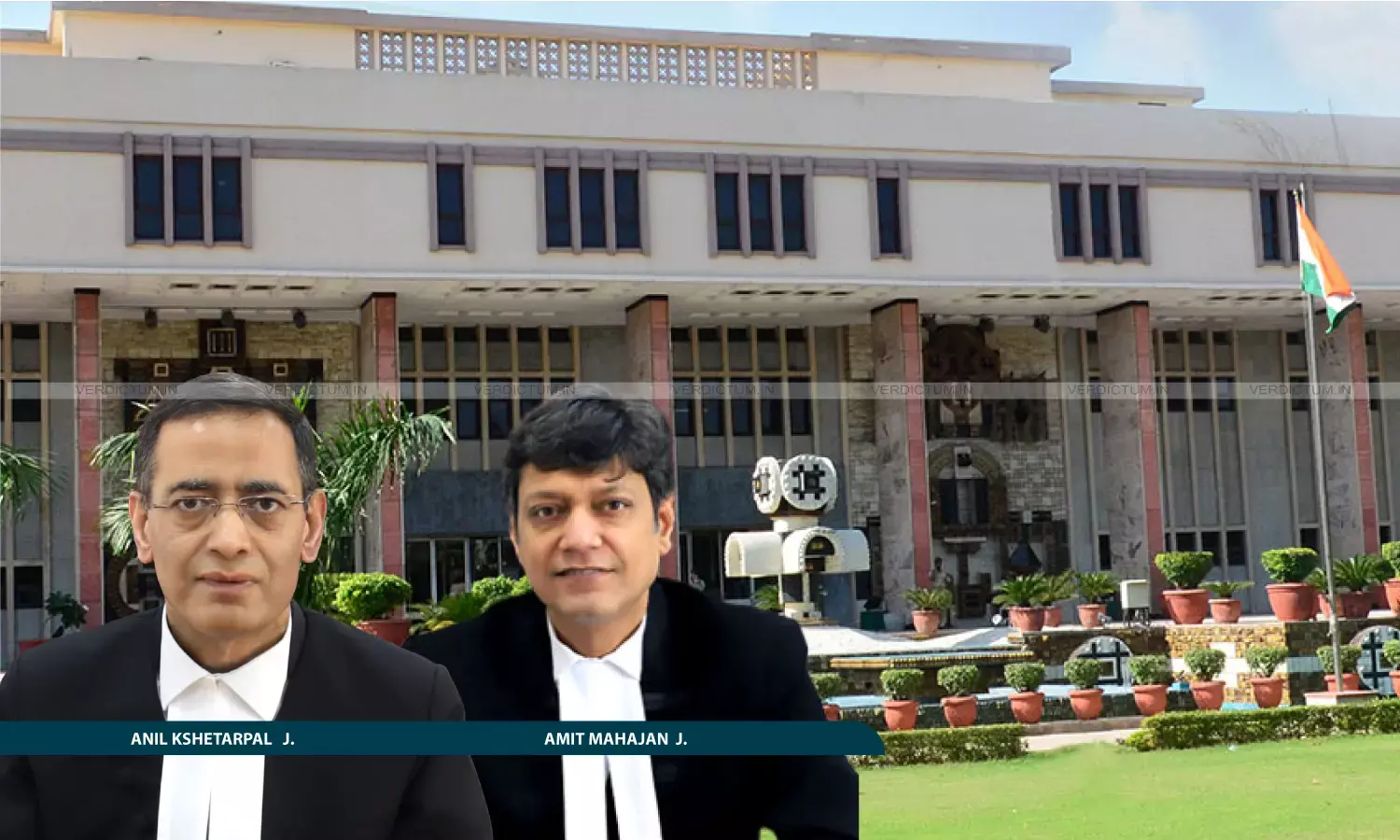
While declining to interfere with the final answer key and evaluation process of the Combined Graduate Level Examination (CGLE) 2024, the Delhi High Court observed that the Staff Selection Commission must adopt greater academic rigour and administrative diligence in framing and vetting question papers, and institutionalise transparent mechanisms to address ambiguities.
The Court emphasised that transparent and structured policies for addressing ambiguous questions are essential to maintain examination credibility.
The Court was hearing a batch of writ petitions challenging orders of the Central Administrative Tribunal refusing to interfere with the SSC’s final answer key and evaluation process in CGLE 2024.
A Division Bench of Justice Anil Kshetrapal and Justice Amit Mahajan observed: “…while the conduct of the SSC in the present examination reveals serious lapses in academic rigour and administrative diligence that merit strong judicial disapproval, the corrective measures ultimately adopted were founded on expert opinion and cannot be characterised as vitiated by patent illegality, arbitrariness, or procedural impropriety warranting interference in the exercise of writ jurisdiction”.
Background
The SSC conducted the CGLE 2024 examination in multiple stages. Following Tier-II examinations, a tentative answer key was released, inviting objections. After considering representations, the SSC declared final results and subsequently published a revised answer key.
The revised key invalidated multiple questions and awarded uniform grace marks to candidates, including those who had not attempted or had incorrectly answered the disputed questions. Candidates challenged this methodology before the Tribunal, alleging arbitrariness, unfair advantage, and dilution of merit. The Tribunal declined to interfere, holding that academic evaluation falls primarily within the domain of experts.
Aggrieved candidates approached the High Court, contending that judicial review was warranted due to procedural irregularities and faulty evaluation.
Court’s Observations
The Delhi High Court began by reiterating settled principles governing judicial review in academic matters. Courts do not function as appellate authorities to reassess answer keys or substitute expert evaluation unless decisions are shown to be patently illegal, arbitrary, or procedurally flawed.
Relying on Supreme Court precedent, the Bench observed that examination authorities enjoy a presumption of correctness in evaluation, and judicial restraint is essential where technical expertise is involved.
The Court distinguished earlier cases where judicial intervention was justified because the subject matter fell within judicial expertise, such as law entrance examinations. CGLE 2024 involved multidisciplinary questions beyond judicial competence, warranting deference to expert assessment.
Addressing the grant of uniform marks for invalid questions, the Court noted that SSC’s rationale was not devoid of logic. In an examination involving negative marking, candidates might deliberately avoid ambiguous questions to prevent penal consequences. Uniform credit mitigated unintended disadvantage, though the Court cautioned that such corrective measures must remain exceptional and not mask systemic deficiencies.
The Bench acknowledged that typographical or drafting errors identified by petitioners reflected lapses in question-setting. However, once experts declared the questions ambiguous and applied uniform moderation, the Court could not supplant that decision.
Importantly, the Court recorded strong institutional concerns. The uniform grant of grace marks across numerous questions indicated shortcomings in framing, vetting, translation parity, and evaluation processes. Declaring results before publishing the final answer key limited scrutiny and created avoidable anomalies.
The Court emphasised that recruitment examinations affect thousands of aspirants and demand the highest standards of precision. It was observed that institutionalising a transparent policy to handle ambiguous questions would preserve fairness, enhance credibility, and reduce litigation.
The Bench further underscored: “…we expect the SSC to adopt a more circumspect and systematic approach in the framing, vetting, and finalisation of question papers and answer keys. Institutionalising a clear and transparent policy for addressing ambiguities and objections will not only enhance the credibility of examinations but also significantly reduce avoidable litigation. While no directions are warranted in the present case, the SSC must exercise greater academic rigour and administrative diligence in all future examinations, so as to prevent recurrence of the shortcomings evident in the present exercise.”
While these lapses merited judicial disapproval, the Bench held that the ultimate corrective decisions were based on expert opinion and did not cross the threshold of illegality or arbitrariness required for writ intervention, while stating that "notwithstanding our expressed concerns, the settled principles governing judicial review in academic matters compel this Court to uphold the impugned decisions".
Conclusion
The High Court concluded that the Tribunal acted within permissible bounds in declining interference with the SSC’s final answer key and evaluation process.
While expressing serious concern over administrative and academic lapses, the Court held that the corrective measures did not warrant judicial intervention. Accordingly, the writ petitions were dismissed.
Cause Title: Devyanshu Suryavanshi & Ors. v. Staff Selection Commission & Ors. & connected matters (Neutral Citation: 2026:DHC:925-DB)
Appearances
Petitioners: Advocates Gauhar Mirza, Aditya Bharat Manubarwala, Abiha Zaidi, Tanishka Grover, Pritam, Priyam Karma, K.K. Sharma, Harshit Agarwal, Arun Kumar Singh, Dhananjaya Kumar Tyagi
Respondents: Arunima Dwivedi, CGSC; Jagdish Chandra, CGSC; Advocates Himanshi Singh, Priya Khurana, Maanya Saxena, Siddharth Bajaj
