

Enterprises Rendering Services From Outside India Not ‘Permanent Establishment’ Under India–Singapore DTAA: Delhi High Court
The High Court held that a permanent establishment under Article 5(6)(a) of the India–Singapore DTAA arises only when services are furnished within India through employees or personnel physically present in India, and that the concept of a ‘virtual service permanent establishment’ has no recognition under the treaty or domestic law.
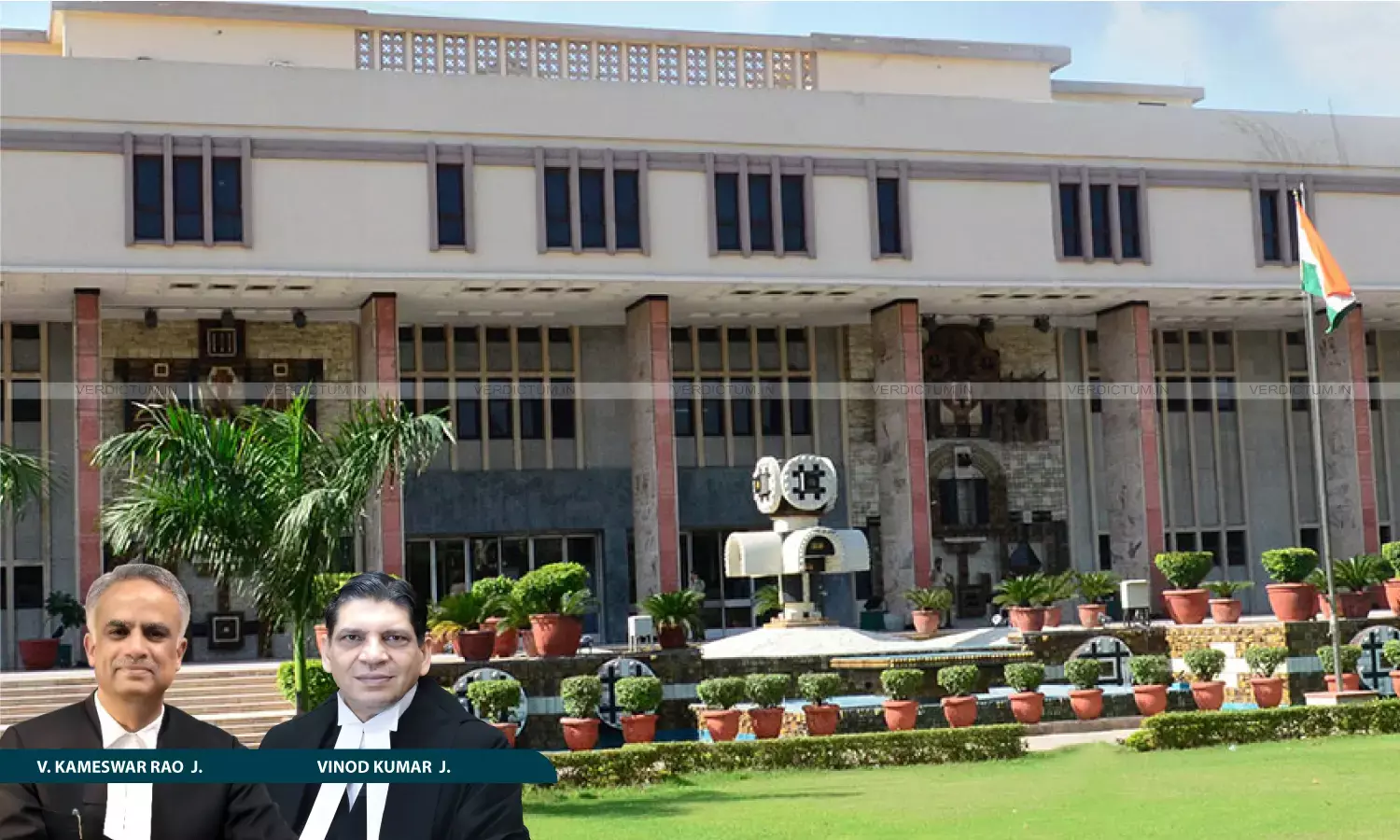
Justice V. Kameswar Rao, Justice Vinod Kumar, Delhi High Court
The Delhi High Court has ruled that foreign enterprises providing services to Indian clients from outside India cannot be treated as having a permanent establishment in India under the India–Singapore DTAA in the absence of personnel physically rendering services within the country.
The Court clarified that Article 5(6)(a) of the DTAA contemplates a physical presence of employees furnishing the services “within India” for a service permanent establishment to arise.
The Court was hearing a batch of appeals by the Revenue challenging the Income Tax Appellate Tribunal’s decision deleting additions on income earned by the assessee, on the ground that it constituted a service PE in India. The Revenue argued that the assessee’s virtual presence and digital mode of service delivery established a taxable nexus.
A Division Bench of Justice V Kameswar Rao and Justice Vinod Kumar observed: “Article 5(6)(a) of the DTAA reads “An enterprise shall be deemed to have a permanent establishment in a Contracting State if it furnishes services… within a Contracting State through employees or other personnel…”. The words “within a Contracting State” and “through employees or other personnel” contemplates rendition of services in India by the employees of the non-resident enterprise, while mandating a fixed nexus; a physical footprint within India. The term „within‟ has a certain territorial connotation and in the absence of personnel physically performing services in India, there can be no furnishing of services "within‟ India. A plain reading of the whole provision would thus reveal that, it such rendition of services by employees present within the country which would constitute a service permanent establishment”.
Harpreet Singh, Sr. Standing Counsel, appeared for the Revenue, while Advocates Misha and Maninder Singh represented the respondent-assessee.
Background
The assessee, a Singapore-based legal services entity, rendered legal advisory services to clients in India but without any employees or representatives visiting India during the relevant assessment years. The Assessing Officer held that the services constituted a service PE in India, taxing revenues accordingly. The CIT(A) affirmed the assessment, prompting the assessee’s appeal.
The ITAT reversed the Revenue’s action, holding that no employee of the assessee visited India during the relevant period and hence no service PE could be established. The Revenue brought the present appeals under Section 260A of the Income Tax Act, reiterating that the digital nature of service provision established a virtual PE.
The question before the High Court was whether virtual or digitally delivered services by foreign enterprises, in the absence of physical presence in India, can establish a taxable presence under the DTAA.
Court’s Observation
The Delhi High Court, upon examining the relevant provisions, held that Article 5(6)(a) of the DTAA requires that services must be furnished within India through employees or other personnel physically present in the country. It was observed that a permanent establishment under treaty law retains an inherent territorial nexus, and a physical footprint is the foundational requirement. The Bench rejected the Revenue’s premise that remote virtual services could constitute PE in the absence of personnel in India.
The Court emphasised that the concept of a virtual service PE finds no mention in the DTAA. It noted that judicial interpretation must adhere strictly to the text negotiated between contracting States, stating that Courts cannot introduce new treaty concepts through judicial innovation merely because technology has evolved.
Addressing the Revenue’s policy concerns, the Court acknowledged that the virtual economy has reduced the traditional physical presence-based nexus. However, it held that taxability must always be governed by explicit statutory or treaty provisions. If a provision is conspicuous by its absence in the DTAA, it cannot be inferred judicially.
The Court concluded that the requirement of Article 5(6)(a) stood unsatisfied. Therefore, no service PE came into existence, and tax could not be levied on such income under the terms of the DTAA.
Conclusion
The Delhi High Court held that the assessee did not have a permanent establishment in India and that receipts from services rendered entirely outside India were not taxable in India under the India–Singapore DTAA.
The appeals filed by the Revenue were dismissed, and the order of the ITAT was affirmed.
Cause Title: Commissioner Of Income Tax (International Taxation)-1, New Delhi v. Clifford Chance PTE LTD. (Neutral Citation: 2025:DHC:10838-DB)
Appearances
Appellant: Harpreet Singh, Sr. Standing Counsel
Respondent: Advocates Misha and Maninder Singh
