

Delhi High Court Directs Consideration Of Plea To Include Deceased Employee's Live-In Partner’s Name For Family Pension
The petitioner had filed the petition before the Delhi High Court challenging the Order passed by the Central Administrative Tribunal, Principal Bench.

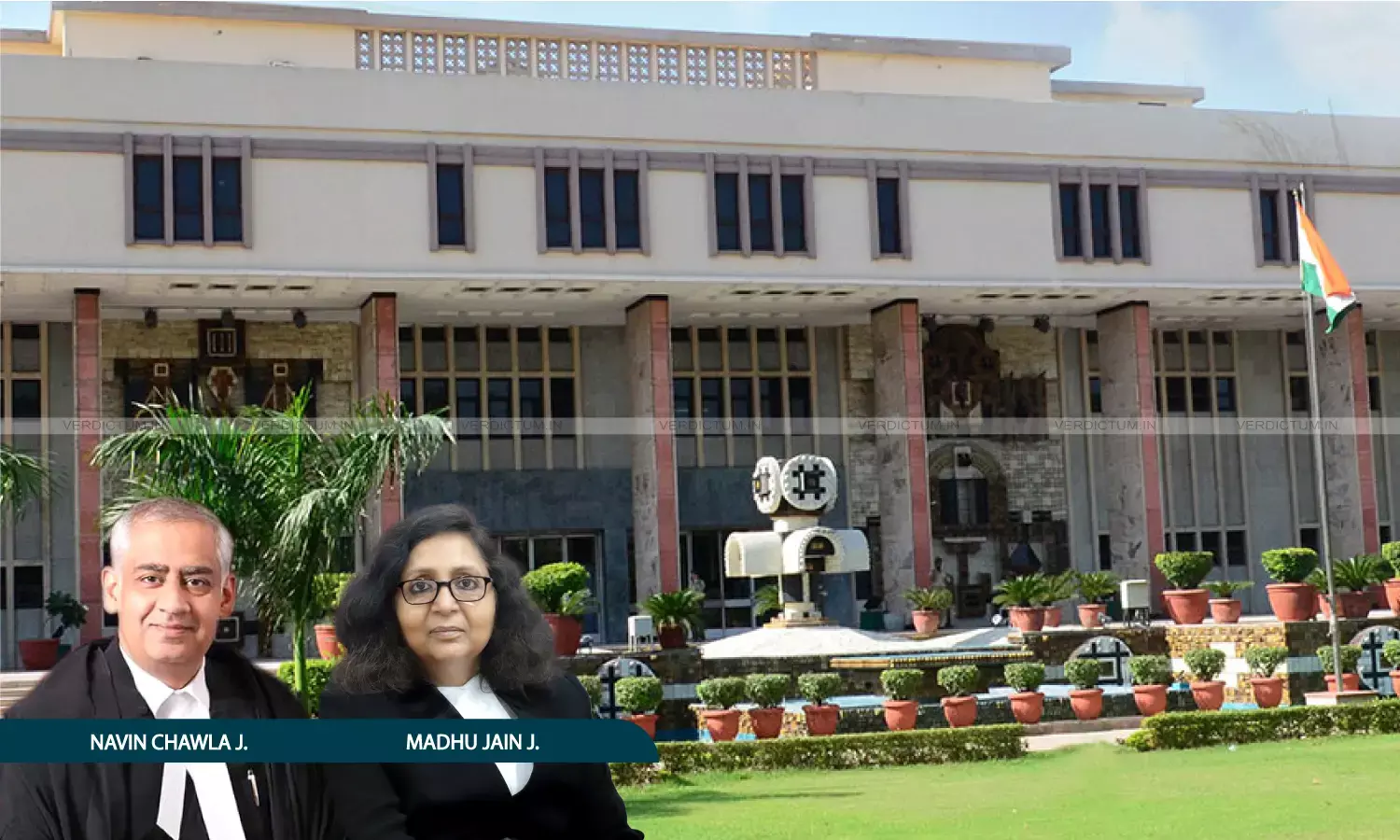
Justice Navin Chawla, Justice Madhu Jain, Delhi High Court
The Delhi High Court has set aside an order to permanently withhold 50% of the monthly pension and gratuity of a retired Government Servant who was deserted by his wife. The High Court noted that he had maintained transparency regarding his live-in relationship and had no mala fide intention to obtain diplomatic passports through misrepresentation or by defrauding the Department.
The petitioner had filed the petition before the High Court challenging the Order passed by the Central Administrative Tribunal, Principal Bench, New Delhi, whereby the Tribunal dismissed his original application.
The Division Bench of Justice Madhu Jain and Justice Navin Chawla held, “Therefore, we are of the opinion that the petitioner maintained transparency, at all times, with the respondents, regarding his relationship with Ms. Manihal Devi, and had no mala fide intention to obtain diplomatic passports through misrepresentation or by defrauding the Department”, it added.
“The respondents are further directed to consider the petitioner’s plea to include the name of Ms. Manihal Devi and her children in the Pension Payment Order for family pension and CGHS facilities”, it ordered.
The Petitioner appeared in person, while Central Government Standing Counsel Aarti Bansal represented the Respondent.
Factual Background
The petitioner was appointed as Deputy Field Officer (DFO) (General Duty) in the Research and Analysis Wing, Cabinet Secretariat in 1976. He married, and a daughter was also born out of this wedlock. It was the case of the petitioner that in 1983, his wife deserted him and refused to grant him a divorce, since then she had been absent from his life. In September 1983, during the subsistence of his first marriage, the petitioner started cohabiting with another lady, and two children were born from their relationship. Pursuant to a complaint filed by the first wife, departmental proceedings were initiated against the petitioner on the charges of neglecting his wife and daughter by living with another woman. The proceedings culminated with the imposition of a major penalty of a reduction in pay by four stages for a period of four years. Thereafter, in February 2008, the petitioner was inducted into the Special Circuit (Ministry of External Affairs) for an overseas assignment. Subsequently, he obtained diplomatic passports. The petitioner took over as Under Secretary. In 2011, he submitted his pension papers, as he was due for superannuation. However, he was served with a Charge Memorandum.
The Disciplinary Authority observed that the petitioner had misrepresented while applying for diplomatic passports, and based on such misrepresentation, he had misled the concerned authorities in getting diplomatic/official passports issued to persons who were not his family members. In view of the above, the UPSC advised that a penalty of permanently withholding 50% of the monthly pension otherwise admissible and 50% of the gratuity admissible, permanently, should be imposed on the petitioner. The said penalty was imposed upon him under Rule 9(1) CCS (Pension) Rules, 1972. Aggrieved by the aforesaid order of the Tribunal, the petitioner preferred the impugned original application before the Tribunal. On dismissal of the application, the petitioner filed the present petition.
Reasoning
The Bench noted that the petitioner never concealed his live-in relationship. He consistently disclosed Manihal and her children in the service records, identifying her as his wife based on prolonged cohabitation for the purposes of family pension benefits. It was also noticed that the Inquiry Officer acknowledged a three-decade-long cohabitation and opined that the department had, to some extent, acknowledged that the petitioner’s real family comprises his live-in partner.
The Bench held, “While a Government servant charged with lack of devotion to duty, may be held guilty of grave misconduct, depending upon the nature and gravity of the conduct, the learned Tribunal erred in characterizing the petitioner’s actions as ‘grave/gross misconduct’, as the petitioner never concealed his relationship with Ms. Manihal Devi. In view of this, the Disciplinary Authority’s assertion that the petitioner lacks personal integrity is also misconceived. Neither the Disciplinary Authority nor the learned Tribunal was correct in upholding the penalty imposed on the petitioner. Treating respondent’s efforts to include Ms. Manihal Devi and her children in the family details proforma as the sole basis for establishing grave misconduct is erroneous.”
The Bench was of the view that the petitioner had not committed any ‘grave misconduct or negligence’ as contemplated under Rule 9. He had also not concealed anything from the respondents. “We, therefore, find no legitimate reason for the respondents to permanently withhold 50% of the petitioner’s monthly pension and gratuity or for denying family pension to the petitioner’s dependents”, it added.
Setting aside the impugned order passed by the Tribunal, the Bench held the petitioner entitled to monthly pension and gratuity amount, with effect from August 1, 2012.
Cause Title: Birendra Singh Kunwar v. Union of India (Neutral Citation: 2026:DHC:66-DB)