

Fraudulent Marriage to Evade Criminal Liability Vitiates Consent: Delhi High Court Upholds Rape and Bigamy Convictions
Court affirms that consent obtained by concealment of subsisting marriage amounts to rape; conspiracy can be inferred from coordinated conduct facilitating deception

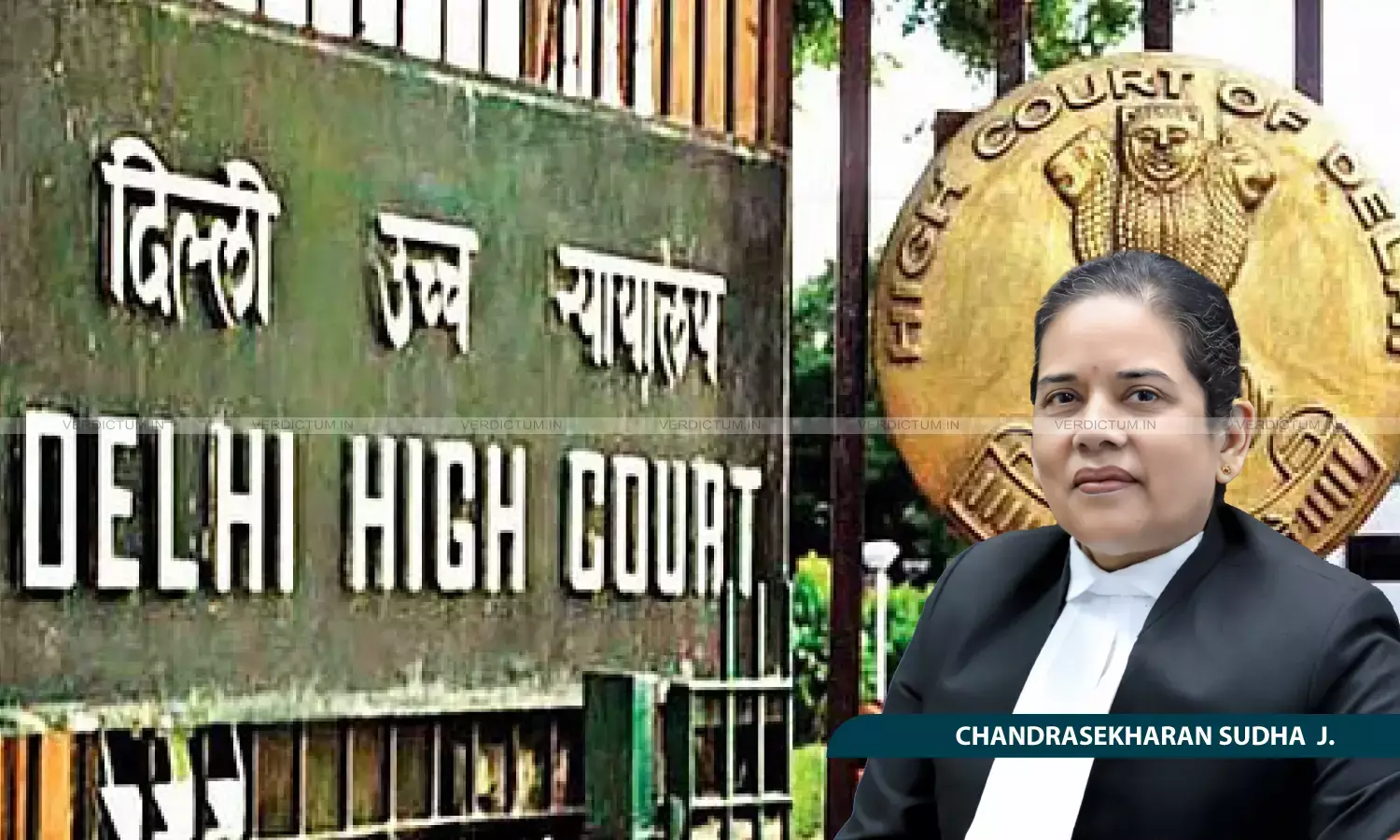
The Delhi High Court has upheld the conviction of a man for offences of bigamy, fraudulent marriage and rape, holding that a marriage ceremony performed after deliberate concealment of a subsisting marriage vitiates the woman’s consent to sexual intercourse. The Court further affirmed the conviction of the co-accused for criminal conspiracy, observing that coordinated conduct facilitating the deception is sufficient to attract liability under Section 120B IPC.
The Court held that where a woman consents to cohabitation solely on the belief that she is the legally wedded wife, and such belief is induced by fraud regarding the accused’s marital status, the consent stands vitiated by misconception of fact. The rigours of criminal law, the Court observed, cannot be diluted merely because the marriage ceremony may not have strictly complied with all customary rites, so long as it was projected as valid to deceive the victim.
Justice Chandrasekharan Sudha observed, “PW1 has consistently stated that had she known about the prior marriage of A1, she would neither have gone through the marriage ceremony nor consented to physical relations. Her testimony has remained unshaken in cross-examination on this material aspect. The medical and forensic evidence, though not determinative by itself, supports the prosecution case regarding sexual intercourse. The offence under Section 376 IPC thus stands proved against A1”.
“For the purpose of offences under Sections 494, 495 and 496 IPC, what is material is the fact that the accused went through a marriage ceremony and held it out as a valid marriage to deceive the victim. The prosecution evidence, particularly that of PW1 and PW8, sufficiently establishes this fact”, the bench further noted.
None appeared for the appellant, Pradeep Gahalot, APP appeared for the respondent.
In the matter, as per the prosecution, in 2002, the principal accused (A1) had enticed the victim, then a minor, leading to registration of a kidnapping case. Subsequent to which, on 22-11-2006, A1 allegedly married her at an Arya Samaj Mandir by representing himself as unmarried, despite having an earlier marriage in 2003.
On 13-05-2007, she was taken to a rented accommodation where A1 established physical relations with her. The next day, she was left at her parental home, where A1 disclosed that he was already married and had gone through the ceremony only to shield himself from the earlier criminal case.
After investigation, a chargesheet was filed for offences under Sections 494, 495, 496 and 376 read with Section 120B IPC.
The trial court convicted A1 for all substantive offences and sentenced him to rigorous imprisonment, and convicted his parents (A2 and A3) and friend (A4) under Section 376 read with Section 120B IPC. One of the co-accused expired during pendency of appeal, resulting in abatement of the substantive sentence.
Reappreciating the evidence, the High Court held that the subsistence of A1’s first marriage stood proved through investigation records and was not seriously disputed. The testimony of the victim regarding the second marriage was corroborated by the priest who solemnised it and by photographs and affidavits executed at the time. The Court rejected the contention that absence of proof of customary rites invalidated the prosecution case, observing that what was material was the accused’s projection of the ceremony as a valid marriage to induce consent.
The bench noting the minor discrepancies in the testimonies said, “Such discrepancies are natural in the testimony of witnesses recounting traumatic & connected matters events after a lapse of time and do not go to the root of the prosecution case. On the core issue of deception, false marriage, and subsequent sexual exploitation, the testimonies of PW1 and PW4 are consistent and mutually corroborative”.
As regards conspiracy, the Court held that direct evidence is seldom available and may be inferred from conduct. The active participation of A2, A3 and A4 in facilitating cohabitation and accompanying the victim at crucial stages demonstrated a meeting of minds.
Accordingly, the Court dismissed the appeals, finding no perversity or illegality in the appreciation of evidence by the Additional Sessions Judge, Special Fast Track Court, Rohini.
Cause Title: Bhagwan Devi & Anr v. State [Neutral Citation: 2026:DHC:1162]
Appearances:
Appellant: None
Respondent: Pradeep Gahalot, APP for the State with SI Karamveer, P.S. Sultanpuri, Delhi, Himanshu Anand Gupta, (DSLSA), Mansi Yadav, Sidharth Barua, Shekhar Anand Gupta, Navneet Kaur and Shivani Rampal, Advocates. Sapna Chauhan, (Amicus Curiae), Vrinda Bhandari, (DHCLSC) with Pragya B., Advocates for victim.
Click here to read/download the Judgment