

Delhi High Court Upholds Validity Of MHAs 2013 Guidelines Disqualifying Colour-Blind Candidates From CAPF & Assam Rifles Recruitment
The High Court held that the 2013 Guidelines of the Ministry of Home Affairs, which prospectively bar recruitment of personnel with defective vision or colour blindness in CAPFs and Assam Rifles, are based on rational considerations and do not violate Article 14 of the Constitution.
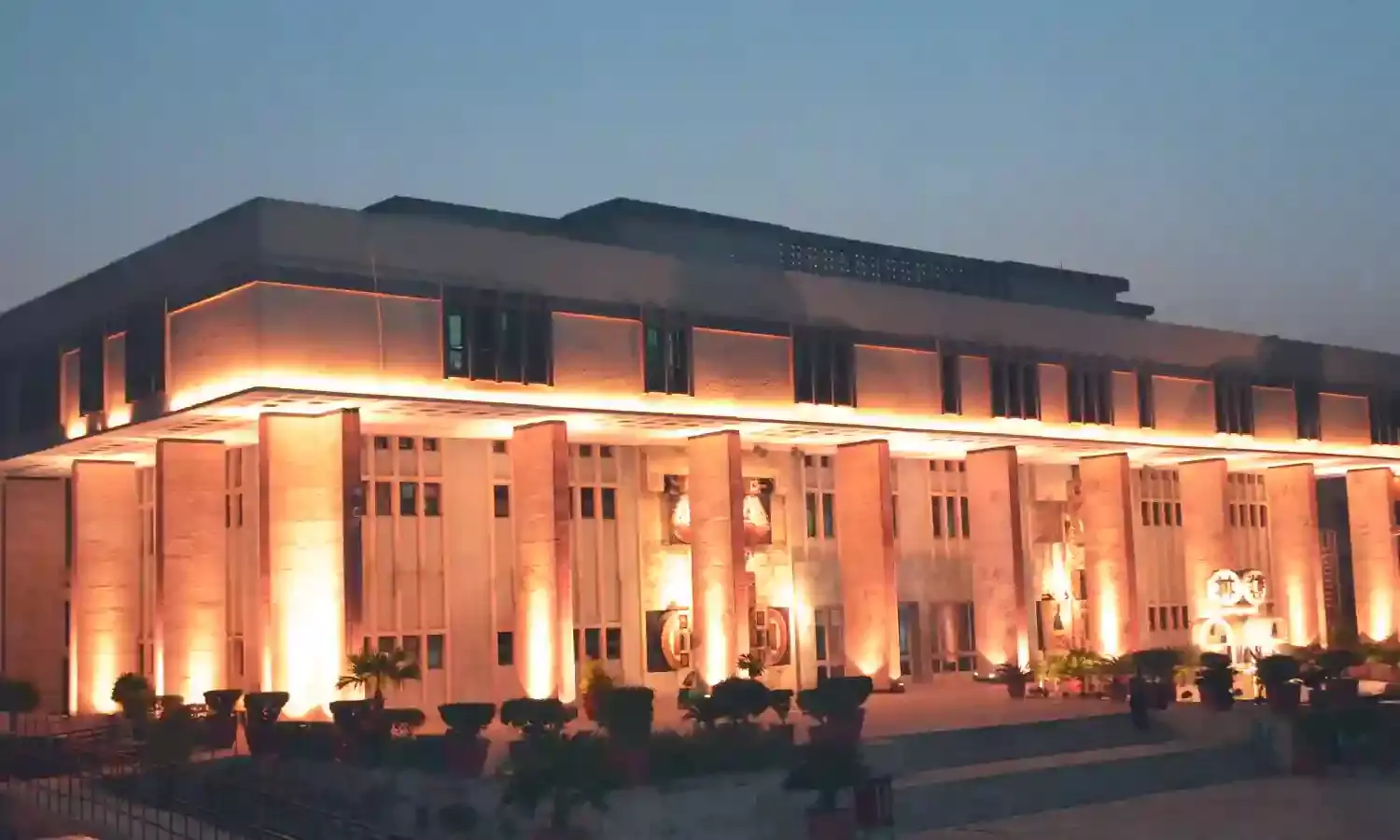
The Delhi High Court has upheld the validity of the 2013 Policy Guidelines issued by the Ministry of Home Affairs, which disqualify candidates with defective colour vision from recruitment to the Central Armed Police Forces and the Assam Rifles.
Background
The petitioners participated in a 2015 recruitment process for the post of Constable (General Duty) in CISF and were initially declared medically fit. After joining their training centres, they were subjected to a colour blindness test, where they were found to have defective colour vision.
Following confirmation of unfitness in review medical examinations, their services were terminated under Rule 25 of the CISF Rules, 2001, during probation. Appeals filed under Rules 46 and 47 were rejected with reference to the 2013 Guidelines.
Earlier writ petitions against termination were withdrawn with liberty to challenge the 2013 Guidelines, leading to the present petitions.
Court’s Observation
The Delhi High Court examined the constitutional challenge to the 2013 Guidelines and reiterated that judicial review of policy is limited to testing arbitrariness, unreasonableness or violation of fundamental rights. It relied on landmark precedents, including T.N. Education Dept. Assn. v. State of T.N., Asif Hameed v. State of J&K, and Ugar Sugar Works Ltd. v. Delhi Administration to reaffirm judicial restraint in policy matters.
The Bench held that preventing the recruitment of personnel who may be unable to distinguish uniforms or effectively use weapons in combat scenarios constitutes a reasonable classification having a direct nexus with public safety and operational integrity. The policy was found to be well-reasoned, non-arbitrary and grounded in expert assessment of national security requirements.
The Court further observed that the Guidelines expressly apply prospectively, protecting personnel already recruited before 18.05.2012, thus compliant with principles laid down in Sree Sankaracharya University of Sanskrit v. Manu. The Court also distinguished earlier High Court rulings cited by petitioners as those cases concerned promotions of serving personnel, not direct recruitment of probationers.
Regarding termination, the Bench held that a probationer has no vested right to continue unless found suitable for permanent appointment. The medical assessment by CISF doctors was accepted as final, with no evidence of mala fides or procedural irregularity.
Conclusion
Dismissing the petitions, the Court upheld the constitutional validity of the 2013 Guidelines and sustained the termination orders issued to the petitioners.
However, the High Court left open to them the liberty to submit representations seeking consideration for posts where colour blindness is not a disqualifying factor, directing CISF to decide such representations within ten weeks of receipt.
The writ petitions were disposed of in these terms, and pending applications were closed.
Cause Title: Anjar Ali Khan & Others v. Union of India & Others (Neutral Citation: 2025:DHC:10764-DB)
Appearances
Petitioners: Advocates Rajat Arora, Niraj Kumar, Sourabh Mahla, Rajesh Kumar Singh
Respondents: Prasanta Varma, SCGC; Arti Bansal, SPC
