

Parent Is Entitled To Meaningful Visitations But Such Interactions Mustn’t Expose Child To Physical Harm Or Emotional Distress: Delhi High Court
The Court said that the Courts exercising jurisdiction in custody and visitation matters are duty-bound to ensure that the child does not become a casualty of ongoing disputes between the parents.

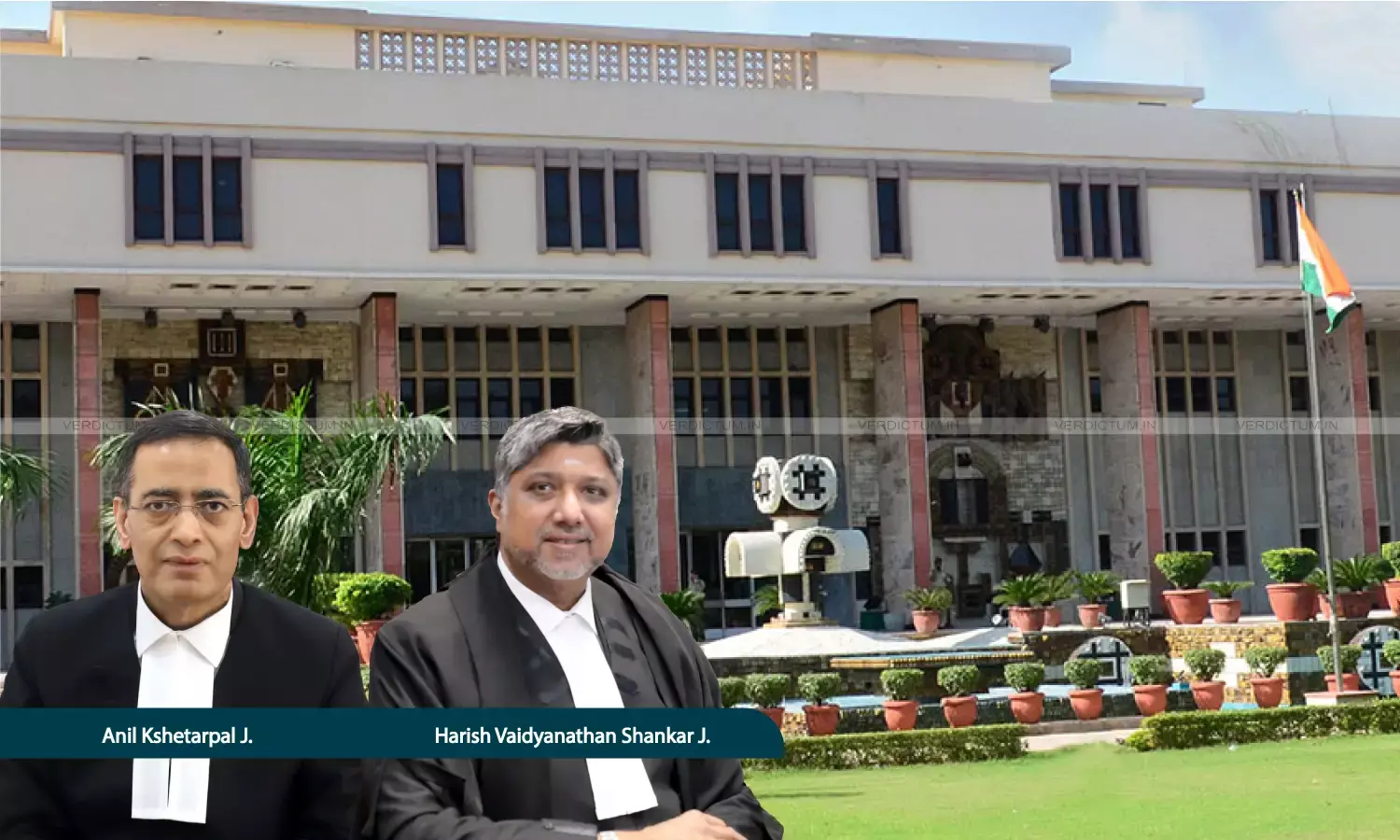
Justice Anil Kshetarpal, Justice Harish Vaidyanathan Shankar, Delhi High Court
The Delhi High Court has observed that a parent is entitled to regular and meaningful visitation, but such interaction must not expose the child to circumstances likely to cause physical harm, emotional distress, or psychological instability, and the welfare of the child is of paramount consideration.
The Division Bench of Justice Anil Kshetarpal and Justice Harish Vaidyanathan Shankar observed, “In assessing the competing contentions, this Court recognizes that while a parent is entitled to regular and meaningful visitation, such interaction must not expose the child to circumstances likely to cause physical harm, emotional distress, or psychological instability.”
Appellant appeared in person, while Advocate Vaibhav Sharma appeared for the Respondents.
Factual Background
The Appellant-father filed an appeal impugning the order passed by the Family Court whereby the trial court allowed the application moved on behalf of the Respondent-mother seeking modification of the earlier and, accordingly, modified the visitation arrangement of the Appellant.
The parties married on October 28, 2019, and had a daughter in 2021. Marital discord later led to legal proceedings regarding the custody and visitation of the minor child. In November 2024, the Family Court granted the father visitation rights at a mall in Delhi for one hour, three times a week. The court intended this as an interim measure to allow the father and daughter to interact in a non-intrusive environment.
However, further disputes arose. The mother alleged that in December 2024, the father and his family tried to break into her home with tools, an event the child reportedly witnessed. She also accused him of tampering with security cameras and disconnecting electricity at the residence throughout 2025. These incidents led to a police FIR and complaints under the Domestic Violence Act.
Due to these allegations, the Family Court modified the visitation schedule on December 15, 2025. The new order significantly reduced the father's visits to only two Saturdays a month and added two monthly video calls. The father then filed this appeal to challenge that decision.
Contention of the Parties
The father argued that the Family Court lacked a valid reason to change the previous arrangement. He claimed there were no significant changes in circumstances since the original order, which the parties had initially agreed upon. He asserted that the court should only modify visitation if there was clear evidence that the child’s welfare was at risk.
He further contended that the reduced schedule harmed the daughter’s best interests. He believed that limiting their time together would damage their emotional bond and lead to parental alienation. According to the father, denying the child a meaningful connection with him could cause long-term psychological harm to her development.
In contrast, the mother argued that the child’s safety and welfare were the court’s primary concerns. She pointed to the father's alleged aggressive behaviour, including the attempt to break into her home, which the child witnessed. She claimed these incidents made the original visitation plan unsafe and stressful for the daughter.
Finally, the mother noted that the child was now of school-going age and needed a stable routine. She argued that the previous schedule, which required travelling to the mall three times a week, disrupted the child's academics and rest. She maintained that the new arrangement better balanced the child’s developmental needs with the father’s right to stay in touch.
Observations of the Court
The Court said, “It is well settled that, in matters concerning custody and visitation, the welfare of the minor child is the paramount consideration, overriding all other considerations, including the convenience or preference of either parent. The Court must ensure that the child’s physical safety, emotional well-being, and opportunities for healthy development are safeguarded, while promoting meaningful contact with both parents wherever possible. Any modification of visitation rights must, therefore, be guided by evidence demonstrating a clear need for change in order to protect the child’s welfare, rather than on speculative or minor disputes between the parents.”
The Court said that the arrangement ensured that the Appellant-father had a meaningful contact with the minor daughter in a safe, neutral, and non-intrusive environment, while simultaneously safeguarding the child’s emotional well-being and physical safety.
It was observed, “The rationale was to balance the Appellant-father’s right to maintain meaningful contact with the paramount requirement of safeguarding the child’s safety, stability, and emotional security. It is well settled that the power to modify visitation arrangements is not to be exercised merely on considerations of convenience or routine parental disagreement, but only where circumstances are demonstrated to have a material impact on the welfare of the child.”
The Court also held, “It is also acknowledged that the Appellant-father has denied the allegations levelled against him. However, at the stage of determining interim visitation, the Court is not required to render definitive findings on disputed facts. What is required is an evaluation of whether the allegations and surrounding circumstances, taken cumulatively, raise concerns that may have an adverse impact on the child’s welfare. While the Appellant-father’s apprehension of parental alienation is noted, the modification of visitation in the present case is a protective measure, ensuring the child’s well-being while preserving avenues for continued meaningful contact. Such an approach aligns with the established principle that the welfare of the child must prevail over all other considerations in matters of custody and visitation.”
The Court also emphasized that while each party asserts its legal rights, the Courts cannot be unmindful of the fact that sustained inter se conflict between parents has a direct bearing on the emotional and psychological well-being of a minor child, particularly one of tender age. During the formative years, a child requires stability, emotional security, and an environment insulated, as far as possible, from parental discord, the Court added.
Conclusion
The Court concluded, “It is reiterated that the visitation of the Appellant-father with the minor daughter shall continue in a manner that prioritises the child’s welfare, emotional stability, and overall well-being. Both parties are directed to cooperate in facilitating the scheduled physical meetings and video interactions in good faith, without creating any situation likely to cause distress or discomfort to the minor daughter. Any future modification of visitation rights shall be considered only upon a clear and demonstrable change in circumstances having a bearing on the welfare of the child.”
Accordingly, the Court dismissed the appeal and upheld the Impugned Order.
Cause Title: XXXX v. YYYY [Neutral Citation: 2026:DHC:128-DB]
Appearances:
Appellant: Appellant in-person
Respondent: Advocates Vaibhav Sharma, Urvashi Sharma and Vinayak Gautam