

Plaint Cannot Be Rejected Merely On Belief That Cause Of Action Is Unfounded: Delhi HC Restores Suit Filed By Indian-Origin Employees In Italian Embassy
The HC reinstated a suit filed by Indian-origin employees in the Italian Embassy alleging discrimination in pay and benefits despite identical duties.

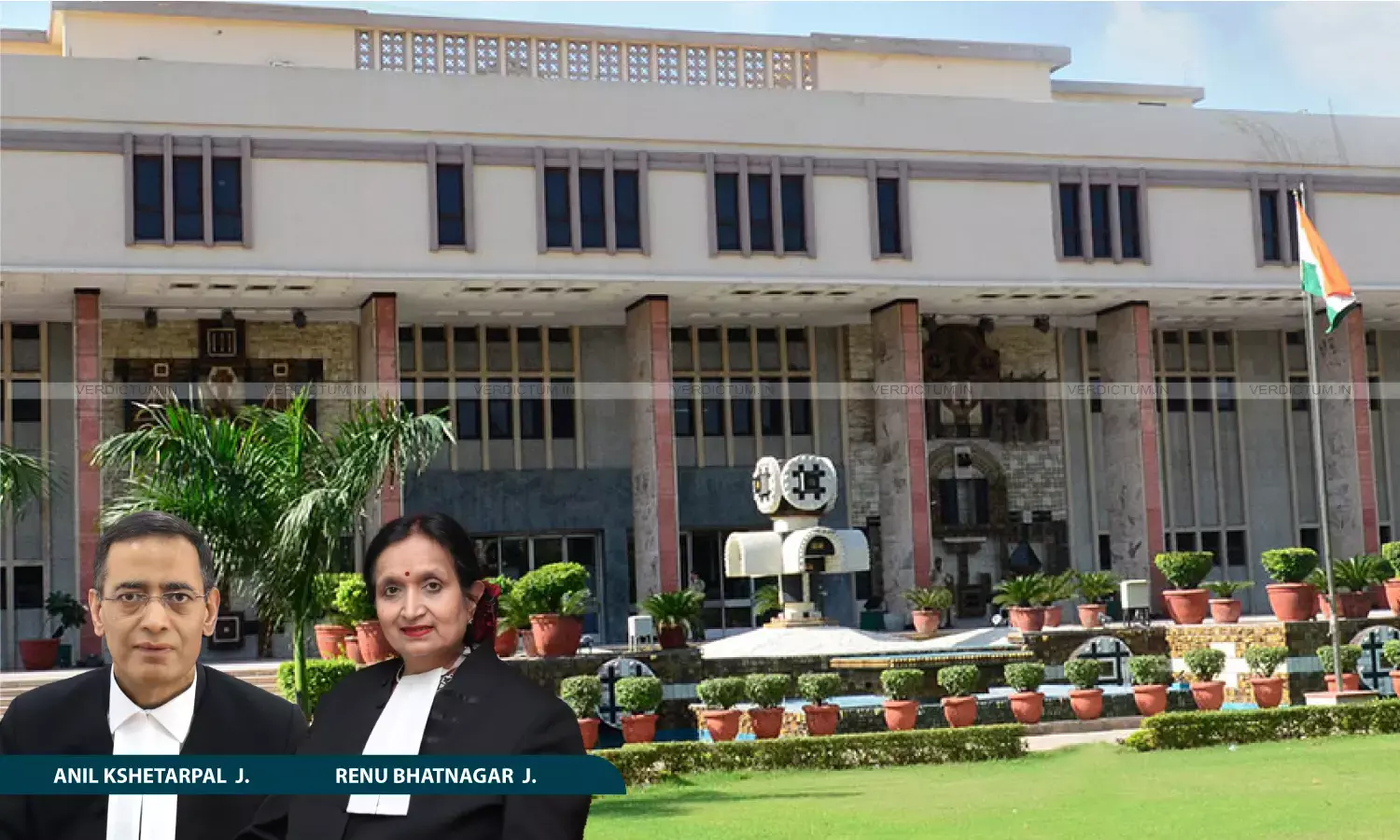
The Delhi High Court, while reinstating a Suit filed by Indian-origin employees in the Italian Embassy alleging discrimination in pay and benefits, observed that a plaint cannot be rejected merely on a ‘belief by the Court’ that the cause of action is legally untenable or unfounded.
An appeal was filed against the order passed by the Single Judge rejecting a plaint under Order VII Rule 11 of the Code of Civil Procedure, 1908 (‘CPC’), on the sole ground that the suit did not contain any cause of action as pleaded.
The Division Bench of Justice Anil Kshetarpal and Justice Renu Bhatnagar ordered, “Thus, a plaint can be rejected only if, even assuming all averments in the plaint to be true, it fails on its face to show a right to sue. A plea that a plaint “does not disclose” a cause of action [clause (a)] is very different from the court concluding that, on the facts pleaded, no cause of action in fact existed. The former is a jurisdictional defect in pleading; the latter is a merits question not triable at the threshold…In other words, one must ask whether the plaint prima face furnishes sufficient facts which, if proven true, give the Plaintiff the right to the relief claimed. A belief by the Court that the Appellants’ cause of action is legally untenable or unfounded is not a ground for rejection under Order VII Rule 11(a) of the CPC.”
Advocate Abhimanyu Garg appeared on behalf of the Appellants, whereas Advocate Jaiveer Shergill appeared on behalf of the Respondents.
Factual Background of the Case
The Appellants, Indian-origin employees locally recruited by the Embassy of Italy in New Delhi since 1997, were governed by a Presidential Decree providing for equal pay within the same employment category. Despite performing similar duties as their Italian-origin counterparts, they were paid significantly less and received fewer benefits. Between 2001 and 2012, they repeatedly represented their grievances to the Embassy, Italian authorities, and the Ministry of External Affairs, but the disparity persisted.
After obtaining the requisite consent under Section 86 of the CPC from the Government of India in 2013, they filed a Civil Suit before the Delhi High Court seeking pay parity, arrears, and declarations of discrimination. The Embassy moved for rejection of the plaint under Order VII Rule 11 CPC. The Single Judge dismissed other objections but rejected the plaint, holding that the cost of living justified pay differences and that no actionable cause was made out, thereby terminating the suit at the threshold.
Contention of the Parties
The Appellants claim discrimination in pay and benefits despite identical duties under the Italian Presidential Decree mandating equal remuneration. They argue that the plaint discloses a valid cause of action and was wrongly rejected without trial. The Respondents contend that no cause of action exists, as pay parity is not mandated and differentials are justified by nationality and cost of living. They also raise limitations, invalid consent under Section 86 CPC, and sovereign immunity to support rejection of the plaint.
Findings of the Court
The Bench said, “Prima facie, given the Appellants and their Italian-origin comparators were locally recruited and had resided in India for at least two years prior to employment, the factual foundation for classifying them as a homogeneous category is cogent. This gives out prima facie reasons to venture into pay parity as a legal entitlement under the Presidential Decree. The Appellants should have been allowed to prove their assertions but, however, the case of the Appellants were misconstrued, and the facts were wrongly presumed to their detriment.”
The Court further observed that considering the facts of the case such issues cannot be summarily decided under Order VII Rule 11 of the CPC but require thorough examination at trial upon evidence. The same could not have been ascertained by the Court without giving an opportunity to the Appellants to lead evidence. Thus, the plaint rightly raises triable issues on this critical point.
The Court held, “The Supreme Court and this Court have repeatedly held, notably in Mayar (H.K.) Ltd. v. Owners & Parties, Vessel M.V. Fortune Express1 and Popat and Kotecha Property v. State Bank of India Staff Assn2, that the test is not whether the claim in the plaint is likely to succeed, but rather whether the plaint, as pleaded, contains the basic averments essential to constitute a cause of action if ultimately substantiated by evidence. To substitute “non-disclosure” with “non-existence” of cause of action is to fundamentally distort the rule, for the former is a matter discernible on a plain reading, while the latter presupposes adjudication on merits or evaluation of evidence- a function reserved strictly for trial.”
Conclusion
The Court observed that the Single Judge erred in rejecting the plaint on the basis of “non-existence of cause of action.” The plaint, on its face, does disclose a cause of action and must therefore be allowed to proceed.
Accordingly, the Court allowed the Appeal and set aside the impugned order.
Cause Title: Rita Solomon & Ors. v. The Republic of Italy & Ors. [Neutral Citation:2025:DHC:10749-DB]
Appearances:
Appellants: Advocates Abhimanyu Garg, Preety Makkar, Shrutanjaya Bharadwaj, Aashish Dutta, Aman Abbi and Vivek Sura.
Respondents: Advocates Jaiveer Shergill and Gaurav Gupta.